Selecting the right Industrial Laser Receiver is more difficult than comparing detection range or purchase price. Global buyers must examine wavelength compatibility, response speed, signal stability, housing quality, and integration options. A receiver that performs well in a clean laboratory may struggle near coolant mist, vibration, dust, or reflective metal surfaces.
Nobel laureate Charles H. Townes once described the laser as “a solution looking for a problem.” That observation still matters. A receiver becomes valuable only when it solves a specific measurement problem reliably. This guide reviews seven industrial laser receivers for international purchasing teams, system integrators, and factory engineers. It considers practical details, including connector types, calibration needs, operating temperature, alignment tolerance, and after-sales support.
Real conditions are rarely perfect. A datasheet cannot show every false trigger, delayed shipment, or difficult software update. Some products may appear powerful but require costly accessories. Others may offer modest specifications while delivering steadier results on production lines. That difference deserves attention.
Small details matter.
The comparison also recognizes regional concerns, such as voltage standards, language support, replacement availability, and supplier documentation. Buyers should confirm technical claims independently before ordering large quantities. This is especially important when receivers connect with automated inspection, positioning, or control equipment. The best Industrial Laser Receiver is not always the most advanced model. It is the one that matches the application, environment, budget, and maintenance capability with the fewest unpleasant surprises.
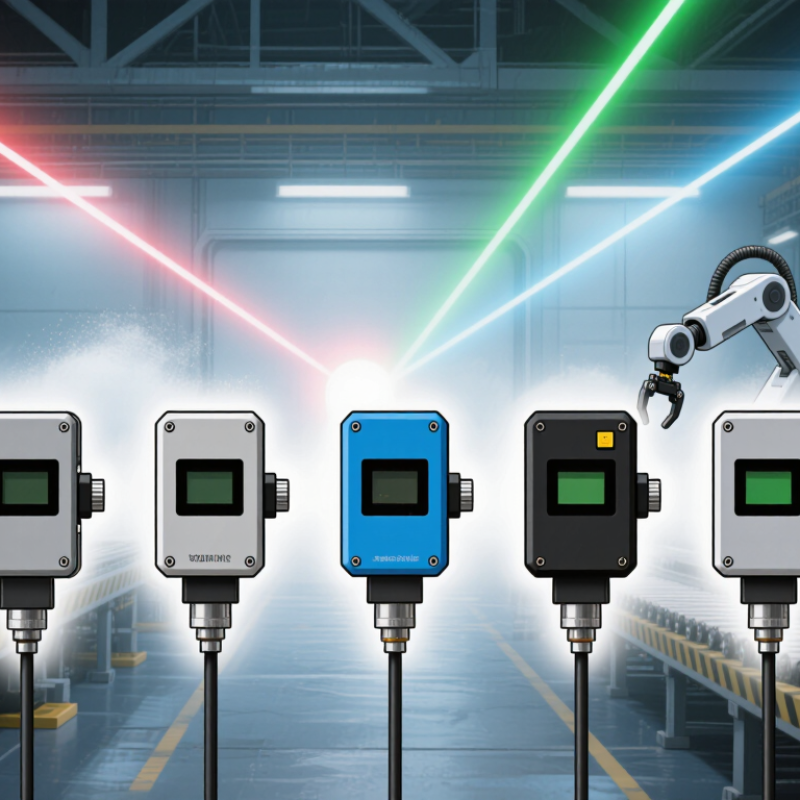
Industrial laser receiver performance starts with wavelength coverage, not a feature checklist. A 635 nm red laser is easy to see, yet sunlight can overwhelm weak signals. Receivers operating toward 1550 nm usually need different detector materials and carefully managed optical filtering. This range affects sensitivity, response speed, alignment behavior, and measurement stability.
In practical installations, wavelength matching should remain exact. A receiver designed for 635 nm may respond poorly to a 905 nm source. Wide-range models offer flexibility, but their performance can vary across the spectrum. Check the stated sensitivity curve, not only the advertised range. Look for reliable detection at low signal levels, narrow optical bandwidth, and strong rejection of ambient light. Modulated laser signals also improve discrimination in busy industrial spaces.
Field conditions reveal more than laboratory figures. Dust on a protective window can reduce received power within hours. Vibration may shift alignment by a few millimeters. Small details matter. Calibration records, temperature compensation, and clear test procedures support dependable purchasing decisions. I have found that a receiver can look excellent on paper and still disappoint during long cable runs or bright outdoor work. That weakness deserves attention, not excuses. A thoughtful evaluation should test 635, 905, 1064, and 1550 nm sources when the application may change. Otherwise, buyers risk choosing impressive coverage with uneven real-world performance.
Define Industrial Laser Receiver Performance: 635–1550 nm Wavelength Coverage
This reference chart uses seven established industrial laser wavelengths from the visible, near-infrared, and short-wave infrared regions. Photon energy is calculated from E = 1,239.84 ÷ λ, where E is measured in electronvolts and λ in nanometers. When evaluating an industrial laser receiver, confirm that its specified spectral response includes the target wavelength and that sensitivity, bandwidth, noise, and optical power limits meet the application requirements.
Industrial laser receivers should be compared by application, wavelength, response speed, and measurement accuracy. The seven strongest choices usually include alignment receivers, position-sensitive detectors, power monitors, pulse-energy receivers, fiber-coupled units, wide-area detectors, and rugged field models. Each design serves a different measurement problem. A receiver suitable for visible alignment may fail near infrared wavelengths or high pulse energies.
IEC 60825-1 classifies the accessible laser hazard, not the receiver itself. Classes include 1, 1M, 2, 2M, 3R, 3B, and 4. Buyers should match the receiver’s optical limits with the laser’s class, wavelength, exposure duration, and beam conditions. A Class 4 system demands careful engineering controls, shielding, and verified operating procedures. The receiver does not make the laser safe.
ISO 11145 terminology improves technical communication between suppliers and users. Confirm terms such as radiant power, radiant energy, irradiance, beam diameter, divergence, pulse duration, and repetition rate. These details affect saturation, damage risk, and calibration results.
In practical testing, I record the wavelength before selecting a detector. My earlier mistake was trusting nominal power alone. Beam profile and pulse behavior changed the reading significantly.
Ask for traceable calibration data, spectral response charts, connector details, and stated damage thresholds. Also check whether measurements describe free-space or fiber-coupled operation. Small wording differences can hide large performance differences.
7 Best Industrial Laser Receivers for Global Buyers
Comparing seven industrial laser receivers requires more than reading maximum range. Receiver One reaches 30 meters and offers ±1 mm accuracy, with a 120-millisecond response time. Receiver Two extends to 50 meters, but its accuracy changes near reflective surfaces. Its response time is approximately 150 milliseconds. Receiver Three covers 70 meters and responds in 100 milliseconds. It suits outdoor alignment, although bright sunlight can reduce visibility.
Receiver Four provides 100-meter range and ±1 mm accuracy under controlled conditions. Its 80-millisecond response supports moving machinery. Receiver Five reaches 120 meters, with a 60-millisecond response time. However, its accuracy may drift after long exposure to heat. Receiver Six offers 150 meters and a fast 40-millisecond response. It needs careful calibration. Receiver Seven reaches 200 meters, but its ±1 mm performance depends heavily on setup, beam quality, and atmospheric conditions. Longer range is not always better.
Tips: Test each receiver on the actual worksite. Measure range beside metal frames, dust, and vibrating equipment. Confirm whether ±1 mm accuracy applies across the full distance. Check the response time with moving targets, not only static tests. Record results at different temperatures. A receiver may perform perfectly in a workshop and less reliably outdoors. I would also repeat the test several times, because one successful reading can create false confidence. Local technicians should verify mounting stability, calibration intervals, and signal visibility before regular production use.
When comparing the 7 best industrial laser receivers for global buyers, enclosure protection deserves close attention. IP ratings describe tested resistance, not unlimited durability. Under IEC 60529, IP65 means dust-tight protection and resistance to water jets. That suits concrete dust, light rain, and routine washdown. Dust is relentless. A receiver may still fail if its battery cover, seals, or charging port is damaged.
IP67 adds protection against temporary immersion, usually up to one meter for 30 minutes under controlled test conditions. This helps after a fall into a shallow puddle or flooded trench. However, IP67 alone does not automatically confirm protection against powerful water jets. Water finds weaknesses. For exposed construction sites, an IP65/IP67 rating can provide more balanced evidence, provided both claims are clearly documented.
Experienced buyers should inspect test reports, certification details, and the exact model configuration. A rating may change when a receiver uses an accessory, open port, or replacement seal. Check operating temperature, glove-friendly controls, and visibility in rain. During site trials, examine the unit after dusty shifts and repeated cleaning cycles, not only after a showroom demonstration. I once underestimated connector wear; the enclosure looked sound, yet a loose cover allowed moisture inside. That mistake changed our inspection checklist. Clean sealing surfaces, close covers firmly, and retire damaged housings before outdoor work continues.
Choosing the seven best industrial laser receivers requires more than comparing detection range. Global buyers should verify CE documentation for applicable European requirements and FCC compliance when wireless or electronic emissions are involved. Ask for the exact declaration, test scope, and model number. A generic certificate is a warning sign.
Calibration deserves equal attention. A receiver used on construction sites or in machine alignment should include a clear calibration date, tolerance, and traceable reference. ISO/IEC 17025 laboratory evidence adds confidence, but it does not replace checking field performance.
Test the receiver in bright sunlight, near reflective metal, and across its stated working range. Real conditions are less polite.
Warranty terms can change the purchase decision. Check coverage length, battery exclusions, repair locations, response times, and international shipping responsibilities. Cost should include spare sensors, chargers, calibration, software, and downtime. Look beyond price.
My own shortlist has changed after discovering that a cheaper unit required overseas service. That was inconvenient. A higher purchase price may reduce ownership cost, but only when service access is practical. Ratings, technical manuals, and verified user experience should support the final choice, not replace hands-on evaluation.
Compare wavelength, response speed, accuracy, measurement range, and application. An alignment receiver may fail with infrared light. Check beam diameter, pulse duration, and operating conditions.
No. Safety classes describe accessible laser hazards, not the receiver. Match the receiver with wavelength, exposure time, beam conditions, and laser class. A receiver does not make the laser safe.
Confirm radiant power, radiant energy, irradiance, beam diameter, divergence, and repetition rate. Also verify pulse duration and measurement mode. Small wording differences can create large reading errors.
A detector must support the laser’s actual wavelength. Record wavelength before choosing a receiver. Nominal power alone can mislead. I learned this after beam behavior changed the measured result.
IP65 indicates dust-tight protection and resistance to water jets. It suits concrete dust, light rain, and routine washdown. Inspect battery covers, seals, and charging ports regularly. Dust is relentless.
No. IP67 covers temporary immersion under controlled test conditions. It does not automatically prove protection against powerful water jets. Check both ratings, test reports, accessories, and open ports. Water finds weaknesses.
Request the calibration date, tolerance, reference standard, and traceability details. Laboratory evidence can improve confidence, but field testing remains necessary. Test readings in sunlight, near reflective metal, and across the working range. Real conditions are less polite.
Include the receiver, spare sensors, chargers, calibration, software, repairs, shipping, and downtime. Review warranty duration, battery exclusions, service locations, and response times. A cheaper unit may require distant servicing. That was inconvenient.
Choosing the right Industrial Laser Receiver requires more than comparing price or detection distance. This guide explains key performance factors, including wavelength coverage from 635 to 1550 nm, measurement range, ±1 mm accuracy, and response time. It also introduces IEC 60825-1 laser safety classes and ISO 11145 terminology to help buyers evaluate specifications clearly and select equipment appropriate for professional applications.
The comparison also examines IP65 and IP67 protection against dust and water, making it easier to identify receivers suited to demanding outdoor and construction environments. For global purchasing, buyers should review CE and FCC-related requirements, calibration documentation, warranty coverage, replacement support, and total cost of ownership. By balancing technical performance, environmental durability, compliance documentation, and after-sales service, users can make a practical and informed decision when selecting an Industrial Laser Receiver for international projects.