In 2026, selecting a Rugged DC-DC Converter requires more than comparing voltage ranges and marketing claims. Industrial vehicles, outdoor instruments, energy systems, and remote communications equipment may face vibration, moisture, dust, electrical surges, and wide temperature swings. One failed converter can shut down an entire control cabinet. The right choice must match the real operating environment, not only the laboratory specification.
A practical evaluation starts with input voltage, output stability, efficiency, isolation, and continuous power demand. Engineers should also examine startup behavior, transient response, thermal derating, and protection against short circuits or reverse polarity. A unit rated for 100 watts may not deliver that output inside a sealed enclosure at high ambient temperature. Check the datasheet carefully. Then ask for test reports, qualification records, and clear information about component quality. Independent verification adds confidence, especially when suppliers make broad reliability claims.
Mechanical details matter too. Look for secure mounting, sealed connectors, conformal coating, and resistance to shock and vibration. Confirm relevant environmental and electromagnetic compatibility requirements for the intended application. Field experience often reveals weaknesses that bench testing misses, such as loose terminals after months of vibration or unexpected heating near cable bundles. No checklist is perfect. A converter that looks ideal on paper may still fail after installation. That possibility deserves honest review. This guide explains how to compare rugged designs, interpret technical evidence, and avoid choosing by price alone. The goal is dependable power conversion under pressure, with enough engineering margin for conditions that were not perfectly predicted.
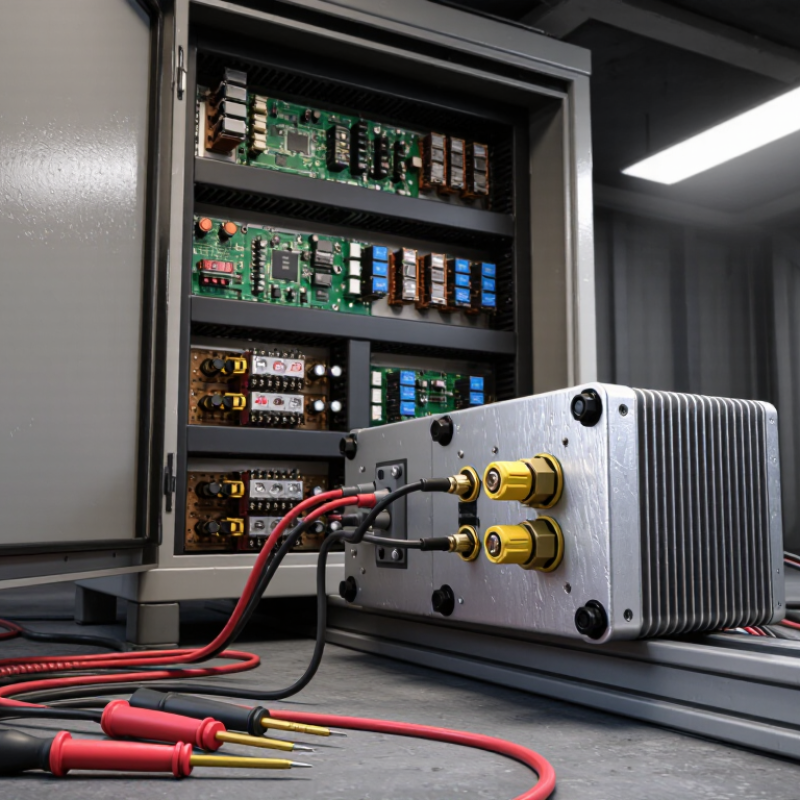
What Is a Rugged DC-DC Converter and Why Does It Matter?
A rugged DC-DC converter is more than a circuit that changes voltage. It is a power module designed for vibration, dust, moisture, heat, and unstable input conditions. Unlike a standard converter, it may use sealed housing, reinforced connections, electromagnetic shielding, and wide-temperature components. Its job is simple: deliver stable power when the surrounding system behaves badly.
Small detail. Big consequence.
In vehicles, field equipment, and industrial controls, input voltage can rise during load changes or fall during engine starts. A rugged converter must manage these transients without overheating or shutting down unexpectedly. The IEA’s Global EV Outlook 2024 reported nearly 14 million electric car sales in 2023, increasing demand for dependable power conversion across mobile platforms. MarketsandMarkets also estimated the global DC-DC converter market could grow from about USD 14.8 billion in 2024 to USD 22.2 billion by 2029.
Numbers support the trend, but they do not prove quality. Look for testing against IEC 60068 methods, temperature derating curves, short-circuit protection, and documented vibration performance. A converter rated for 100 watts may deliver far less inside a hot enclosure. Heat remains the overlooked enemy.
The specification can still mislead. A wide input range does not guarantee stable output during every transient. Engineers should review efficiency at actual loads, not only the best-case figure. They should also inspect isolation voltage, conducted emissions, connector retention, and service records. No converter is invincible. A poorly ventilated enclosure can defeat an otherwise rugged design.
Which Electrical Specifications Should You Evaluate First?
A rugged DC-DC converter should be judged by electrical specifications before its housing or mounting options. Start with the input voltage range. Check the lowest startup voltage, normal operating voltage, and possible surges. A converter rated for 24 V may not tolerate a 32 V transient. Confirm the maximum continuous input current as well.
Then examine output voltage accuracy, current capacity, and power rating. Do not size the unit exactly to the load. Motors, radios, and processors can create brief current peaks during startup or transmission. Measure these peaks with an oscilloscope, not only with a multimeter. Output ripple also matters. Excessive ripple can disturb sensors and communication circuits. Review the test conditions behind the published ripple value. It may use a short cable and a specific load.
Efficiency affects both energy use and heat. Calculate losses at the actual input voltage and load range. A 90% rating may apply only near full load. That detail is easy to miss. Check thermal derating, operating temperature, and cooling airflow together. Isolation voltage, leakage current, short-circuit behavior, and overvoltage protection deserve equal attention. In field testing, I have seen a converter pass bench tests but fail after repeated load transients. The missing factor was recovery time. Leave practical margin, then verify performance inside the complete system.
How Do You Match the Converter to Environmental Conditions?
Choosing a rugged DC-DC converter starts with the actual environment, not the product label. In field installations, I record temperature, humidity, altitude, vibration, and electrical transients at the load. The WMO State of the Global Climate 2024 report identified 2024 as the warmest year recorded, about 1.55°C above the pre-industrial average. NOAA’s 2024 Global Climate Report also ranked 2024 as the warmest year in its 175-year record. These findings make narrow temperature assumptions risky. Specify startup, continuous, and enclosure temperatures separately. A converter rated to 85°C may still derate sharply near its limit.
For outdoor cabinets, select conformal protection and verify damp-heat performance under IEC 60068-2-78. Salt air needs salt-mist testing under IEC 60068-2-11, while dust requires an enclosure rating matched to the site. In vehicles or machinery, compare measured vibration with IEC 60068-2-6 and shock with IEC 60068-2-27. MIL-STD-810H stresses tailoring tests to real missions, rather than copying generic profiles. That distinction matters. A rail cabinet and a mining vehicle do not experience the same vibration.
Input quality deserves equal attention. Log brownouts, load dumps, reverse-polarity events, and switching spikes before choosing protection. At high altitude, reduced air density weakens cooling and insulation margins. Review altitude derating data carefully. I prefer thermal-chamber testing with the real enclosure, harness, and load. Bench tests can mislead. One mistake I have made was trusting case temperature while a nearby connector ran hotter. Recheck the hottest interface, not only the cleanest measurement. Require documented test conditions, sample size, and failure limits; otherwise, “rugged” remains unproven.
How to Choose a Rugged DC-DC Converter in 2026?
Match the Converter to Environmental Conditions
Temperature capability is one of the first screening criteria when selecting a rugged DC-DC converter. Commercial converters commonly target 0°C to 70°C, industrial designs typically cover −40°C to 85°C, and rugged or defense-oriented designs may extend from −55°C to 105°C.
Select a converter whose specified operating range exceeds the lowest and highest temperatures at the installation site. Also verify output-power derating, altitude, humidity, vibration, shock, dust, and sealing requirements in the manufacturer’s datasheet. The temperature bands shown are typical engineering screening ranges, not certification limits.
What Protection, Compliance, and Reliability Features Are Essential?
How to Choose a Rugged DC-DC Converter in 2026?
A rugged DC-DC converter must survive more than a clean laboratory supply. In vehicles, a 24-volt battery can experience cranking dips, load dumps, and rapid transients. Choose protection against overvoltage, undervoltage, short circuits, overcurrent, reverse polarity, and overheating. Input filtering should limit conducted noise, while isolation may protect sensitive control circuits and operators. Check the thermal design carefully. A converter rated for 100 watts at 25°C may deliver much less inside a sealed cabinet at 70°C.
Compliance depends on the installation, voltage, and target market. Request test evidence for relevant safety, EMC, environmental, and automotive requirements. Common references may include IEC 62368-1, IEC 61000 series testing, or ISO 7637-2 for vehicle environments. These references are not interchangeable. Confirm the exact edition and test scope. Look for vibration, humidity, altitude, salt mist, and temperature-cycle results when equipment operates outdoors. A declaration alone is useful, but incomplete without traceable reports.
Tips: Ask for protection thresholds, recovery behavior, derating curves, and production test records. Inspect connector retention and terminal temperature, not only the datasheet. Prefer documented component control and serial traceability. MTBF is only a prediction, not a promise. I once treated a wide temperature rating as proof of reliability; it was not. Real reliability also depends on airflow, wiring, installation, and maintenance. Leave design margin. The field is less forgiving.
How Can You Compare, Install, and Maintain Models in 2026?
How to Choose a Rugged DC-DC Converter in 2026?
Comparing models requires more than checking output voltage. The International Energy Agency reported over 17 million electric cars sold worldwide in 2024. That growth increases demand for converters that survive vibration, heat, and unstable input power. Check efficiency at realistic loads, not only the advertised peak. A converter rated at 96% efficiency may perform differently at 20% load. Review continuous current, surge capacity, isolation voltage, ripple, and thermal derating. Short datasheets can hide important limits.
Installation decides whether the specification becomes real performance. Mount the converter on a rigid, conductive surface when permitted by its safety design. Keep high-current cables short, and use properly sized fuses near the source. Leave airflow around the case. In a sealed enclosure, measure internal temperature during the hottest expected cycle. IEC 60068 testing covers vibration and shock methods, while ISO 16750 addresses environmental loads in road vehicles. Certification helps, but it does not replace site testing.
Maintenance should be measurable. Record input voltage, output ripple, case temperature, and fault events during scheduled inspections. Clean blocked vents before temperatures rise. Inspect terminals for looseness or discoloration. Small details matter. The Uptime Institute’s 2024 Global Data Center Survey found that power-related failures remain a major outage cause, although the report focuses on facilities rather than converters. That limitation deserves attention. Field conditions rarely match laboratory graphs. A sensible 2026 comparison includes test logs, spare capacity, service access, and documented failure behavior.
FAQS
Record temperature, humidity, altitude, vibration, shock, and electrical transients at the load. Measure startup and enclosure temperatures separately. Field data beats assumptions.
A converter rated at 85°C may derate near its limit. A 100-watt rating at 25°C may deliver much less inside a sealed cabinet at 70°C. Thermal margins matter.
Use conformal protection for damp environments and verify damp-heat performance. Salt air requires salt-mist testing. Dust requires an enclosure rating suited to the site. Do not treat every outdoor location alike.
Compare measured vibration with the applicable test profile. A rail cabinet and a mining vehicle experience different mechanical stress. Generic testing may miss the real failure pattern.
Check brownouts, load dumps, reverse polarity, switching spikes, and cranking dips. Protection should cover overvoltage, undervoltage, short circuits, overcurrent, and overheating. Input quality is often underestimated.
Thinner air reduces cooling and weakens insulation margins. Review altitude derating data carefully. Test with the real enclosure and airflow conditions.
Request traceable safety, EMC, environmental, and vehicle-related test reports. Confirm the exact standard edition, test scope, sample size, and failure limits. A declaration alone is incomplete.
Check derating curves, protection thresholds, recovery behavior, connector retention, and terminal temperature. Review production test records and serial traceability. MTBF is a prediction, not a promise.
Do not measure only the converter case temperature. A nearby connector may run hotter than the case. I once trusted the cleanest measurement. That assumption was wrong.
Conclusion
Choosing a Rugged DC-DC Converter in 2026 requires more than matching input and output voltages. A rugged converter is designed to deliver stable power in demanding applications where vibration, temperature changes, dust, moisture, electrical noise, and limited maintenance may affect performance. Begin by evaluating the full electrical requirements, including input-voltage range, regulated output, power rating, efficiency, isolation, load transients, ripple, startup behavior, and thermal derating. Selecting adequate headroom helps prevent overheating and unstable operation.
Environmental conditions should guide the converter’s construction, cooling method, sealing level, and resistance to shock and vibration. Essential protection features include overvoltage, overcurrent, short-circuit, reverse-polarity, overtemperature, and input surge protection. Also review relevant safety, electromagnetic compatibility, and industry compliance requirements, along with expected service life and reliability data. Finally, compare models by total operating value rather than price alone, install them with suitable wiring, grounding, airflow, and fusing, and establish routine inspections to verify connections, temperature, cleanliness, and output stability throughout the system’s service life.