Selecting reliable China top engine temperature monitoring unit manufacturers requires more than comparing catalog prices. Engine Temperature Monitoring Unit performance can influence engine protection, maintenance planning, and operational safety. This guide introduces leading Chinese suppliers through practical evaluation criteria, including sensor accuracy, response time, display stability, wiring quality, and environmental resistance.
Real-world use matters. A monitoring unit installed near a diesel engine may face vibration, oil mist, heat, and repeated temperature changes. Strong manufacturers usually provide clear technical datasheets, calibration information, installation guidance, and responsive after-sales support. Buyers should also review enclosure ratings, operating temperature ranges, alarm settings, output signals, and compatibility with existing engine control systems. Factory audits, sample testing, and reference checks can reveal details that online listings often miss.
Not every supplier performs equally.
This overview focuses on manufacturers with relevant production experience, documented quality procedures, and export capability. It also considers customization, such as probe length, alarm thresholds, communication interfaces, and display layout. However, public information can be incomplete, and supplier rankings may change as product lines and certifications develop. Independent verification remains essential before signing a purchase agreement. Request recent test records, confirm component origins, and evaluate a production sample under realistic conditions. A low price may look attractive, but unstable readings can create higher maintenance costs later. The most dependable choice combines measurable performance, transparent communication, and consistent manufacturing control.
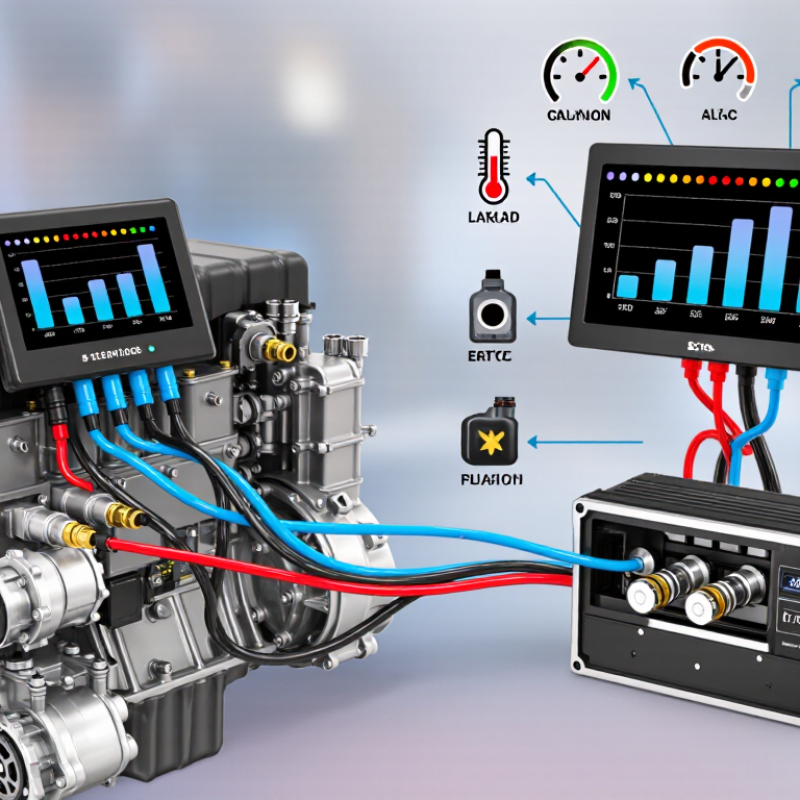
Define Engine Temperature Monitoring Units and Their 90–105°C Operating Range
An engine temperature monitoring unit measures and reports thermal conditions around the engine. It commonly combines a temperature sensor, signal processor, display, alarm output, and data interface. The sensor may read coolant, cylinder-head, oil, or exhaust temperature. Each location tells a different story.
For many liquid-cooled engines, 90–105°C represents a practical coolant operating range. It is not a universal limit. At 90°C, the thermostat may be regulating flow efficiently. Near 105°C, the system may approach an alarm threshold, depending on pressure, coolant type, and engine design. The number matters. A reading of 102°C during heavy loading may be acceptable, while a rapid rise from 88°C requires attention. Temperature trends often reveal trouble earlier than a single alarm.
When assessing Chinese manufacturers, buyers should request sensor accuracy, response time, calibration records, and test data. Units should tolerate vibration, moisture, electrical noise, and repeated thermal cycling. A clear display helps technicians react beside a noisy generator. I have found that installation quality can affect readings as much as the instrument itself. Poor sensor contact, trapped air, or an unsuitable probe location may create false confidence. Small errors matter. Reliable suppliers should explain these limitations and provide practical wiring and calibration guidance.
Identify Key Technologies: Pt100 Class A Accuracy and J1939 CAN Integration
China’s Top Engine Temperature Monitoring Unit Manufacturers?
Selecting an engine temperature monitoring unit starts with measurement integrity. Pt100 Class A sensors follow IEC 60751 tolerance requirements. At 0°C, the permitted error is approximately ±0.15°C. That precision supports safer alarms, cleaner diagnostics, and more stable engine testing.
The probe still needs correct installation.
A loose crimp can defeat an excellent sensor. Experienced manufacturers should provide calibration records, vibration-resistant housings, and protection against oil, coolant, and thermal cycling. The IEA’s Global EV Outlook 2025 reports that electric car sales exceeded 17 million in 2024. Yet commercial engines, hybrids, generators, and marine systems still require dependable thermal supervision. The market is changing, not disappearing.
J1939 CAN integration adds practical value. It lets the unit transmit temperature, status, fault codes, and diagnostic data across a vehicle network. SAE J1939 message structure also supports clearer communication between sensors, controllers, and display systems. A capable supplier should explain PGN mapping, baud-rate compatibility, termination requirements, and open-circuit detection. MarketsandMarkets’ automotive sensor analysis identifies connected sensing and predictive maintenance as major growth areas through this decade.
However, digital integration can hide simple mistakes. Incorrect scaling may display 120°C as 102°C. That is not a software detail. It is a maintenance risk. Buyers should request bench-test results, CAN logs, response-time data, and evidence of Class A calibration before comparing manufacturers.
Compare China Manufacturers by ±0.15°C Sensor Accuracy and 500 kbps Data Rates
China’s engine temperature monitoring unit market deserves comparison by measured performance, not brochure language. A 2024 MarketsandMarkets report values the global automotive sensors market at more than USD 25 billion, with engine management remaining a major application. For buyers, ±0.15°C sensor accuracy is a useful benchmark. Yet this figure may describe laboratory conditions, not a hot, vibrating engine bay. Ask for calibration records, temperature range, response time, and tolerance after thermal cycling.
Data speed also matters. A 500 kbps CAN connection can transfer engine temperature readings quickly across a vehicle network. ISO 11898-1 defines CAN communication principles, but network loading, cable length, and message priority affect real performance. A supplier should provide bus-load tests, error-frame results, and timestamp accuracy. Some Chinese manufacturers offer compact units with sealed housings, stainless probes, and operating ranges near -40°C to 150°C. These details are more useful than a polished product image.
Tips: Request three test samples from each manufacturer. Compare readings against a traceable reference thermometer. Check ±0.15°C at low, normal, and high temperatures. Do not assume 500 kbps means faster control. It may not. Review the test method carefully, because accuracy claims can become weaker after installation, vibration, or connector aging. A practical audit should also examine firmware revision control, production calibration, and failure reporting. I would keep one concern open: published data often reflects ideal samples, while fleet conditions are less forgiving.
China Top Engine Temperature Monitoring Unit Manufacturers? - Compare China Manufacturers by ±0.15°C Sensor Accuracy and 500 kbps Data Rates
Comparative overview of anonymized China-based manufacturer profiles for engine temperature monitoring units. Values reflect commonly specified industrial configurations and should be confirmed against the supplier’s latest datasheet and test report.
| Manufacturer Profile |
Primary Application |
Sensor Accuracy |
Data Interface |
Maximum Data Rate |
Operating Temperature |
Measurement Range |
Ingress Protection |
Response Time |
Supply Voltage |
Calibration Documentation |
| Manufacturer Profile A |
Diesel generator sets and commercial vehicles |
±0.15°C |
CAN 2.0B |
500 kbps |
-40°C to +105°C |
-40°C to +150°C |
IP67 |
≤100 ms |
9–36 VDC |
Factory calibration report |
| Manufacturer Profile B |
Construction machinery and off-highway engines |
±0.15°C |
CAN 2.0B / RS-485 |
500 kbps |
-40°C to +125°C |
-40°C to +180°C |
IP67 |
≤120 ms |
10–32 VDC |
Calibration points at -20°C, 25°C and 100°C |
| Manufacturer Profile C |
Marine propulsion and auxiliary engines |
±0.20°C |
CAN 2.0B |
250 kbps |
-30°C to +85°C |
-40°C to +150°C |
IP66 |
≤150 ms |
9–36 VDC |
Certificate available on request |
| Manufacturer Profile D |
Industrial engines and pump systems |
±0.15°C |
CAN 2.0B / Modbus RTU |
500 kbps |
-40°C to +105°C |
-40°C to +200°C |
IP65 |
≤100 ms |
12–24 VDC |
ISO 17025 traceable option |
| Manufacturer Profile E |
Agricultural machinery and compact engines |
±0.20°C |
CAN 2.0B |
500 kbps |
-40°C to +85°C |
-40°C to +150°C |
IP67 |
≤130 ms |
8–32 VDC |
Standard production test record |
| Manufacturer Profile F |
Heavy-duty trucks and fleet telematics |
±0.15°C |
CAN 2.0B / J1939 |
500 kbps |
-40°C to +125°C |
-40°C to +160°C |
IP67 |
≤80 ms |
9–36 VDC |
End-of-line calibration record |
| Manufacturer Profile G |
Test benches and engine development laboratories |
±0.10°C |
CAN 2.0B / USB-CAN |
500 kbps |
-20°C to +70°C |
-50°C to +200°C |
IP54 |
≤50 ms |
12–24 VDC |
Multi-point calibration certificate |
| Manufacturer Profile H |
Low-volume OEM and customized monitoring systems |
±0.25°C |
CAN 2.0B / RS-232 |
250 kbps |
-30°C to +85°C |
-40°C to +150°C |
IP65 |
≤180 ms |
9–36 VDC |
Optional calibration report |
Evaluate ISO 16750 Testing, IP67 Protection, and −40°C to 125°C Reliability
Selecting China top engine temperature monitoring unit manufacturers requires more than comparing sensor ranges and catalog prices. Review documented testing against ISO 16750 environmental conditions, especially temperature cycling, vibration, humidity, and electrical disturbances. Ask whether tests use production samples or specially prepared units. The difference matters.
For engine-bay use, verify reliable operation from −40°C to 125°C. A unit should start accurately after cold soaking, then maintain stable readings near hot metal surfaces. Check response time, measurement tolerance, connector sealing, and cable flexibility. Small details often decide field performance. Not enough.
IP67 protection indicates dust-tight construction and temporary immersion under defined test conditions. It does not automatically prove resistance to pressure washing, oil exposure, coolant spray, or long-term condensation. Request enclosure drawings, sealing test records, and connector specifications. Installation also matters; a poorly routed cable can fail despite a strong housing.
A practical evaluation should include thermal cycling while the device is powered and recording data. Compare readings with a calibrated reference sensor. Inspect drift after vibration testing. A clean laboratory result can still mislead when grounding, mounting, or heat transfer changes in a vehicle. No test predicts every engine bay. That limitation deserves honest documentation from the manufacturer. Look for traceable reports, clear acceptance criteria, and corrective actions when a sample fails. Reliable suppliers explain weaknesses instead of hiding them.
Select the Best Supplier Using Certification, Customization, Warranty, and Cost Criteria
China Top Engine Temperature Monitoring Unit Manufacturers?
Choosing a Chinese engine temperature monitoring unit manufacturer requires more than a low quotation. Grand View Research valued the global automotive sensors market at about USD 28.9 billion in 2022. It also projects a 10.2% annual growth rate through 2030. This expansion increases supplier choices, but not every factory offers equal control. Ask for ISO 9001 and, where applicable, IATF 16949 certification. Request calibration records, sampling reports, and evidence of thermal-cycle testing. Certification alone is not enough. Inspect the production process.
Customization should match the engine’s temperature range, probe type, connector, display, and communication protocol. A practical supplier should provide engineering samples before mass production. Check accuracy near critical warning points, not only at room temperature. Warranty terms need clear coverage, replacement timing, and failure analysis. A twelve-month warranty may sound acceptable, but harsh vibration can expose weaknesses later. MarketsandMarkets identifies growing demand for connected automotive sensing and data-driven diagnostics, making signal stability increasingly important. Compare total cost, including tooling, testing, packaging, calibration, and after-sales support. The cheapest offer can become expensive after field failures. I would also keep a small reserve budget for redesigns. That part is easy to underestimate.
China Top Engine Temperature Monitoring Unit Manufacturers: Supplier Evaluation Criteria
This procurement model compares the four factors most relevant when selecting an engine temperature monitoring unit supplier in China. Certification verifies compliance and quality control, customization measures the ability to adapt sensors and interfaces, warranty reflects after-sales confidence, and cost supports total-value evaluation rather than price-only purchasing. The percentages represent a practical recommended weighting for supplier assessment.
Conclusion
An Engine Temperature Monitoring Unit is a critical device for tracking engine coolant or component temperature, typically within a 90–105°C operating range. This article explains how Pt100 Class A sensors provide high measurement accuracy, while J1939 CAN integration enables dependable communication with vehicle control systems at data rates up to 500 kbps. It also compares Chinese manufacturers by sensor accuracy targets of ±0.15°C, communication performance, response time, and system compatibility.
The evaluation further examines ISO 16750 testing, IP67 protection, and reliable operation from −40°C to 125°C, ensuring stable performance in demanding automotive and industrial environments. When selecting a supplier, buyers should consider relevant certifications, customization capabilities, production consistency, warranty coverage, technical support, delivery capacity, and total cost. A balanced assessment of these factors can help identify a monitoring solution that delivers accurate temperature data, durable protection, and dependable long-term operation.