Selecting the right Electric Motor Drive Controller has become a practical energy and reliability decision. Motors power pumps, conveyors, compressors, fans, and countless automated machines. The International Energy Agency has reported that electric motor systems consume around 46% of global electricity. That figure makes controller selection more than a purchasing detail. It affects operating costs, carbon performance, maintenance schedules, and production stability.
Recent market pressure is even clearer in transportation. The IEA’s Global EV Outlook 2024 reported more than 17 million electric car sales worldwide in 2024. This growth increases demand for efficient inverters, precise speed control, thermal protection, and dependable communication. Industrial facilities face similar requirements, although their priorities may differ. A packaging line may need rapid torque response, while a water pump may value smooth ramping and low standby losses. The U.S. Department of Energy also identifies motor systems as major industrial electricity users, reinforcing the value of efficient drive control.
The best choice rarely comes from comparing rated voltage alone. Engineers should examine load profiles, braking cycles, ambient temperature, enclosure ratings, harmonics, feedback devices, and network compatibility. Small details matter. A dusty cabinet, a 30-meter motor cable, or repeated starts can expose a weak design quickly. Seven useful tips can guide this evaluation, from matching control methods to checking lifecycle support. Still, no checklist removes every uncertainty. Real machines behave differently from spreadsheets. Testing under actual load remains essential, and even experienced teams sometimes underestimate heat, noise, or commissioning time.
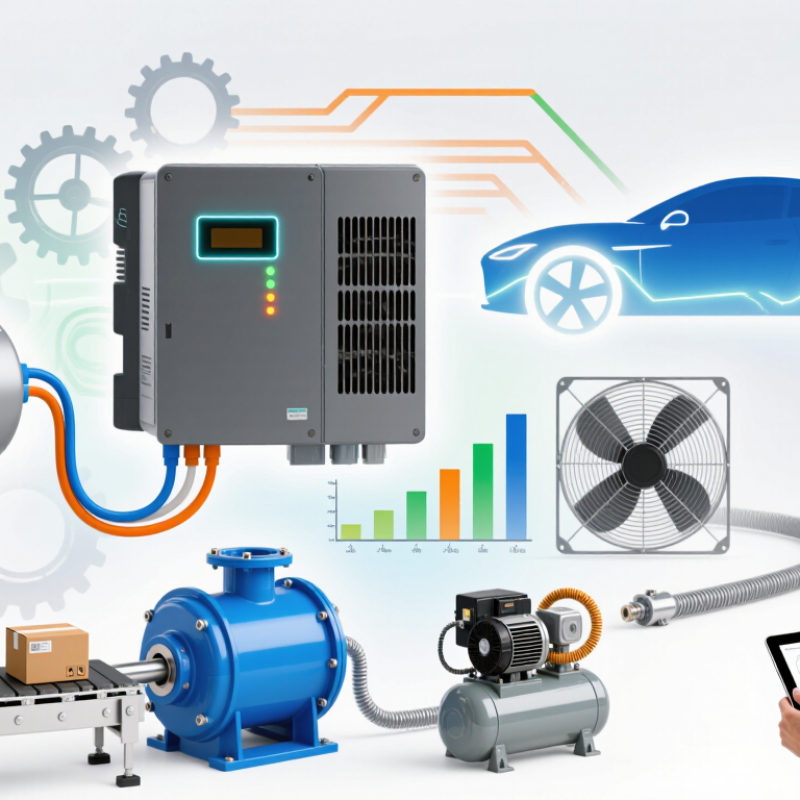
Define the Motor Drive Controller’s Role in the System
7 Tips for Choosing an Electric Motor Drive Controller
Define the motor drive controller’s role before comparing specifications. It regulates speed, torque, direction, acceleration, and braking between the power source and the mechanical load. It may also process feedback from encoders, temperature sensors, or current monitors. On a conveyor, this means controlled starts instead of sudden belt tension. On a pump, it can match motor speed to changing flow demand.
The International Energy Agency reports that electric motor systems consume about half of global electricity. The U.S. Department of Energy also estimates that motor-driven equipment uses more than 70% of industrial electricity.
These figures make controller selection an energy decision, not merely a wiring choice. Check the real duty cycle, overload duration, stopping method, ambient temperature, and required response time. A controller sized only for the motor nameplate may fail during repeated starts or heavy loading.
A commissioning review often exposes missing details. Is the controller expected to protect the motor, control the process, or do both? Those functions need different sensors and settings. The first specification is often incomplete. That is normal. Revisit it after observing the machine under load. IEC 61800 guidance can help assess adjustable-speed electrical power drive systems, but standards do not replace site measurements. Document fault behavior, maintenance access, and communication requirements before choosing the final controller.
Match Controller Ratings with Motor and Power Requirements
Tip 1: Match the controller’s voltage range to the motor’s rated voltage. Confirm the battery or supply voltage under load, not only its label. A 48-volt system may exceed 48 volts during charging. That difference matters.
Check continuous and peak current ratings against the motor’s operating demands. Starting, climbing, or sudden acceleration can create brief current spikes. The controller should handle these events without overheating or shutting down. However, oversizing it blindly can reduce efficiency and increase cost.
Tip 2: Review the motor type and control method carefully. Brushless, brushed, synchronous, and induction motors require different drive strategies. Confirm phase count, sensor compatibility, commutation requirements, and feedback signals. In field commissioning, wiring mistakes often look like controller failure. I have seen teams replace hardware before checking a reversed sensor connection.
Tip 3: Consider the real duty cycle, enclosure, and cooling path. A controller inside a sealed cabinet may need more thermal capacity than its datasheet suggests. Check ambient temperature, airflow, vibration, moisture, and mounting orientation. Peak ratings are not continuous ratings. This is easy to overlook.
Leave a sensible margin, but document your assumptions. Include acceleration time, load inertia, braking energy, cable length, and protection settings. A careful bench test can expose problems before installation. Still, test results may change with colder temperatures or a heavier load, so review the design honestly.
Evaluate Control Modes, Feedback, and Response Performance
Choosing an electric motor drive controller starts with the load, not the brochure. The IEA reports that motor-driven systems consume about 53% of global electricity. Small control errors can therefore become expensive heat and wasted energy.
Match the control mode to the application. V/f control may suit pumps with steady loads. Sensorless vector control offers better torque at low speed. Closed-loop vector control is stronger for lifting, indexing, or rapid reversal. Check speed regulation, torque accuracy, and acceleration response under real load. A fast headline response can still hide poor settling performance.
Feedback deserves equal attention. Encoders improve low-speed control, while resolvers can tolerate harsher conditions. Confirm resolution, signal noise, cable length, and failure behavior. The U.S. Department of Energy notes that motor systems can represent 50–70% of industrial electricity use in its Motor Systems Tip Sheet series. Efficiency matters.
Do not compare response figures blindly. Ask whether the test used full inertia, rated temperature, and sudden load changes. IEC 61800-9-2 provides a useful framework for drive-system efficiency classification. In practical commissioning, engineers often discover that tuning values work in the test bay but fail near resonance. That is easy to miss. My own preference is measurable feedback, documented tuning, and a controller that exposes limits clearly. Overconfidence is costly.
7 Tips for Choosing an Electric Motor Drive Controller
Compare control modes by typical speed-regulation accuracy and closed-loop response time. Lower values indicate tighter regulation and faster response.
Open-loop V/f control is cost-effective for basic constant-speed loads. Sensorless vector control improves torque and speed performance without an encoder, while closed-loop vector control provides the highest accuracy and fastest dynamic response when feedback is available.
Check Protection Features, Compatibility, and Installation Needs
7 Tips for Choosing an Electric Motor Drive Controller
A reliable controller begins with protection, not price. The IEA 4E Motor Systems Annex reports that motor-driven systems consume roughly 46% of global electricity. Small control errors can therefore create significant energy and maintenance costs. Check overload, overcurrent, phase-loss, short-circuit, ground-fault, and thermal protection. Safe torque off is valuable where unexpected starting creates hazards.
Compatibility needs closer inspection. Match the controller’s voltage, rated current, frequency range, and motor type. Confirm support for induction, permanent-magnet, or synchronous motors. Check feedback requirements, braking methods, and communication protocols. A controller may power the motor but still fail the machine’s control logic. That mistake is common. Also compare the drive’s continuous current with the motor’s actual load profile, not only its nameplate rating.
Installation conditions deserve equal attention. IEC 61800-3 addresses electromagnetic compatibility, while IEC 61800-5-1 covers adjustable-speed power-drive safety. Use these standards during specification, not after commissioning. Check enclosure protection, ambient temperature, altitude, ventilation, cable length, grounding, and harmonic effects. The U.S. Department of Energy identifies motor systems as a major share of industrial electricity use, so efficient commissioning matters. In practice, record acceleration time, peak current, and cabinet temperature. I would not trust factory settings blindly; real loads behave differently. test carefully.
Compare Efficiency, Maintenance, Cost, and Long-Term Support
7 Tips for Choosing an Electric Motor Drive Controller
Compare efficiency across the full operating range, not only the nameplate rating. According to the IEA’s Energy Efficiency 2016 report, electric motor systems use about 53% of global electricity. Even small losses matter. Check standby consumption, partial-load performance, regenerative capability, and harmonic distortion. The U.S. Department of Energy’s 2021 Motor Systems Market Assessment links motor-driven equipment to roughly 67% of industrial electricity use. Ask for independently verified test data. Do not trust impressive graphs alone.
Review maintenance in practical terms. Choose controllers with clear fault codes, thermal monitoring, removable cooling fans, and accessible terminals. Confirm enclosure protection for dust, moisture, and vibration. Study the service interval. A cheap controller becomes expensive when a technician spends hours diagnosing one flashing light. Calculate purchase price, installation, energy, downtime, spare parts, and disposal costs over its expected life. This is where many comparisons fail.
Check long-term support before approval. Request firmware policies, repair procedures, replacement compatibility, training materials, and guaranteed spare-part availability. Seven years of documentation can matter more than a slightly higher efficiency figure. Ask whether the controller records operating history; useful data can reveal overheating before failure. I prefer transparent limits over perfect promises. Field conditions are messier than laboratory tests. Review the warranty exclusions, local service capability, and commissioning support in writing. Keep one alternative specification, too. A single-source decision may look efficient today, but it can restrict maintenance tomorrow.
FAQS
Match the controller’s voltage range with the motor’s rated voltage. Measure supply voltage under load, not only the label. A 48-volt system may rise during charging. That difference matters.
Compare both ratings with the motor’s real operating demands. Starting, climbing, and sudden acceleration can create short current spikes. The controller must survive these events without overheating. Oversizing blindly can increase cost and reduce efficiency.
Different motor types need different control methods. Check phase count, sensor compatibility, commutation, and feedback signals. A reversed sensor wire can look like hardware failure. Check wiring before replacing parts.
Basic V/f control may suit pumps with steady loads. Sensorless vector control can improve low-speed torque. Closed-loop control fits lifting, indexing, and rapid reversal. Test speed, torque, and settling performance under real load.
Feedback improves low-speed control and positioning accuracy. Check resolution, signal noise, cable length, and failure behavior. An encoder may help precision. A resolver may tolerate harsher conditions.
Look for overload, overcurrent, phase-loss, short-circuit, ground-fault, and thermal protection. Safe torque off can reduce unexpected starting risks. Protection settings should match the machine and its operating environment.
Check ambient temperature, enclosure sealing, airflow, vibration, moisture, altitude, and mounting direction. A sealed cabinet may need extra thermal capacity. Peak ratings are not continuous ratings. This is easy to miss.
Record acceleration time, peak current, cabinet temperature, and braking behavior. Test with realistic inertia and sudden load changes. A bench test can reveal wiring and tuning problems. Still, colder temperatures may change the result.
Treat factory settings as a starting point, not a final solution. Test near resonance and under the heaviest expected load. Fast response can hide poor settling. I would not trust impressive numbers blindly.
Conclusion
Choosing the right Electric Motor Drive Controller is essential for achieving safe, efficient, and reliable motor operation. Start by defining its role within the overall system, including how it will manage speed, torque, direction, and communication with other equipment. The controller’s voltage, current, power, and operating ratings should closely match both the motor and the available power supply to prevent poor performance or premature failure.
Next, evaluate control modes, feedback options, and response performance according to the application’s precision and dynamic requirements. Check for essential protection features such as overcurrent, overheating, overload, and short-circuit protection, while also confirming compatibility with wiring, sensors, software, and installation conditions. Finally, compare energy efficiency, maintenance demands, initial cost, expected service life, documentation, and long-term technical support. A balanced assessment of these factors will help you select a controller that delivers dependable performance, simplifies maintenance, and provides strong value throughout the system’s operating life.