- ISO 9001:2015 Certified Manufacturing — Canada
- Engineering Support Since 1991
A CANbus Protocol Gateway connects CAN-based networks with systems that use different communication protocols, such as Ethernet, Modbus, or industrial fieldbus networks. It translates messages without losing the identifiers, timing, and control data that machines depend on.
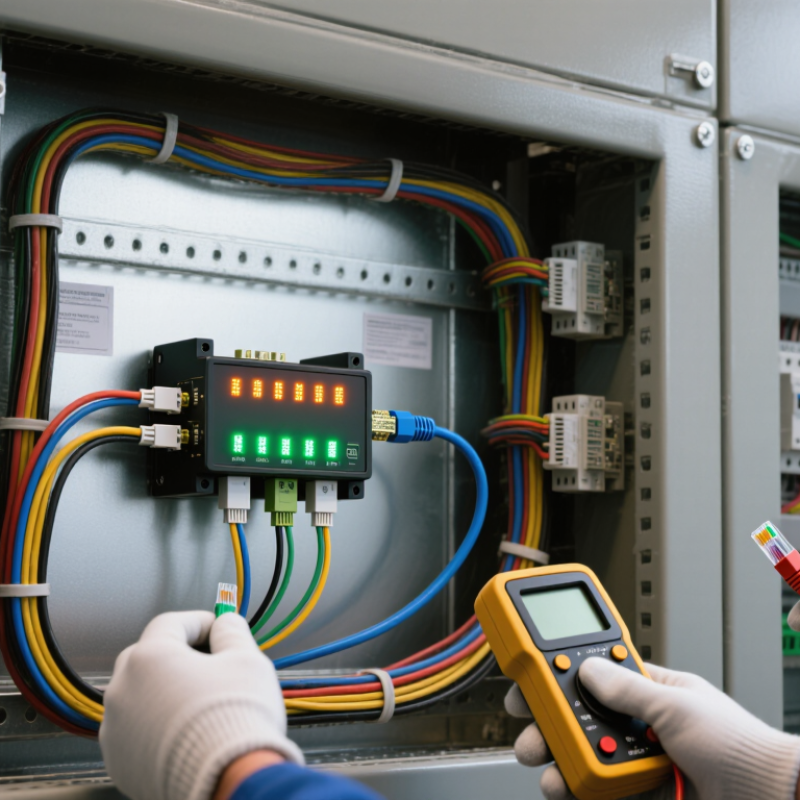
The term can feel abstract. Picture a factory cabinet with a compact gateway, blinking status LEDs, twisted-pair CAN wires, and an Ethernet cable leading to a control server. Inside, the device filters frames, converts data formats, and manages traffic between two very different network environments. It may also isolate electrical faults, support diagnostics, and reduce unnecessary messages reaching the controller.
CAN expert Wilfried Voss describes CAN as a “multi-master broadcast serial bus.” That short description explains why gateway design requires careful planning. Several devices can communicate, but message priority, bus load, and response timing still matter. A poorly configured CANbus Protocol Gateway may create delays, duplicate data, or confusing diagnostic results.
This article examines what a CANbus Protocol Gateway does, how its translation process works, and where it fits in modern automation systems. It also considers practical issues, including baud-rate matching, protocol mapping, galvanic isolation, cybersecurity, and maintenance access. Standards provide structure, but implementation details can still cause trouble.
Some explanations make gateways sound effortless. They are not.
A reliable installation begins with real traffic measurements, clear signal definitions, and documented failure behavior. Even then, assumptions may need revision after commissioning. That imperfect stage matters because a gateway should be judged by stable operation, traceable data, and safe recovery when communication fails.
What Is a CANbus Protocol Gateway?
CANbus Protocol Gateway: Definition and Core Purpose
A CANbus protocol gateway is a hardware or software bridge between CAN networks and other communication systems. It translates messages, identifiers, data formats, and timing rules between incompatible interfaces. A vehicle controller may use CAN, while a monitoring platform expects Ethernet, serial communication, or another industrial protocol. The gateway connects them without forcing every device to speak the same language.
Its core purpose is controlled data exchange. It filters unnecessary frames, converts signal values, and forwards essential information to the correct destination. CAN in Automation has reported that more than one billion CAN nodes operate worldwide, showing why interoperability remains important across vehicles, machines, and embedded equipment. ISO 11898-1 also defines key CAN communication principles, including arbitration and error handling. These rules guide reliable gateway design.
A good gateway does more than translate packets. It manages message priorities, protects timing, and records communication faults. Small details matter. A delayed frame can affect a motor response or a diagnostic reading. However, gateway performance is not always predictable. Poor signal mapping, overloaded buses, or weak filtering can create hidden delays. This is where field testing becomes essential. Engineers should compare real bus traces with expected timing, rather than trusting configuration screens alone. The gateway is useful, but it is not magic.
| Data Dimension | Definition or Characteristic | Practical Purpose |
|---|---|---|
| Basic Definition | A CANbus protocol gateway is an embedded device or software component that transfers, filters, translates, or manages data between a CAN network and another CAN network or communication protocol. | It allows systems using different communication structures or data formats to exchange information. |
| Core Function | The gateway receives CAN frames, evaluates their identifiers and contents, and forwards or converts selected messages according to configured rules. | It provides controlled and organized data exchange instead of directly connecting every device to every network. |
| Network-to-Network Connection | A gateway can link two CAN segments or connect CAN with protocols such as Ethernet, LIN, serial communication, or diagnostic transport layers. | It supports communication between subsystems that do not share the same physical bus or protocol. |
| Message Filtering | The gateway can accept, block, or forward messages based on CAN identifiers, message direction, payload values, or configured conditions. | Filtering reduces unnecessary traffic and helps prevent unrelated or unauthorized messages from crossing network boundaries. |
| Protocol Translation | Translation may include changing message identifiers, rearranging payload fields, converting units, adding or removing headers, or mapping data to another protocol format. | It makes data understandable to devices that use different message definitions or communication methods. |
| CAN Frame Handling | A gateway processes CAN data frames containing an identifier and a data field. Classical CAN supports up to 8 data bytes per frame, while CAN FD supports up to 64 data bytes. | It can route or transform messages while respecting the frame format used by the connected CAN networks. |
| Data Rate Adaptation | A gateway may connect CAN segments operating at different configured bit rates, provided its hardware and software support the required timing parameters. | It helps separate high-speed and lower-speed traffic and prevents one network's timing configuration from being imposed on another. |
| Traffic Management | The gateway can queue, prioritize, rate-limit, schedule, or temporarily buffer messages before transmission. | These functions help manage bus load and reduce the risk of congestion during periods of heavy communication. |
| Diagnostics Support | A gateway may route diagnostic requests and responses, including segmented diagnostic messages that require transport-layer handling. | It enables service tools or controllers to access electronic control units located on another network segment. |
| Security Boundary | A gateway can restrict message paths, validate permitted traffic, separate safety-critical networks, and support access-control policies. | It limits the exposure of sensitive network segments, although gateway security depends on the complete system design and configuration. |
| Hardware Components | Typical hardware includes one or more CAN controllers, CAN transceivers, a processor or microcontroller, memory, power regulation, and physical interfaces. | These components allow the gateway to receive, process, store, and transmit bus traffic. |
| Electrical Isolation | Some gateways use galvanic isolation between interfaces to reduce ground-loop effects and limit the spread of electrical faults. | Isolation can improve robustness when connected networks have different ground potentials or electrical environments. |
| Timing and Latency | Because a gateway receives and retransmits messages, it introduces processing and transmission delay that depends on configuration, bus load, and implementation. | Latency must be considered for time-sensitive control, synchronization, and safety-related communication. |
| Typical Applications | Common applications include vehicles, industrial machinery, building systems, medical equipment, test systems, and embedded control platforms. | The gateway integrates distributed controllers and devices while allowing each subsystem to retain an appropriate network design. |
| Main Benefits | Key benefits include interoperability, network segmentation, controlled traffic flow, easier diagnostics, improved scalability, and support for different data rates or protocols. | These benefits simplify system integration and help optimize communication architecture. |
| Important Design Considerations | Designers should evaluate bus load, bit rate, termination, message priorities, latency, error handling, electrical isolation, fault behavior, security, and configuration management. | Careful design helps ensure reliable communication and prevents the gateway from becoming a bottleneck or single point of failure. |
It connects vehicle or machine networks with external systems. It translates messages between CAN, Ethernet, USB, serial, and wireless interfaces. It also filters traffic and controls message timing. It is not magic.
Common parts include a CAN transceiver, processor, memory, power circuit, and communication ports. The transceiver manages electrical signals on the bus. The processor interprets frames and converts selected data. Memory stores settings, diagnostic records, and temporary messages.
Devices must use compatible bit rates to exchange messages correctly. Termination resistors help maintain signal quality across the cable. A loose resistor can resemble a software problem. Check the wiring before changing settings repeatedly.
Isolation helps reduce ground-loop risks between separately powered devices. This matters when controllers, sensors, and external computers use different power sources. It can improve communication stability. It cannot fix every wiring fault.
Ethernet supports factory networks and large diagnostic data volumes. USB works well for nearby service tools. RS-485 suits longer, simpler serial connections. Wireless access is convenient, but interference needs testing.
It can connect body electronics, powertrain controllers, battery systems, and diagnostic equipment. It may separate network sections and manage message priorities. Electric vehicles may exchange battery, charging, and thermal information. Timing and voltage levels still require careful verification.
Create a message map before connecting equipment. Record each signal, identifier, update rate, and response time. For example, document temperature readings every 100 milliseconds. Small definition errors can create confusing faults.
Test normal traffic and fault conditions. Disconnect a sensor and observe the response. Send messages too quickly and check for overload behavior. Unexpected resets matter. Successful communication alone proves too little.
Filtering can reduce traffic and improve performance. However, it may hide a message needed during diagnosis. Simple rules are often safer than passing everything. Still, I would review that assumption for each installation.
A CANbus Protocol Gateway is a specialized communication device that connects different CAN-based networks or links a CANbus system with other industrial and automotive communication protocols. Its core purpose is to translate messages between incompatible interfaces, allowing electronic control units, sensors, machines, and monitoring systems to exchange data reliably. The gateway receives CAN frames, interprets their identifiers and payloads, converts them into the required format, and routes them to the appropriate network or application.
Typical components include a CAN transceiver, processing unit, memory, power circuitry, and interfaces such as Ethernet, serial communication, or other fieldbus connections. CANbus gateways are commonly used in vehicles, factory automation, robotics, energy equipment, and remote monitoring systems. When selecting one, users should consider protocol compatibility, data rate, latency, message filtering, environmental durability, security, configuration options, and scalability. Benefits include integration flexibility, reduced wiring complexity, and improved system visibility, while limitations may involve processing delays, configuration effort, and compatibility constraints between different networks.