- ISO 9001:2015 Certified Manufacturing — Canada
- Engineering Support Since 1991
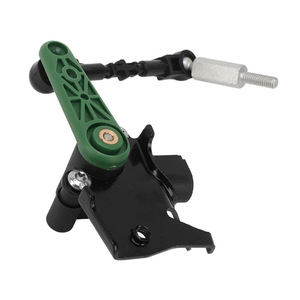
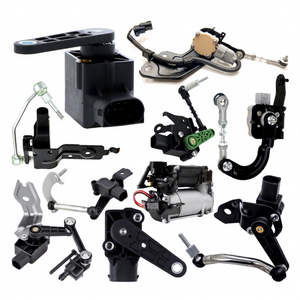
Explore our high-reliability OEM height sensors, engineered for auto-leveling headlights, Electronically Controlled Air Suspension (ECAS), and heavy-duty chassis angle management.
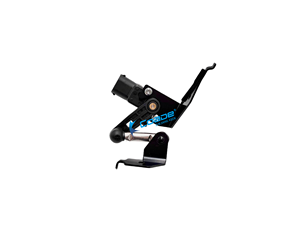
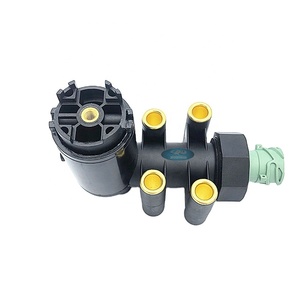
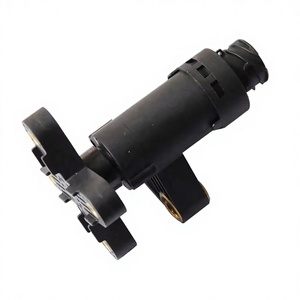
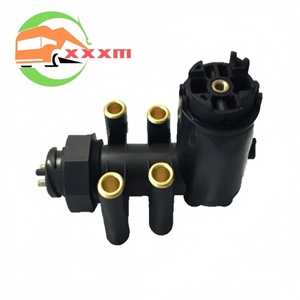
Understanding the hardware evolution, signal processing protocols, and environmental standards defining modern automotive and industrial ride-height transducers.
Traditional automotive height sensors relied on resistive potentiometers. However, mechanical wear, track degradation, and moisture ingress created significant long-term failure rates in fleet operations. Modern CE certified height sensors manufactured by industry leaders utilize solid-state, non-contact 3D Hall-effect integrated circuits (ASICs).
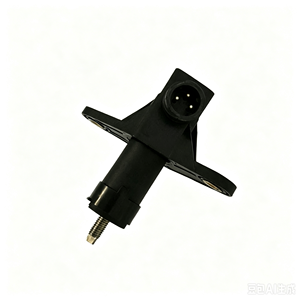
By measuring the angular orientation of a localized magnetic field across an articulated lever arm, Hall-effect height sensors eliminate internal physical contact, delivering virtually unlimited mechanical cycle life and superior thermal stability across operating ranges from -40°C to +125°C.

Validated to EN 61000-6-2 (Industrial Immunity) and EN 61000-6-4 (Emissions), alongside automotive directive E-Mark (ECE R10) testing to resist heavy RF interference and transient voltage spikes.
Fully encapsulated electronics inside glass-filled PBT housings withstand high-pressure steam cleaning, salt spray (ASTM B117), chemical immersion, and subzero mud buildup.
Seamlessly interfaces with Electronically Controlled Air Suspension (ECAS) ECUs to dynamic-level chassis height in real-time, reducing aerodynamic drag and optimizing axle load distribution.
Key strategic insights for Tier-1 buyers, system integrators, and procurement directors navigating supply chains from 2025 to 2030.

Procurement strategies for height sensing transducers are undergoing a fundamental shift. Original Equipment Manufacturers (OEMs) are transitioning away from uncalibrated discrete component sourcing toward fully integrated, pre-certified sensor assemblies.
Engineers and purchasing managers now prioritize vendor partners capable of supplying turnkey solutions—combining sensor bodies, customized linkage geometries, and verified firmware profiles to reduce line-side assembly time and field warranty risk.
| Evaluation Parameter | Legacy Analog Height Sensors | Modern CE Certified CAN Sensors | Procurement Advantage |
|---|---|---|---|
| Signal Integrity | Susceptible to ground loops & voltage drops | Digital CANbus (SAE J1939 / CANopen) / PWM | Zero signal degradation over long wire runs |
| Environmental Sealing | IP65 to IP67 (Gasket sealed) | IP68 / IP69K (Overmolded potting compound) | Eliminates high-pressure washdown failures |
| Diagnostic Capabilities | None (Static voltage output) | Self-diagnostics, fault code reporting (DTCs) | Enables predictive fleet maintenance |
| Regulatory Compliance | Basic basic automotive standards | CE, E-Mark (ECE R10), RoHS, REACH, ISO 16750 | Streamlines global homologation for OEMs |
| Calibration Effort | Manual mechanical adjustment on assembly line | Soft-calibration via CAN tools / EEPROM offset | Reduces OEM factory assembly time by up to 40% |
How autonomous platforms, electrification, and multi-sensor fusion are transforming height sensing application requirements.
Commercial EVs and electric buses rely on active height sensors to prevent battery pack bottoming-out. Sensors continuously adjust ride height depending on payload weight and terrain severity, preserving structural battery integrity.
As EU regulations mandate advanced Adaptive Driving Beam (ADB) systems, front and rear height sensors must provide millisecond-level dynamic pitching data to prevent oncoming driver glare during acceleration and braking.
Next-generation height sensing architectures combine 3D Hall angular sensors with 6-axis Inertial Measurement Units (IMUs). This hybrid sensor fusion isolates chassis roll/pitch dynamics from road vibration for autonomous off-highway equipment.
Delivering heavy-duty machine control electronics, custom software integration, and certified quality since 1991.
Founded in 1991, our global organization specializes in designing, validating, and manufacturing compact, rugged electronic controls, signal converters, and specialized height/level transducers for working machines.
With primary R&D and manufacturing facilities certified under ISO 9001:2015, software engineering offices in Canada and Finland, and global logistics nodes in the USA and Australia, we deliver robust OEM controls backed by deep technical expertise.
 ISO 9001:2015 Certified Manufacturing
 CAN in Automation (CiA) Official Member
 SAE International Standards Partner
Direct answers to common questions regarding height sensor selection, CE validation, and OEM integration.
CE certification for automotive and industrial height sensors requires rigorous Electromagnetic Compatibility (EMC) testing in accordance with EN 61000-6-2 (industrial immunity) and EN 61000-6-4 (emissions), as well as Automotive Directive 2004/104/EC or ECE Regulation 10 (E-Mark). Tests include electrostatic discharge (ESD) immunity, radiated RF field immunity, fast transient/burst testing, surge immunity, and conducted RF emissions. Additionally, physical safety, RoHS 3 compliance, and REACH environmental substance standards must be documented in the technical construction file.
Our CE certified height sensors utilize 3D magnetic angle-sensing ASICs paired with internal temperature compensation algorithms. The micro-controller continuously monitors internal die temperature and applies real-time polynomial correction curves to compensate for thermal drift across the -40°C to +125°C range. Mechanical tolerance stack-up is mitigated through precision ball-joint linkages and soft-calibration features via CANbus tools or EEPROM programming during factory assembly.
We supply height transducers supporting analog ratiometric outputs (0.5V to 4.5V), Pulse-Width Modulation (PWM), and digital CANbus interfaces. For commercial trucks, buses, and off-highway machinery, our controllers natively support SAE J1939 and CANopen protocol standards. Custom PGN/SPN configurations, CAN FD protocols, and custom telemetry baud rates (250 kbps, 500 kbps, 1 Mbps) are available for OEM integration projects.
Standard catalog part numbers are available with short lead times for engineering prototyping and validation. For OEM custom hardware modifications (such as specialized linkage arm lengths, custom wiring harness drop-outs, or specific connector types such as Deutsch DT, AMP Superseal, or Molex), baseline MOQs typically start at 500 to 1,000 units per annual production release. Custom rapid prototyping and initial sample delivery can typically be achieved within 4 to 8 weeks following engineering sign-off.
Our height sensors feature IP69K ingress protection ratings achieved via complete vacuum-potting encapsulation with high-grade polyurethane or epoxy resins, coupled with double-lip viton rotary shaft seals. This prevents moisture ingress even when subjected to close-range 100 bar (1,450 psi) high-pressure steam cleaning at temperatures up to +80°C, ensuring reliable operation in agricultural, mining, and winter highway de-icing applications.
Yes. We maintain an extensive cross-reference database covering commercial truck, bus, and passenger vehicle height sensors (including replacement units for Mercedes-Benz, BMW, Audi, Volvo, MAN, DAF, and Scania pneumatic suspension systems). Our application engineering team can verify mounting hole patterns, lever arm dimensions, operating voltage, and electrical pinouts to ensure complete plug-and-play drop-in compatibility.
Speak directly with our senior application engineering team to request technical datasheets, CAD 3D models, sample evaluation units, or custom OEM quotations.