- ISO 9001:2015 Certified Manufacturing — Canada
- Engineering Support Since 1991
Explore our industrial-grade, CE-certified speed sensors, signal converters, power management units, and digital I/O controllers engineered for high vibration and extreme thermal operation.
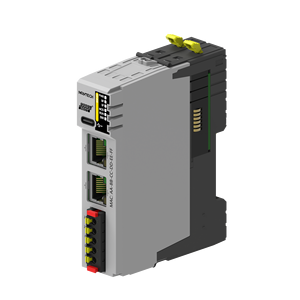
Industrial-grade PLC display and power conversion interface module engineered for harsh advertising displays, speed feedback loops, and illuminated backlight arrays.
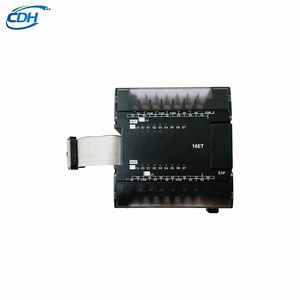
High-speed 16-channel solid state switching module optimized for Omron industrial systems, processing pulse frequency outputs and motion velocity controls.
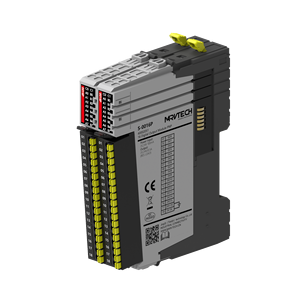
Rugged MT20S series individual channel input/output fieldbus gateway bridging rotational speed sensor signals to Ethernet/IP and Profinet industrial PCs.
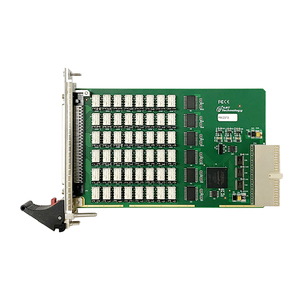
Supporting custom C++/C# development environments with exceptional inductive load handling, ideal for heavy equipment hydraulic speed feedback.
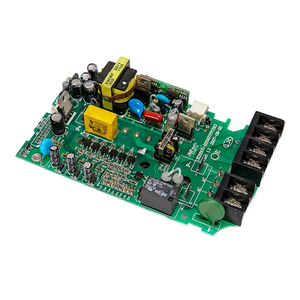
Multi-voltage (12V to 3kV isolation) MPPT hybrid energy conversion PCB engineered to power off-grid speed monitoring telemetry units and sensor arrays.
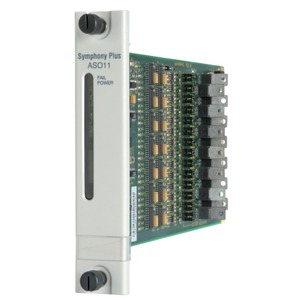
Ultra-precise process signal interface module converting variable frequency sensor pulses into high-resolution analog voltage/current outputs for turbine control.
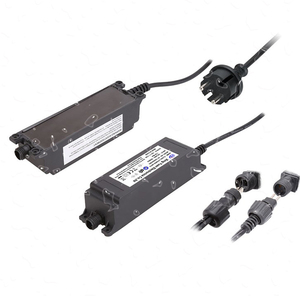
CE-certified outdoor power unit providing regulated 5V to 36V DC bus excitation for magnetic pickups, Hall effect sensors, and external encoder networks.
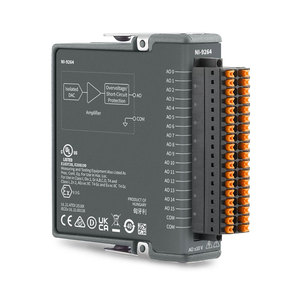
High-density 16-channel simultaneous voltage output module handling up to 25 kS/s/ch sampling rate for advanced speed sensor simulation and bench testing.
A comprehensive examination of speed sensing physics, electromagnetic compliance (EMC), CAN bus protocol translation, and international OEM procurement criteria.
In off-highway machinery, industrial turbines, automotive powertrains, and hydraulic pumps, precise rotational velocity measurement is vital for closed-loop control. Procurement and systems engineers must evaluate two primary transducer technologies: Hall-Effect Speed Sensors and Variable Reluctance (VR) Magnetic Pickups.
Hall-Effect Sensors: Utilize semiconductor elements that generate a digital square-wave voltage when exposed to a moving ferrous gear tooth or magnetic target. Key benefits include zero-speed detection capabilities (down to 0 Hz), constant output amplitude regardless of target speed, and low susceptibility to electromagnetic hum.
Variable Reluctance (VR) Sensors: Passive electromagnetic transducers consisting of a wire coil wrapped around a permanent magnetic core. As gear teeth pass the sensor tip, magnetic flux shifts induce an AC sine wave. VR sensors excel in extreme thermal environments (exceeding +200°C) but require intelligent signal conditioning modules to convert variable-amplitude low-frequency sine waves into clean digital pulses.
A "CE Mark" on speed sensing components and associated signal conversion modules is not merely a label; it represents rigorous adherence to European Union directives governing electromagnetic compatibility and operational safety. Key compliance standards include:
Compare operational characteristics across major industrial speed sensing and signal converting platforms to streamline OEM component specification.
| Architecture Type | Primary Sensor Element | Output Frequency Range | Protocol / Interface | CE Directives Applied | Ideal Application |
|---|---|---|---|---|---|
| Hall-Effect Single Channel | Differential Hall IC | 0 Hz – 20 kHz | Open-Collector / NPN / PNP | EN 61000-6-2, IP68 | Engine flywheel RPM, transmission output |
| Quadrature Dual-Channel | Dual Hall Element Array | 0 Hz – 15 kHz | Direction (Phase Shift) + Frequency | ISO 13849 (PLd), CE EMC | Hydraulic motor speed & direction tracking |
| Variable Reluctance (VR) | Coil & Magnet Core | 10 Hz – 25 kHz | AC Sine Wave (Voltage scales with speed) | Passive Device (CE Compliant) | High-temperature turbine rotors (>180°C) |
| CANbus Speed Processor | Microprocessor Signal Conditioning | Input: 0.1 Hz – 50 kHz | SAE J1939 / CANopen / CAN FD | EN 61000-6-4, ISO 14982 | Multi-sensor wheel speed integration to ISOBUS |
| Smart Ethernet Gateway Module | ARM Cortex-M4 Fieldbus MCU | High-Speed Packet Conversion | Profinet / Ethernet/IP / Modbus TCP | CE, Class 2 Safety, RoHS | Factory automation PLCs & SCADA speed loops |
Our CE-certified speed sensing and control architectures power mission-critical equipment operating under severe shock, thermal expansion, and electrical noise.
Heavy wheel loaders, excavators, and haul trucks rely on ruggedized quadrature speed sensors for anti-slip traction control, dynamic braking, and hydrostatic transmission timing.

Reciprocating gas engines, wind turbine gearboxes, and hydro-electric generators utilize high-frequency magnetic pickups connected to CANbus speed monitoring units to prevent catastrophic overspeed conditions.

Precision crankshaft and camshaft speed sensing modules feeding real-time digital pulse streams into SAE J1939 Electronic Control Units (ECUs) for optimized fuel injection timing and emission reduction.

Key technological shifts reshaping how procurement managers, OEM engineers, and system integrators source speed measurement hardware over the next decade.
Traditional speed sensors output raw analog pulses requiring extensive shielded copper cabling to central PLCs. Sourcing trends show a rapid shift toward Smart Speed Sensors with integrated CAN FD (Flexible Data-Rate) microcontrollers. These micro-nodes process pulse counts locally, perform temperature compensation, and broadcast error-checked RPM data directly across the vehicle bus, reducing wiring weight by up to 40%.
With the rise of autonomous mining equipment and automated agricultural tractors, procurement departments are mandated to source speed sensors with built-in self-diagnostics. Future speed sensors feature dual-die redundancy (two independent Hall ICs inside a single housing) to provide continuous cross-checking, satisfying SIL2/PLd safety requirements for steer-by-wire systems.
Global supply chain volatility has made bespoke, single-vendor sensor designs high-risk for OEMs. Sourcing managers now prioritize manufacturers offering modular sensor architecture—where housing threads (M12, M16, 3/4-16 UNF), shaft lengths, cable terminations (Deutsch DT, Amphenol), and electrical output logic can be rapidly reconfigured without requiring complete recertification.
As commercial vehicles transition to high-voltage battery power (400V–800V architectures), high-frequency switching noise from SiC/GaN inverters severely corrupts traditional magnetic sensor signals. Sourcing specifications now mandate speed sensors qualified to extreme EMC levels (100 V/m field strength immunity) with isolated signal grounds to ensure reliable operation alongside high-voltage buslines.
Combining over three decades of Canadian engineering precision, Finnish firmware expertise, and global technical support to deliver unmatched harsh-environment control solutions.
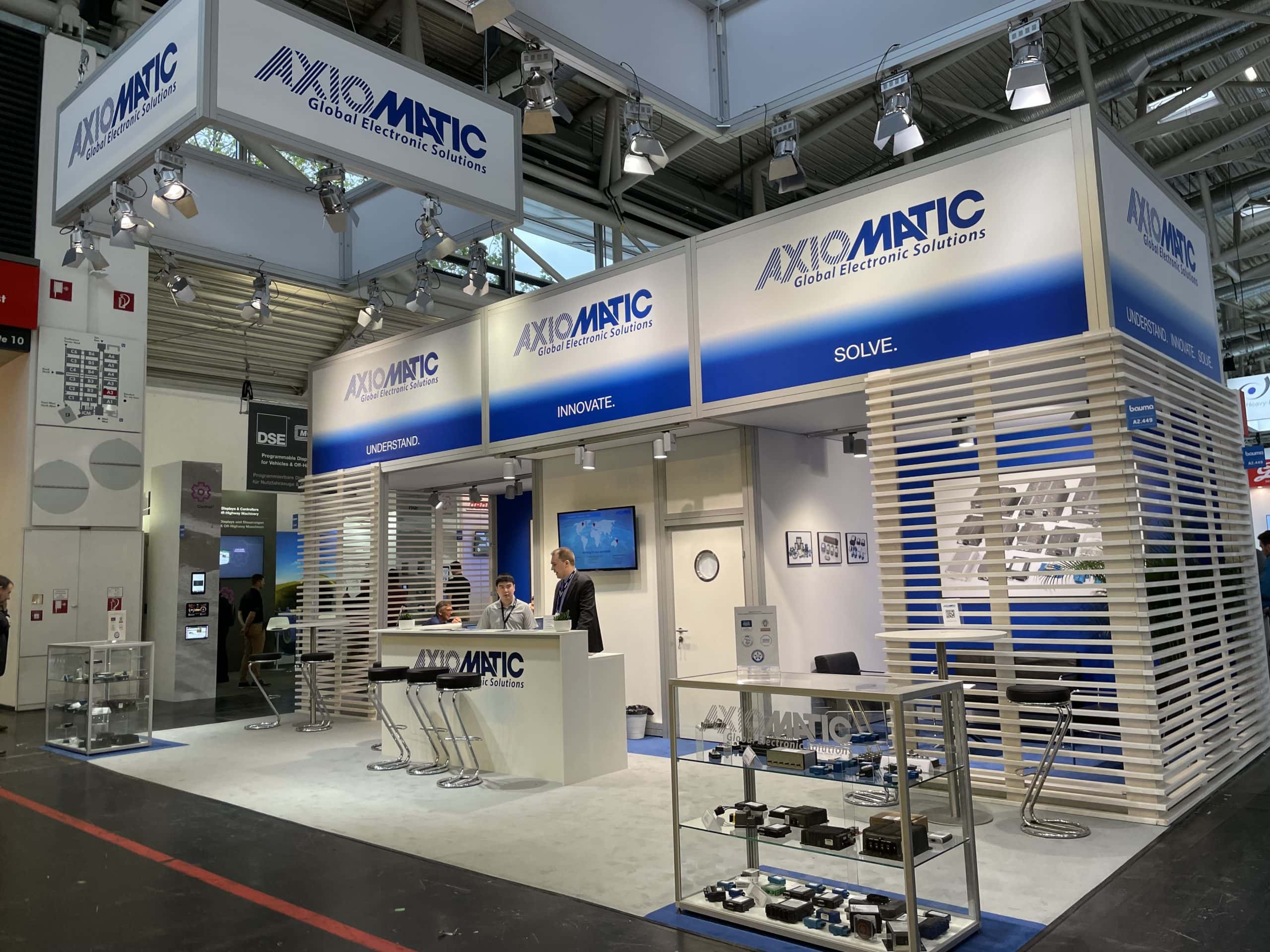
Since 1991, Axiomatic Technologies Corporation has engineered compact, ultra-rugged electronic control units, pulse converters, hydraulic valve drivers, and speed sensing modules. Operating out of an ISO 9001:2015 certified manufacturing plant in Canada, our facility integrates fully automated SMT assembly lines, environmental potting, and in-house automated optical inspection (AOI).
Our firmware design centers in Canada and Finland maintain active memberships in CAN in Automation (CiA) and SAE International, ensuring our standard and OEM customized products remain at the absolute cutting edge of CANbus, J1939, and CANopen protocols.
 ISO 9001:2015 Certified
 CiA Member
 SAE International
Direct technical answers addressing CE testing, air-gap tolerances, CAN protocol matching, custom OEM prototyping, and global logistics.
All Axiomatic speed measurement modules and signal converters carry full CE marking compliance under the EU Electromagnetic Compatibility (EMC) Directive 2014/30/EU. Testing protocols encompass EN 61000-6-2 (Industrial Immunity) and EN 61000-6-4 (Industrial Emissions). Where applicable, modules mounted on mobile machinery comply with ISO 14982 (Agricultural and forestry machinery EMC) and E-mark regulations for on-highway commercial vehicles.
Hall-Effect sensors generally allow for a wider operational air gap (typically 0.5 mm to 2.5 mm depending on target gear pitch) while maintaining a consistent 0-to-Vcc digital pulse amplitude. VR sensors, conversely, produce an AC output signal whose amplitude drops dramatically as the air gap increases or as rotation slows down. For zero-speed sensing or wide mechanical tolerances, Hall-Effect or active magnetic pickups are highly recommended.
Yes. Axiomatic manufactures specialized I/O pulse-input modules designed to accept raw frequency, PWM, or quadrature signals from 1 to 4 independent speed sensors. The module's internal microcontroller calculates real-time RPM, wheel speed, or flow rate, and broadcasts formatted SAE J1939 Parameter Group Numbers (PGNs) or CANopen Emergency/PDO frames onto the vehicle network at configurable transmit rates.
Because Axiomatic retains full in-house control over hardware layout and firmware design in Canada and Finland, standard catalogue variants can be factory-programmed to customer specs within 2 to 4 weeks. For complete custom OEM control development (including custom PCB footprints, special harness potting, and SIL qualification), prototype samples are typically delivered in 8 to 14 weeks.
Modules are engineered inside heavy-duty aluminum or glass-filled nylon housings, fully potted with high-grade polyurethane or epoxy resins. They are validated to withstand 10g continuous vibration (20 Hz – 2000 Hz) per MIL-STD-202G, random mechanical shock up to 50g, and maintain an IP67/IP69K rating against high-pressure steam cleaning.
Primary manufacturing and global R&D are operated out of our ISO 9001:2015 facility in Mississauga, Ontario, Canada. Customer application support, system architecture consulting, and regional sales are backed by direct technical offices in the USA (Michigan), Europe (Finland), and Australia (Queensland).
Connect with our senior application engineering team to review your schematics, request datasheets, or scope custom CE-certified speed sensing hardware.
Contact Us