- ISO 9001:2015 Certified Manufacturing — Canada
- Engineering Support Since 1991
Explore our high-performance power conditioning, I/O signal suppression, and fieldbus power conversion hardware optimized for harsh operating environments.
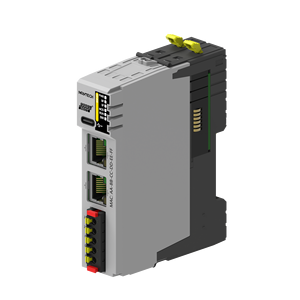
Heavy-duty power management module engineered for regulated DC output, high surge immunity, and continuous industrial display operations.
Contact Us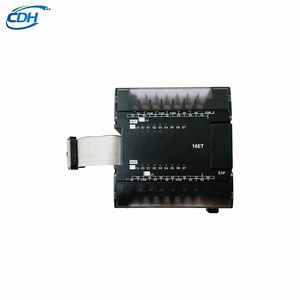
High-speed solid-state switching module featuring built-in transient voltage suppression for robust automation control networks.
Contact Us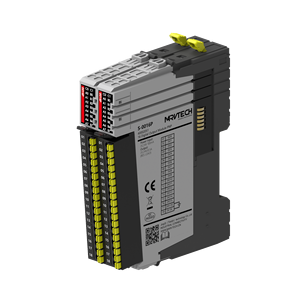
Rugged MT20S series fieldbus interface module providing channel-to-channel isolation and integrated surge protection against bus spikes.
Contact Us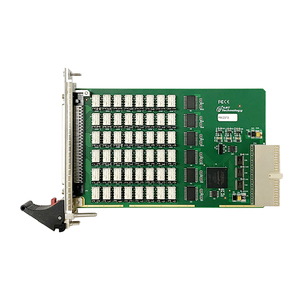
Programmable industrial controller board with superior load capability and heavy transient suppression arrays for custom OEM machines.
Contact Us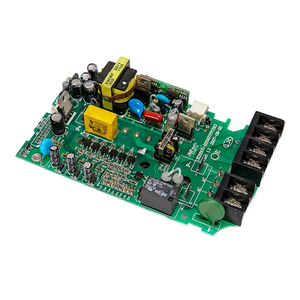
Advanced power conditioning circuit board featuring 3kV surge isolation, active MPPT tracking, and hybrid battery storage safety controls.
Contact Us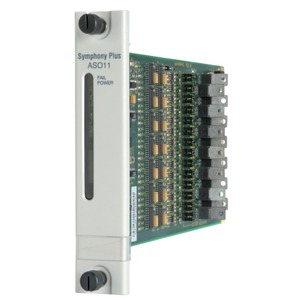
Ultra-accurate process signal generator shielded with multi-stage surge arresters to eliminate ground loops and inductive interference.
Contact Us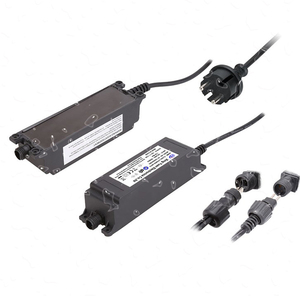
Fully encapsulated IP67 outdoor power unit compliant with CE Class 2 safety standards, featuring integral overvoltage protection.
Contact Us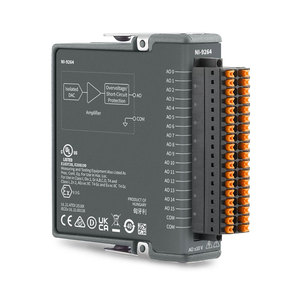
High-density 25 kS/s/ch output module designed with industrial channel isolation and high-energy surge clamping networks.
Contact UsIn modern industrial automation, power distribution networks, off-highway mobile equipment, and renewable energy installations, transient overvoltage events pose a systemic risk to operational continuity. Voltage surges—caused by atmospheric lightning discharges, heavy inductive load switching, utility grid switching, and electrostatic discharge (ESD)—can induce extreme voltage spikes reaching thousands of volts within microsecond intervals. Without robust, verified suppression hardware, these electrical disturbances lead to semiconductor breakdown, data corruption across CAN bus / Ethernet networks, catastrophic equipment destruction, and unplanned plant downtime costing millions annually.
As leading CE Certified Surge Protector Suppliers & Exporters, our mission centers on engineering high-reliability transient overvoltage protection devices (SPDs) and power modules that satisfy stringent international standards, including IEC/EN 61643-11 (Low-voltage surge protective devices for power systems) and IEC/EN 61643-21 (Surge protective devices connected to telecommunications and signaling networks). Achieving genuine CE compliance demands comprehensive Electromagnetic Compatibility (EMC) testing under the 2014/30/EU Directive and Low Voltage Directive (LVD 2014/35/EU), ensuring that every unit deployed in the field offers predictable clamping behavior, thermal safety disconnection, and zero degradation under nominal operating stress.
Industrial surge protective devices rely on sophisticated internal circuit architectures to manage massive surge currents while maintaining minimal residual clamping voltage ($U_p$). High-performance SPDs integrate a multi-stage hybrid protection topology that leverages the unique response characteristics of distinct surge suppression components:
Engineered to discharge massive lightning impulse currents ($I_{imp}$ up to 25kA 10/350µs) directly to earth ground. GDTs provide exceptionally high insulation resistance under normal conditions and safely divert high-energy transients.
Offers rapid nanosecond-level switching with high energy absorption capacity ($I_n$ 8/20µs). Integrated with internal thermal cutoffs to prevent thermal runaway under sustained overvoltage conditions.
Delivers ultra-fast picosecond response times ($<1\text{ ps}$) for sensitive microcontrollers, CAN bus transceivers, and analog I/O channels, clamping voltage spikes to tight safety thresholds.
Selecting the appropriate CE certified surge protective device requires matching the installation zone (LPZ - Lightning Protection Zone) with the electrical stress parameters of the operating environment.
| SPD Class / Type | Test Waveform | Typical Installation Zone | Primary Component Technology | Key Performance Metric |
|---|---|---|---|---|
| Type 1 (Class I) | 10/350 µs Direct Lightning | Main Service Entrance / LPZ 0 to 1 | Spark Gap / High-Cap GDT | Direct Lightning Current ($I_{imp} \ge 12.5\text{kA}$) |
| Type 2 (Class II) | 8/20 µs Switching Surge | Sub-distribution Panels / LPZ 1 to 2 | Heavy-Duty MOV Array | Nominal Discharge Current ($I_n \ge 20\text{kA}$) |
| Type 3 (Class III) | 1.2/50 µs & 8/20 µs Hybrid | Terminal Equipment / LPZ 2 to 3 | TVS Diode + Hybrid Filter | Low Clamping Voltage ($U_p < 1.5\text{kV}$) |
| Signal & Data Line SPD | 8/20 µs & High-Frequency | CANbus, RS-485, Ethernet IP | Ultra-Low Cap TVS / GDT Array | High Bandwidth / Low Insertion Loss |
| DC Power / Solar SPD | Up to 1500V DC Dynamic | PV Inverters, UPS, Microgrids | Y-Configuration Thermally Fused MOV | No Arcing on Short-Circuit DC Current |
As global supply chains navigate technological shifts towards industrial automation, electrification, and green energy transition, B2B procurement managers and system engineering directors are altering their sourcing strategies for critical electrical protection components. Key trends redefining global procurement include:
Procurement teams increasingly favor modular DIN-rail and chassis-mount surge suppressors equipped with visual status indicators and remote signal contacts (NO/NC). Pluggable cartridges allow maintenance crews to replace degraded suppression modules without disconnecting power lines, minimizing operational mean-time-to-repair (MTTR).
Modern industrial IoT (IIoT) architectures require intelligent surge protectors capable of monitoring surge events, leakage currents, and MOV health status in real time. Forward-looking exporters are integrating CANbus (SAE J1939, CANopen) and Modbus communications directly into surge modules for predictive maintenance asset management.
With the expansion of battery energy storage systems (BESS), commercial EV charging infrastructure, and high-voltage off-highway electric machinery, global buyers are prioritizing suppliers with verified 1000V DC to 1500V DC CE-certified surge protection expertise tailored to wide-bandgap (SiC/GaN) power electronics.
Heavy machinery deployed in mining, agriculture, forestry, and marine environments demands IP67/IP69K sealing against moisture, dust, and corrosive salt spray. Sourcing managers are shifting procurement toward suppliers with ISO-certified potting capabilities and validated shock/vibration performance.
The surge protection landscape is evolving rapidly beyond passive voltage clamping components. Advanced research and engineering focus on overcoming the physical limitations of legacy suppression technologies to deliver ultra-resilient protection for high-frequency industrial platforms.
Legacy MOVs risk thermal runaway when subjected to repetitive, low-amplitude transient overvoltages. Next-generation CE certified suppressors incorporate patented arc-extinguishing thermal fuses and flame-retardant ceramic barriers that isolate failing components within milliseconds, completely eliminating fire hazards.
High-speed industrial buses such as Single Pair Ethernet (SPE), Automotive Ethernet (100Base-T1), and CAN FD operate at elevated frequencies sensitive to parasitic line capacitance. Advanced silicon-avalanche TVS diode arrays now deliver surge clamping while maintaining stray capacitance below $0.5\text{ pF}$, ensuring zero packet loss or signal attenuation.
Combining high-density switching regulators with active EMI filtering and transient voltage clamping in a single potted module provides robust line protection and clean DC rails for sensitive engine ECUs, sensor clusters, and hydraulic valve drivers operating in sub-zero or high-temperature environments.



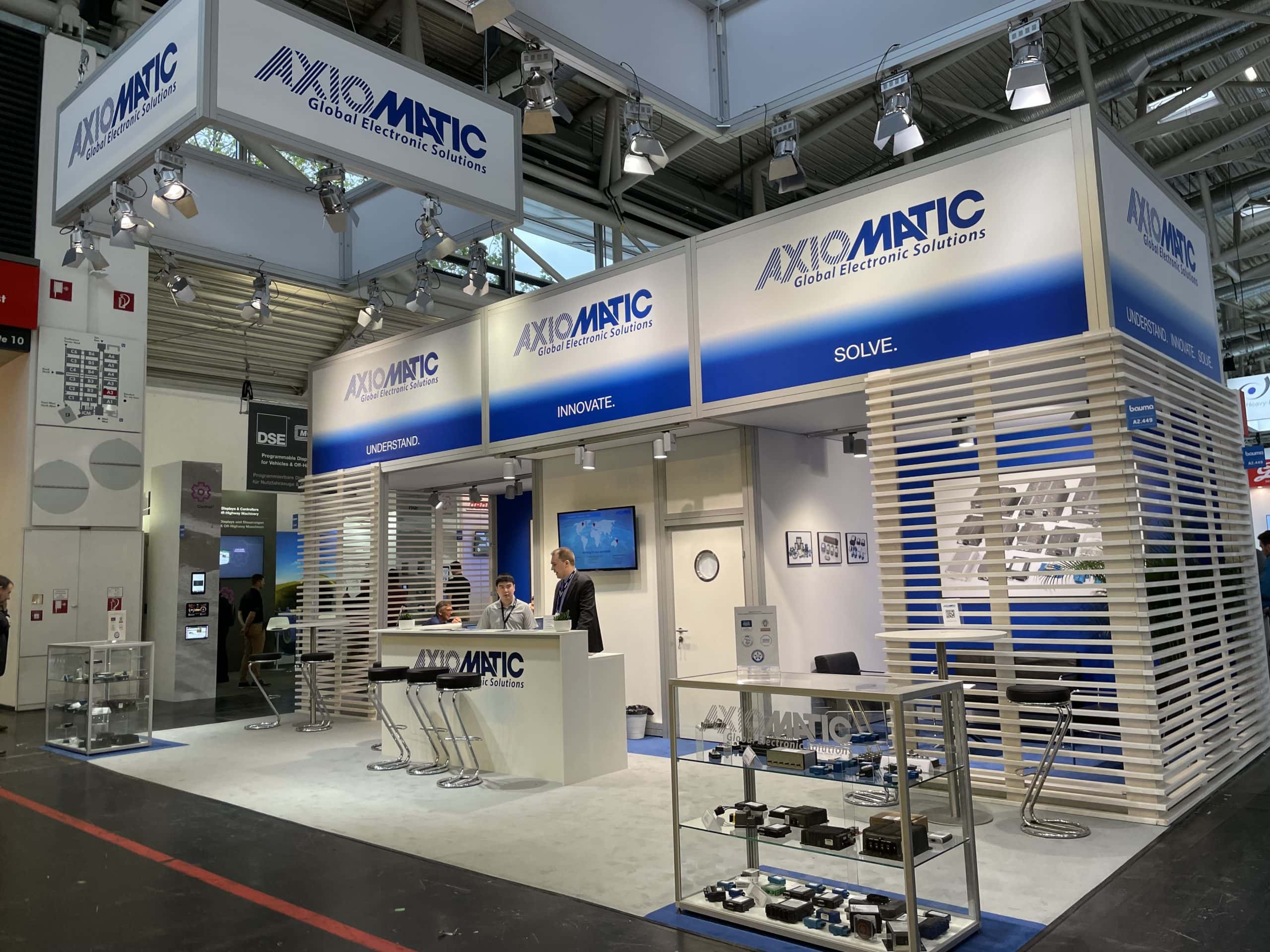
Since 1991, Axiomatic Technologies Corporation has engineered robust electronic control units, hydraulic valve drivers, DC-DC converters, CAN bus protocol gateways, and custom surge protective devices tailored for working machines and industrial applications. Operating under a rigorously audited ISO 9001:2015 certified quality management system in Canada, Axiomatic integrates hardware design, embedded firmware development, and automated environmental validation under one umbrella.
 ISO 9001:2015 Certified
 CiA Member
 SAE International Member
When sourcing surge protection devices and industrial power modules for critical infrastructure projects, procurement authorities must audit prospective manufacturers against rigorous engineering benchmarks:
Verify that CE compliance is backed by full laboratory test reports from accredited notified bodies (ILAC/TÜV/CE) adhering to IEC 61643-11/21 specifications, including impulse durability and thermal disconnection verification.
Top-tier exporters maintain strict component traceability, utilizing premium MOV disks and high-energy TVS diodes sourced exclusively from qualified semiconductor foundries to prevent counterfeit risks.
Choose suppliers with in-house hardware engineering teams capable of modifying clamping thresholds, pinout configurations, enclosure potting, and network interfaces to match your exact OEM build specs.
Leading manufacturers execute automated 100% end-of-line electrical parameter verification, high-voltage breakdown testing, and leak detection prior to global shipment export.
Expert answers to common engineering, compliance, and procurement inquiries regarding industrial surge suppressors.
CE marking for surge protectors mandates compliance with the EMC Directive (2014/30/EU) and Low Voltage Directive (2014/35/EU). Testing must conform to IEC/EN 61643-11 for AC/DC power line SPDs (evaluating parameter characteristics such as $I_{imp}$, $I_n$, $U_p$, and thermal stability) and IEC/EN 61643-21 for signal, data, and telecommunication network protection devices.
The 8/20 µs waveform represents indirect, switching-induced, or distant lightning surges, characterized by an 8-microsecond rise time and 20-microsecond decay to half-peak. The 10/350 µs waveform simulates a severe direct lightning strike carrying significantly higher total charge and energy. Type 1 SPDs are tested with 10/350 µs impulses ($I_{imp}$), whereas Type 2 SPDs are evaluated with 8/20 µs impulses ($I_n$).
The Voltage Protection Level ($U_p$) must be lower than the impulse withstand voltage ($U_w$) of the downstream equipment it protects. A general engineering rule of thumb is to select an SPD where $U_p$ is at least 20% below the damage threshold of connected microcontrollers, PLCs, or fieldbus transceivers, typically maintaining clamping under 1.5 kV for 230V systems.
Yes. Axiomatic specializes in custom controller and protection designs engineered specifically for vehicle bus architectures. CAN bus surge modules utilize low-capacitance TVS suppression arrays paired with common-mode chokes to clamp differential transient spikes without disrupting CAN FD or SAE J1939 differential signaling speeds.
Standard catalogue power modules and protective hardware are routinely stocked or manufactured on short 2-to-4 week build schedules. For custom OEM developments (spanning PCB modifications, specific connector harnesses, or custom enclosure potting), lead times typically range from 6 to 12 weeks including engineering verification and validation testing.
Metal Oxide Varistors (MOVs) naturally degrade after absorbing repeated transient surges, causing elevated leakage current. Without an integrated thermal disconnector, degraded MOVs can enter thermal runaway, leading to overheating, smoke, or fire hazards. CE standards require fail-safe thermal disconnection mechanisms that isolate the MOV from line voltage upon end-of-life.
Consult with Axiomatic's application engineering team today. Send us your system schematic, operating voltage parameters, and environmental targets for expert product selection or custom design development.