- ISO 9001:2015 Certified Manufacturing — Canada
- Engineering Support Since 1991
Explore our high-reliability Electronic Control Units, CANbus protocol converters, solid-state output modules, and industrial power controllers built for harsh operating environments.
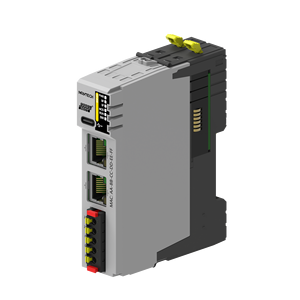
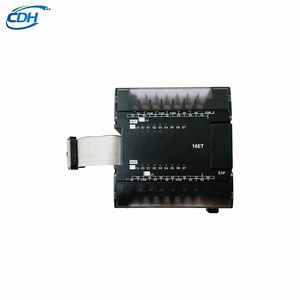
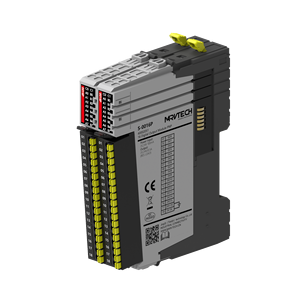
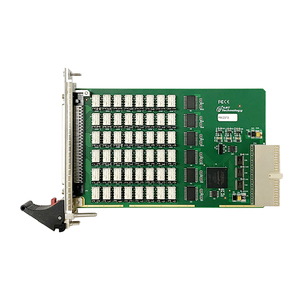
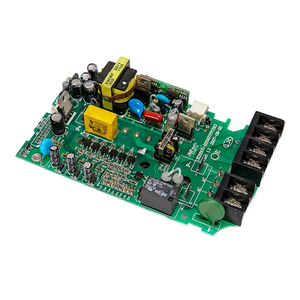
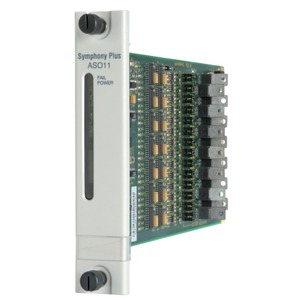
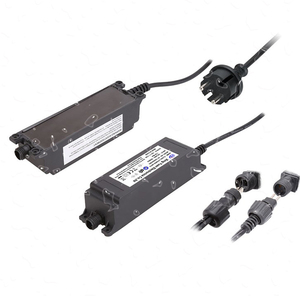
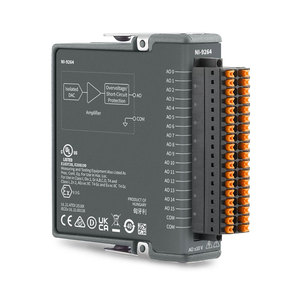
In the contemporary landscape of industrial automation, commercial vehicle electrification, and off-highway heavy machinery, the Electronic Control Unit (ECU) serves as the central neural nexus. As a premier China ECU Controller Factory & Exporter, our engineering division integrates over three decades of advanced embedded design control with state-of-the-art SMT (Surface Mount Technology) manufacturing facilities. We specialize in producing high-reliability controllers, SAE J1939 CANbus gateways, hydraulic valve drivers, and distributed I/O controllers engineered specifically for mission-critical operating environments where operational failure is not an option.
Modern machine architectures are undergoing a paradigm shift from centralized PLC racks to highly distributed, ruggedized fieldbus nodes. To empower global Original Equipment Manufacturers (OEMs) and system integrators, our hardware platforms provide seamless interoperability with legacy protocols while pioneering high-speed networks including CAN FD (Flexible Data-rate), Automotive Ethernet, PROFINET, and Modbus TCP.
Our manufacturing complex maintains rigorous ISO 9001:2015 quality management standards. From low-level bare-metal firmware development in C/C++ to graphical application configuration environments, our in-house R&D teams provide end-to-end OEM customization capabilities. Key structural engineering pillars include:
Advanced CAN protocol converters engineered to bridge engine telemetry, hydraulic actuators, and telematics networks without adding latency or packet drops.
Closed-loop PWM current control drivers featuring configurable dither frequency and acceleration ramps for high-precision hydraulic valve positioning.
Configurable multi-channel analog/digital input and output modules supporting high-density voltage, 4-20mA current, and quadrature encoder signals.
To assist OEM procurement managers and senior control engineers in evaluating controller specs, the matrix below highlights key operational parameters across our primary hardware control families.
| Controller Series | Primary Network Interfaces | I/O Configuration Range | Ingress Rating | Typical OEM Application Context |
|---|---|---|---|---|
| Distributed Fieldbus Modules (MT20S) | EtherNet/IP, PROFINET, Modbus TCP | 8-32 Ch (PNP/NPN, Analog 16-Bit) | IP20 / IP65 Modular | Automated production lines, industrial PLC expansion racks |
| Rugged Off-Highway ECU Controllers | Dual CAN 2.0B, SAE J1939, CANopen | 12-48 Ch (PWM Valve Driver, Frequency) | IP67 / IP69K Sealed | Mining machinery, excavators, agricultural tractors |
| High-Speed Discrete IO Controllers | Automotive Ethernet, RS-485, C++/C# SDK | 16-64 Ch Solid-State High-Load Output | IP54 Aluminum Chassis | Specialty vehicle controls, automated solar trackers |
| Isolated Power & Converter Units | Modbus RTU, Isolated Analog Output | Class 2 Regulated Power Rails (5-36V) | IP67 Waterproof | Outdoor telematics nodes, solar micro-inverters, UPS hybrid |
As off-highway machinery and commercial fleets incorporate sophisticated LiDAR, vision systems, and edge telemetry, legacy CAN bus throughput (500 kbps) becomes a transmission bottleneck. Sourcing trends indicate a rapid transition toward CAN FD (up to 5 Mbps) and Automotive Ethernet (100BASE-T1). Forward-thinking OEMs are requesting hybrid gateway controllers capable of routing low-latency real-time control traffic alongside high-bandwidth sensor payloads.
Safety compliance is no longer an afterthought—it is a mandatory engineering requirement. Sourcing trends highlight a growing demand for dual-core lockstep microcontrollers and SIL2/PLd safety-rated hardware architecture. Modern ECU controllers must feature dedicated watchdog safety processors, redundant input sensing, and hardware fault diagnostic feedback loops to satisfy strict international machinery safety directives.
Global procurement teams are shifting away from passive controller boards toward intelligent edge nodes. Modern ECU units are expected to execute predictive diagnostic algorithms locally. By monitoring solenoid coil resistance, temperature drift, and power rail fluctuations in real time, these controllers transmit early fault warnings over telemetry gateways, dramatically reducing unscheduled machine downtime.
In response to global semiconductor volatility, tier-1 OEMs are prioritizing ECU suppliers in China who utilize multi-sourced component topologies and modular PCB designs. By standardizing basic physical footprints while allowing factory firmware programming, machine builders achieve rapid product iteration without undergoing total hardware re-qualification.
When choosing a manufacturing partner for custom ECU hardware in China, technical verification and quality management rigor are paramount. Below are detailed answers to primary technical and sourcing queries from international engineering directors.
Unlike commercial electronics assembly plants, our facility is engineered exclusively for heavy-duty, harsh-environment machine controls. We maintain complete design control in-house—including hardware schematic design, multi-layer PCB layout, embedded firmware development, and automated environmental testing chambers. Our manufacturing line includes automated optical inspection (AOI), in-circuit testing (ICT), conformal coating applicators, and full thermal-shock burn-in chambers, ensuring 100% traceably tested products before shipment.
Yes. We offer complete OEM custom development services covering hardware design, low-level board support packages (BSP), and high-level application firmware in C, C++, or C#. Furthermore, for catalog controller units, we provide factory pre-configuration services—flashing your custom J1939 message maps, baud rates, and pin configurations prior to shipping so units are 100% plug-and-play upon assembly line arrival.
Our off-highway and industrial controllers feature heavy-gauge aluminum cast or ruggedized polycarbonate enclosures coupled with high-density polyurethane encapsulation. Internal components are anchored using automotive-grade SMT solder processes and anti-vibration potting compounds validated to ISO 16750 standards for mechanical shock and random vibration. Thermal designs incorporate direct mechanical heat-sinking paths to allow full continuous power operation up to +85°C ambient temperatures.
Our controllers support standard industrial and mobile machine protocols, including SAE J1939, CANopen, CAN FD, Modbus RTU/TCP, EtherNet/IP, PROFINET, RS-485, and RS-232. We also engineer specialized protocol translator gateways that allow legacy serial or Modbus devices to communicate directly with modern CANbus or Ethernet vehicle networks.
For standard catalog hardware pre-programmed with custom firmware parameter maps, prototype lead time is typically 1 to 2 weeks. For ground-up custom OEM hardware development (custom PCB layout, housing mold tooling, and full EMC validation), prototype delivery ranges from 6 to 10 weeks. Mass production runs are supported by our high-capacity SMT lines with standard batch delivery within 4 to 6 weeks.
Our manufacturing plant operates under a strictly audited ISO 9001:2015 quality management system. Our product lines meet CE mark requirements, FCC Part 15 regulations, and RoHS/REACH environmental compliance. Furthermore, our engineering team adheres to CAN in Automation (CiA) standards and SAE International specifications for mobile machine electronics.
Submit your machine control architecture, pinout requirements, and target environment specs to our engineering team today for immediate technical review and competitive OEM quotation.
Contact Us