- ISO 9001:2015 Certified Manufacturing — Canada
- Engineering Support Since 1991
Explore our export-grade power converters, fieldbus IO modules, and programmable industrial controllers. Engineered for extreme operating environments and multi-protocol network interoperability.
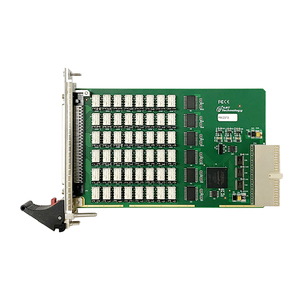
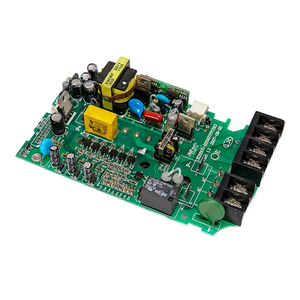
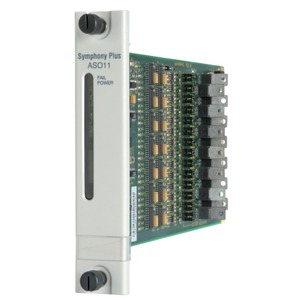
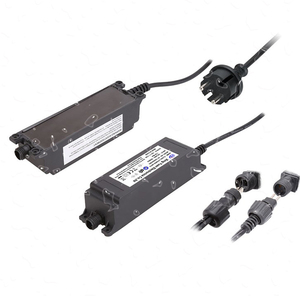
Combining Canadian embedded engineering heritage with China's high-capacity ISO 9001:2015 manufacturing ecosystem. Delivering rugged electronic control units (ECUs) and power conversion systems since 1991.
Unlike standard trading exporters, our internal design authority manages complete product life-cycles. From C++/C# embedded code execution to multi-layer PCB layout, we maintain absolute design ownership.
Every power module and signal gateway undergoes 100% full-load thermal burn-in, HALT/HASS stress testing, thermal cycling (-40°C to +85°C), and severe shock/vibration verification according to SAE standards.
Seamlessly bridge off-highway machine networks. Our power conversion units integrate smoothly with SAE J1939, CANopen, Modbus RTU/TCP, Automotive Ethernet, RS-485, and high-speed CAN FD backbones.
An in-depth analysis for procurement directors, hardware architects, and system integration engineers on evaluating power topologies, thermal dissipation, and fieldbus reliability.
In modern industrial automation, mobile off-highway vehicles, and renewable energy storage, the stability of DC-DC and AC-DC power conversion modules dictates overall system mean time between failures (MTBF). Power converters act as the critical energetic interface between raw, unconditioned supply rails—such as heavy machinery alternator outputs or battery arrays—and sensitive digital processing units including microcontrollers, DSPs, and fieldbus transceivers.
High-efficiency conversion requires non-linear, switch-mode topologies over linear regulation to minimize thermal waste. Standard industrial architectures utilize isolated forward, flyback, phase-shifted full-bridge (PSFB), and LLC resonant converter topologies. Isolated configurations are paramount when severe ground loops, high common-mode noise, or dangerous high-voltage differentials exist between input voltage rails (e.g., 300V-1000V DC solar strings) and low-voltage control circuits (5V, 12V, or 24V DC logic levels).
Technical Insight: Galvanic isolation utilizing planar transformers rated for multi-kilovolt breakdown prevents high-voltage transients from destroying expensive master PLCs or standard Ethernet/IP and PROFINET communication nodes. Galvanic barriers are essential in heavy-duty Class 2 outdoor power units and vehicle power systems.
Off-highway equipment operated in agricultural, mining, and construction sites exposes electronic hardware to hostile electrical environments. Key operational threats include load dump transients (caused by sudden battery disconnection while charging), inductive kickback from hydraulic solenoid coils, and electrostatic discharge (ESD) during manual maintenance.
A robust power converter manufacturing process incorporates multi-stage input filtering networks. These networks include metal oxide varistors (MOVs), transient voltage suppression (TVS) diodes, common-mode chokes, and Pi (π) LC filtering topologies. Compliance with international standards such as ISO 7637-2 (electrical disturbances on road vehicles), CISPR 25, and EN 61000-6-4 ensures that electrical emissions generated by high-frequency switching semiconductors (such as SiC MOSFETs or GaN switches) do not contaminate surrounding CAN bus networks or analog instrumentation signals.
Thermal management is the single most critical factor influencing electronic lifespan. According to Arrhenius' equation, the failure rate of a semiconductor component doubles for every 10°C rise in operating temperature above its design limit. China's top export-grade factories utilize advanced thermal engineering techniques to mitigate hot-spots in high-power converters (ranging from 500W to 2kW hybrid solar MPPT systems).
| Converter Class | Target Input Voltage | Isolation Voltage | Primary Fieldbus / Interface | Ideal Application |
|---|---|---|---|---|
| Isolated Fieldbus Converter | 9V - 36V DC | 1,500V AC / 3k VDC | CANopen, SAE J1939, Ethernet/IP | Off-Highway ECUs, Hydraulic Valve Control |
| High-Power Hybrid MPPT | 120V - 1000V DC | 3,000V AC Galvanic | Modbus TCP / RS-485 / C++ API | Micro Solar Arrays, Hybrid UPS Power Systems |
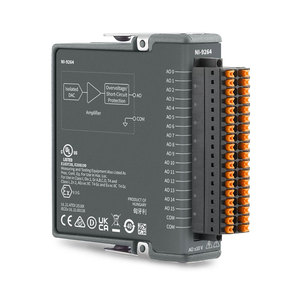
| Precision Analog Power Module | 24V DC ±10% | 500V RMS Functional | ±10V / 4-20mA Output (e.g. NI-9264) | Closed-Loop Process Automation & Testing |
| Waterproof Class 2 Power Unit | 90V - 264V AC | 3,750V AC Extended | Fixed DC (5V - 36V Output) | Outdoor LED Backlighting, Harsh Environment Signage |
How wide-bandgap semiconductors, software-defined hardware, and centralized machine architectures are transforming global supply chains.
Silicon Carbide (SiC) and Gallium Nitride (GaN) power transistors are replacing traditional Silicon MOSFETs. Buyers are prioritizing factories capable of incorporating GaN topologies, which offer 3x faster switching speeds, reduced magnetics sizes, and efficiency ratings exceeding 96%.
Next-generation power modules no longer act as passive components. Procurement specs increasingly require internal microcontrollers that log operating temperatures, input ripple variations, total duty cycles, and broadcast predictive maintenance alerts over CAN FD or Automotive Ethernet.
To guard against global component shortages, Tier-1 buyers demand modular converter designs supporting alternate pin-compatible IC platforms. Modern export facilities provide factory-configurable firmware and pinouts to eliminate lead-time bottlenecks.
Our rugged power conversion platforms and fieldbus modules are deployed globally in heavy machinery, energy management, and engine diagnostic systems.

Isolated high-voltage DC-DC converters for battery energy storage systems (BESS) and microgrid controllers.

Temperature monitoring units, thermocouple amplifiers, and electronic control units for marine and industrial gensets.

SAE J1939 hydraulic valve drivers, slope sensors, and ruggedized power modules built for excavators and harvesters.

Class 2 certified power supplies and Automotive Ethernet protocol converters for modern heavy-duty truck fleets.
Everything you need to know about custom OEM development, certifications, minimum order quantities, and international logistics.
Our standard controllers and intelligent power units interface directly with SAE J1939 and CANopen networks. Selective advanced models offer native integration for Modbus RTU/TCP, PROFINET, Ethernet/IP, Automotive Ethernet (100BASE-T1), RS-485, RS-232, and high-speed CAN FD. Custom protocol conversion gateways are also available to bridge legacy systems.
Yes. Products designed for harsh environments are validated against severe shock and vibration standards, wide operating temperature envelopes (-40°C to +85°C ambient), and feature fully sealed potting rated up to IP67/IP69K. Electrical protection includes reverse battery polarity, output overvoltage, continuous short-circuit, and load dump compliance according to ISO standards.
Absolutely. We provide end-to-end engineering and manufacturing services including custom circuit schematic creation, PCB layout optimization, customized mechanical enclosure design, and firmware development (supporting C++, C#, and IEC 61131-3 PLC programming standards). Factory pre-configuration of catalogue models is also provided to streamline your assembly line integration.
Our manufacturing operations strictly adhere to ISO 9001:2015 quality management systems. Individual product series maintain compliance certifications including CE, Class 2 Power Unit ratings, UL/cUL recognition, RoHS 3 environmental standards, and REACH compliance. Full certificate documentation packages are supplied with export orders.
Every production lot undergoes 100% Automated Optical Inspection (AOI), in-circuit testing (ICT), and automated functional end-of-line testing under load. Key power components are sourced directly from verified original manufacturers, with complete lot trace codes assigned to every shipped unit for total quality transparency.
Download our full industrial product catalog, request detailed datasheet specifications, or speak directly with an application engineer to review your electrical system requirements.