- ISO 9001:2015 Certified Manufacturing — Canada
- Engineering Support Since 1991
High-precision galvanic isolation, protocol converters, and power conversion units certified for industrial deployment.
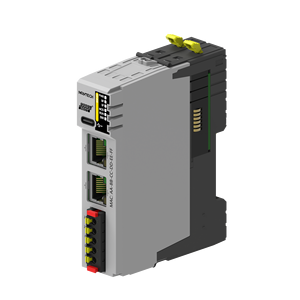
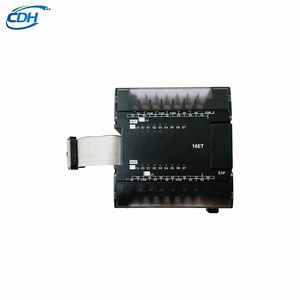
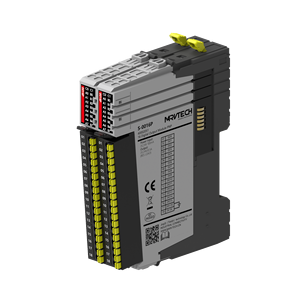
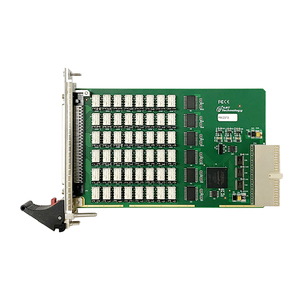
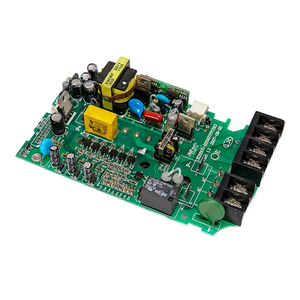
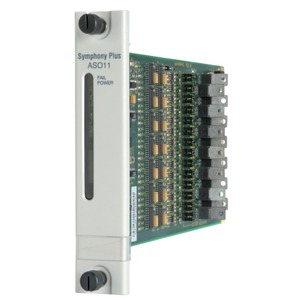
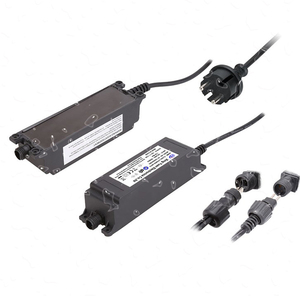
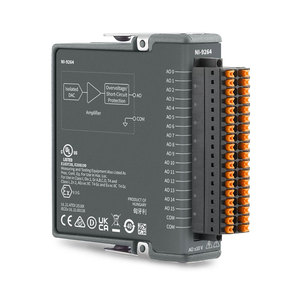
In modern process automation, industrial manufacturing, off-highway machinery, and smart grid energy systems, ground loops, common-mode transient noise, and high-voltage surges pose severe risks to signal integrity and sensitive Programmable Logic Controllers (PLCs). Identifying the right China signal isolator manufacturers & suppliers requires evaluating more than just nominal unit costs; it demands a deep audit of electromagnetic compatibility (EMC) engineering, galvanic isolation architecture, MTBF metrics, and global compliance standards.
Complete 3-way isolation (input, output, and power supply) prevents electrical noise cross-talk and protects control units against high-voltage surges up to 3750V AC.
Precision-matched internal components ensure temperature coefficients lower than 50 ppm/°C across broad operating ranges (-40°C to +85°C).
Seamless signal bridge for bridging legacy RS-485 / Modbus networks with Automotive Ethernet, CAN FD, and industrial Ethernet architectures.
When selecting signal isolation barriers and industrial remote I/O modules, systems integrators must align electrical specifications with the operating environment and network topology. The table below outlines technical parameter boundaries for common isolation and control applications.
| Module Category | Isolation Rating | Primary Interface / Signals | Key Performance Metrics | Target Industrial Application |
|---|---|---|---|---|
| Analog Signal Isolators | 2.5kV AC – 3.75kV AC | 0-20mA, 4-20mA, 0-10V DC | < 0.1% F.S. Accuracy, < 5ms Response | Process Control, Petrochemical, Water Treatment |
| Discrete Fieldbus I/O | 1.5kV DC Channel-to-Bus | Ethernet/IP, Profinet, Modbus TCP | 16-Channel High Load, PNP/NPN Auto-Detect | Automotive Assembly, Factory Automation Lines |
| Hydraulic Valve Drivers | Fully Sealed (IP67/IP69K) | SAE J1939, CANopen, PWM Out | Configurable Dither Current, Dual Closed-Loop | Off-Highway Construction & Mining Machinery |
| Embedded Power Converters | Up to 3kV DC Isolation | 12V/24V/120V/220V Rail Conversion | High Efficiency (>92%), Integrated MPPT | Energy Storage Systems (ESS), Solar Hybrid Microgrids |
| High-Speed Voltage Modules | Ch-to-Ch & Ch-to-Earth | ±10V Simultaneous, 25 kS/s/ch | 16-Bit Resolution, Zero Cross-talk | Precision Test Benches, Aerospace Data Acquisition |
The industrial signal conditioning landscape is undergoing structural technology transitions driven by Smart Manufacturing, Industry 4.0, and the electrification of mobile machinery. B2B procurement managers and system engineering leads must account for several major market trends:
Traditional passive signal isolators are rapidly being replaced by intelligent modules equipped with internal microcontrollers capable of reporting line-fault diagnostics, open-circuit conditions, signal clipping, and module thermal stress over industrial Ethernet networks. Procurement shifts favor vendors offering IO-Link and CAN-enabled isolation modules.
Control cabinet real estate comes at a premium. The market is shifting toward ultra-slim 6.2mm DIN-rail housings and multi-channel fieldbus blocks (such as 16-channel and 32-channel discrete modules) that minimize space requirements while maintaining thermal dissipation standards.
As heavy equipment transitions to hybrid and fully electric drivetrains, signal isolators and DC-DC power converters must comply with combined industrial automation standards and rugged vehicle standards (such as SAE J1939, ISO 13766, and severe shock/vibration tolerance).
Our manufacturing and engineering network combines rigorous R&D with ISO 9001:2015 certified production processes. We deliver rugged, reliable electronic control units, protocol gateways, and signal isolators engineered to perform under extreme operational stress.
Complete ownership over hardware schematics, firmware architectures, and enclosure tooling ensures long-term product lifecycle availability (10+ years continuity).
Every design undergoes rigorous environmental screening, including thermal shock (-40°C to +85°C), EMC immunity, surge suppression validation, and HALT/HASS testing.
From factory-pre-programmed firmware parameters to full custom PCB layout engineering, we short-circuit OEM development timelines from concept to mass production.
A signal isolator specifically breaks electrical connection paths (ground loops) between input, output, and power circuits using galvanic isolation barriers (optical, capacitive, or magnetic transformers). A signal conditioner modifies the signal itself—such as amplifying low-mV signals, linearizing thermocouple sensor curves, or converting 0-10V inputs to 4-20mA outputs. Most modern industrial modules perform both isolation and conditioning simultaneously.
2-way isolation isolates input from output, but shares power common with either the input or output side. This is sufficient when using isolated power supplies. 3-way isolation completely isolates input, output, and power supplies independently. 3-way isolation is strongly recommended for complex DCS/PLC installations to guarantee that power line transients cannot breach signal channels.
Our controller and signal gateway product lines interface with standard industrial protocols including SAE J1939, CANopen, CAN FD, Modbus RTU/TCP, Profinet, Ethernet/IP, and Automotive Ethernet (100BASE-T1), alongside standard analog and digital I/O channels.
Yes. Our off-highway and ruggedized industrial modules are sealed to IP67 / IP69K ingress standards and feature encapsulated electronics designed to withstand extended operating temperatures (-40°C to +85°C), high-vibration profiles (up to 10G continuous), and heavy electromagnetic interference (EMI).
For standard catalogue products modified with factory-programmed firmware, sample dispatch occurs within 1 to 2 weeks. Full custom OEM developments (spanning custom hardware schematics, PCB layout, enclosure design, and certification testing) typically take 8 to 14 weeks depending on customer validation milestones.
Speak directly with our application engineering team to match product specifications, review topology schematics, or request bulk procurement pricing.