- ISO 9001:2015 Certified Manufacturing — Canada
- Engineering Support Since 1991
Directly engineered for severe environments, high data throughput, and seamless integration with SAE J1939, CANopen, Ethernet/IP, and PROFINET industrial networks.
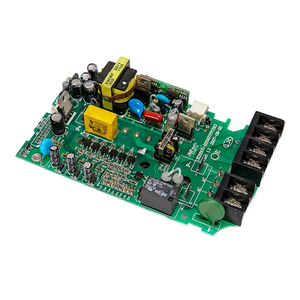
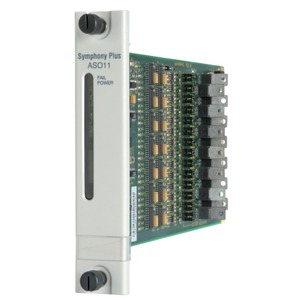
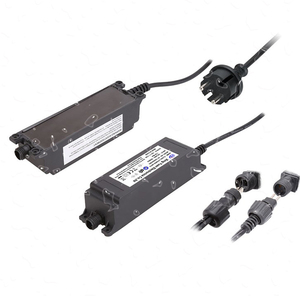
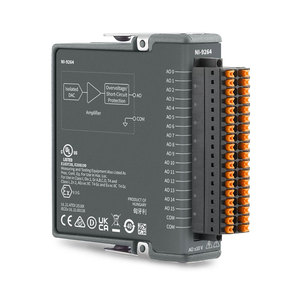
Operating at the intersection of automotive-grade telemetry, off-highway machinery automation, and power conversion electronics under strict ISO 9001:2015 quality frameworks.
An in-depth analysis of hardware architecture, edge-computing paradigms, multi-protocol translation, and cybersecurity compliance in modern OEM vehicle telematics systems.
Modern telematics units have evolved far beyond basic GPS trackers. As a leading manufacturer based in China, our engineering methodologies center on embedding high-performance 32-bit ARM Cortex microcontrollers capable of executing real-time edge processing. By processing raw sensor data directly on the device—such as high-frequency CAN bus logging, driver behavior analysis, and predictive load diagnostics—telematics control units significantly compress data payloads before wireless transmission via 5G NR, LTE-M, or NB-IoT networks.
This localized processing capability lowers cloud latency, reduces cellular bandwidth overhead by up to 60%, and ensures mission-critical telemetry remains uninterrupted even during temporary network blackouts through onboard EEPROM and Flash buffer storage.
Commercial vehicles, heavy excavators, agricultural tractors, and stationary power generators operate on diverse industrial protocol standards. China's top telematics factories prioritize multi-channel protocol gateway integration into a single TCU hardware enclosure.
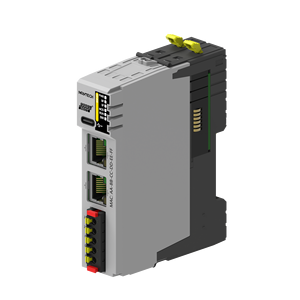
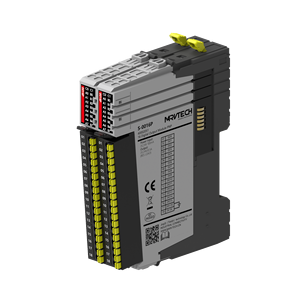
Our flagship Telematics Gateway architecture integrates dual isolated CAN ports supporting SAE J1939, CANopen, and CAN FD alongside legacy RS-485 Modbus RTU and Automotive Ethernet interfaces. This enables simultaneous ingestion of engine ECU telemetry, hydraulic pressure sensor outputs, battery management system (BMS) status, and external payload scale data, translating them seamlessly into unified MQTT or HTTP/HTTPS JSON payloads for cloud enterprise management platforms.
| Engineering Dimension | Legacy Telematics Trackers | Next-Gen Edge Telematics Units (Our Factory Standard) |
|---|---|---|
| Main Microprocessor | 8-bit / 16-bit Low-cost MCU | 32-bit Dual-Core ARM Cortex-M7 / Cortex-A7 (Up to 800 MHz) |
| Vehicle Bus Support | Single OBD-II (K-Line / CAN) | Dual/Quad Isolated CAN FD, SAE J1939, LIN, Automotive Ethernet, RS485 |
| Edge Analytics & AI | None (Raw Data Pass-Through) | Local FFT Vibration Analytics, Predictive Fault Detection, Geofencing Logic |
| Cellular Telemetry | 2G / 3G Legacy Networks | Global 5G NR Sub-6GHz, 4G LTE Cat-4 / Cat-M1 / NB-IoT with 2G Fallback |
| Ingress & Thermal Protection | IP54 Plastic Casing (-20°C to +60°C) | IP67 / IP69K Sealed Aluminum Enclosure (-40°C to +85°C Operating) |
| Cybersecurity Protocol | Unencrypted Plaintext / Basic TLS | Hardware Security Module (HSM), ISO/SAE 21434, AES-256 Encrypted Storage |
Key strategic purchasing insights for Tier-1 automotive buyers, machinery OEMs, and system integrators navigating supply chain efficiency and product lifecycle stability.
Global OEMs are increasingly partnering directly with Chinese original design manufacturers (ODMs) that provide full DFM feedback prior to silicon taping or PCB layout finalization. Selecting a factory with automated SMT placement, automated optical inspection (AOI), and selective soldering capabilities ensures zero-defect production scales across thousands of TCU batches annually.
Component obsolescence is a critical risk in automotive procurement. Leading telematics suppliers offer guaranteed 10-to-15-year silicon lifecycle support, utilizing AEC-Q100 certified automotive-grade microcontrollers and power management ICs (PMICs) to prevent costly redesign cycles mid-production.
Export-ready telematics control units manufactured in China must hold comprehensive international certifications including CE, FCC, E-Mark (ECE R10), RoHS, and PTCRB carrier certifications. This guarantees seamless compliance and fast-track deployment across North American, European, and Asia-Pacific markets.
Anticipating technological shifts in software-defined vehicles (SDVs), satellite connectivity, and AI-assisted predictive analytics in commercial telematics platforms.
For mining operations in remote deserts, maritime transport, and deep forestry logging, terrestrial cellular coverage falls short. The future of telematics hardware lies in Non-Terrestrial Network (NTN) satellite integration. Future TCUs engineered by top Chinese manufacturers will incorporate dual-mode 3GPP Release 17 NTN satellite modems alongside traditional cellular connectivity. This guarantees true 100% global connectivity, automatically switching to satellite messaging for emergency SOS, vehicle tracking, and essential health metrics when out of cellular range.
Moving beyond historical fault logging, upcoming telematics units will execute lightweight artificial intelligence and tinyML algorithms on board. By continuously sampling sensor data at kilohertz frequencies, the TCU can identify subtle harmonic vibration anomalies in hydraulic pumps, thermal runaway signals in EV battery packs, or micro-slippage in commercial transmissions—alerting fleet managers to perform maintenance weeks before catastrophic field breakdown occurs.
As vehicle electronics migrate toward centralized zonal architectures, the telematics unit acts as the secure edge gateway for entire vehicle fleets. Dual-bank Flash memory architecture enables secure, differential Firmware-Over-The-Air (FOTA) and Software-Over-The-Air (SOTA) updates without taking vehicles offline. Security remains paramount, requiring asymmetric RSA/ECC cryptographic keys to authenticate every single incoming update package.
Autonomous agricultural equipment and smart construction excavators require centimeter-level spatial positioning. Next-generation telematics control hardware integrates multi-constellation GNSS engines (GPS, GLONASS, BeiDou, Galileo) with real-time kinematic (RTK) corrections and cellular Vehicle-to-Everything (C-V2X) communication, facilitating synchronized autonomous fleet coordination in heavy industrial environments.
Over three decades of specialized hardware, firmware, and systemic integration for off-highway, on-highway, and energy management applications.
From initial circuit schematic design and 4-to-10 layer PCB layout to customized IP69K die-cast aluminum enclosure tooling, our R&D engineering team provides end-to-end development tailored precisely to your application requirements.
Every telematics unit variant undergoes severe in-house environmental screening, including thermal shock (-40°C to +125°C), 50G mechanical shock testing, random vibration profiling (ISO 16750-3), salt spray corrosion, and full EMC/EMI immunity testing.
We actively participate in international standard bodies including CiA (CAN in Automation) and SAE International. Manufacturing operates strictly under an ISO 9001:2015 quality management system with full component traceability.
Addressing key technical inquiries from system engineers, procurement managers, and commercial fleet operators.
Consult directly with our experienced engineering and procurement team. Receive detailed datasheets, custom feasibility assessments, and direct factory pricing within 24 hours.