- ISO 9001:2015 Certified Manufacturing — Canada
- Engineering Support Since 1991
In modern off-highway heavy machinery—ranging from compact hydraulic excavators to 90-ton mining diggers—the Electronic Control Unit (ECU) acts as the central nervous system. As global original equipment manufacturers (OEMs) transition toward high-density electro-hydraulic proportional control, hybrid powertrains, and autonomous grade-control systems, sourcing certified wholesale excavator controllers from verified Chinese manufacturing hubs has evolved into a strategic supply chain imperativeness.
This technical white paper evaluates the manufacturing standards, protocol architectures, electromagnetic compatibility (EMC) parameters, and hardware topologies essential for specifying excavator main controllers, hydraulic valve drivers, protocol gateways, and power distribution modules. Grounded in ISO 9001:2015 manufacturing rigor and SAE J1939 standardization, this guide empowers procurement leads and systems engineering teams to mitigate field failures, optimize Total Cost of Ownership (TCO), and establish robust OEM/ODM vendor partnerships.
Select from our catalogue of field-proven, OEM-certified Electronic Control Units, fieldbus I/O modules, power drivers, and specialized micro-controllers.
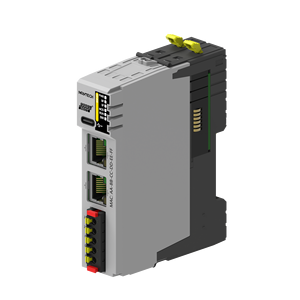
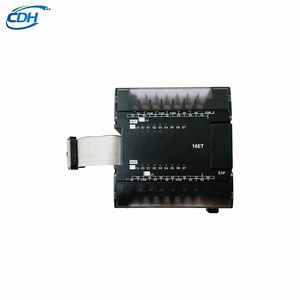
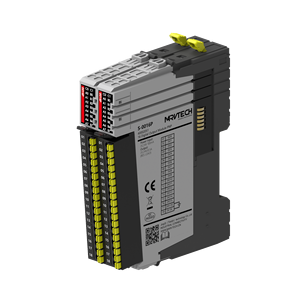
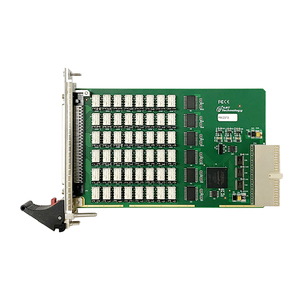
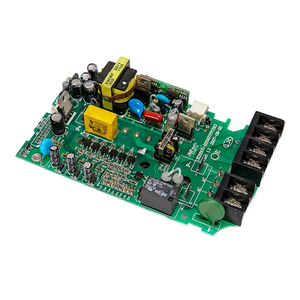
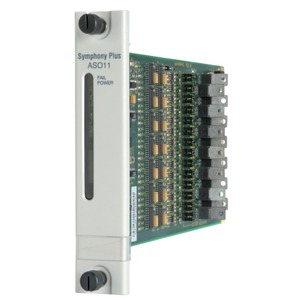
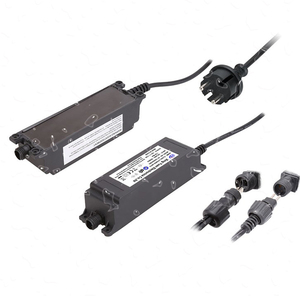
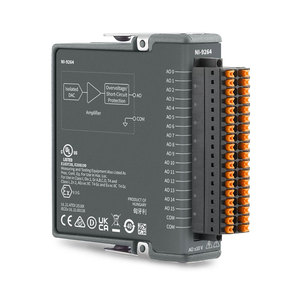
Since 1991, our partner manufacturing facilities have led the engineering and production of rugged electronic control systems, hydraulic valve drivers, DC-DC converters, inclinometers, and protocol gateways. Operating under an ISO 9001:2015 certified quality management system, our production architecture combines Canadian and European R&D design control with high-volume, cost-optimized Chinese assembly operations.
Every controller undergoes rigorous thermal shock (-40°C to +105°C), 50g mechanical shock testing, ISO 13766 EMC validation for earthmoving machinery, and ingress protection verification up to IP69K against high-pressure washdowns.
As active members of CAN in Automation (CiA) and SAE International, our engineering teams build compliant SAE J1939, CANopen, CAN FD, and ISOBUS controllers equipped with custom dither configuration and diagnostic fault logging.
From initial schematic design and PCB layout to customized firmware compilation (supporting CODESYS, C++, C#), we provide factory-programmed variants that minimize integration timelines for global machine builders.
 ISO 9001:2015 Certified
Quality Assurance Systems
 CiA Member
CANopen & J1939 Standards
 SAE International
Off-Highway Electronics Standards
Excavator control architectures have progressed from basic relay-based switching boxes to multi-core, distributed electronic control units capable of managing multi-pump hydraulic flow sharing, anti-stall engine governance, boom float control, and GPS-guided grade accuracy. Sourcing managers must evaluate four core hardware pillars when selecting a manufacturing partner in China:
Modern excavator main controllers utilize 32-bit ARM Cortex-M7 or dual-core lockstep microcontrollers running deterministic RTOS (such as FreeRTOS or VxWorks). This ensures sub-millisecond task execution for hydraulic pilot valve loops. Hardware watchdogs and flash memory ECC (Error-Correcting Code) guard against code corruption induced by electrical noise during engine cranking or heavy inductive load switching.
Hydraulic excavators rely on proportional solenoid valves to govern main control valve spool position. Superior controllers incorporate closed-loop current feedback drivers with programmable dither frequency (typically 50 Hz to 250 Hz). Dither minimizes mechanical hysteresis and stick-slip motion in spool valves, guaranteeing buttery-smooth joystick modulation for operators.
Excavators operate in environments rich in electrical interference caused by high-amp alternators and starter motors. Controller analog inputs must feature 12-bit or 16-bit ADC resolution, ratiometric 5V sensor supply rails, and differential filtering for pressure transducers, hydraulic oil temperature thermistors, hall-effect angle sensors, and dual-axis inclinometers.
| Spec Parameter | Standard Aftermarket Controller | Heavy-Duty OEM Factory Spec | Advanced Mining/Autonomous Spec |
|---|---|---|---|
| Operating Voltage | 12V / 24V DC (10 - 30V Range) | 9V - 36V DC Continuous (Load Dump Protected) | 9V - 60V DC (Reverse Polarity & ISO 16750-2) |
| Microcontroller Architecture | 8-bit / 16-bit Single Core | 32-bit ARM Cortex-M4/M7 (160MHz) | Dual 32-bit Lockstep Core with Safety MCU |
| CANbus Channels | 1x CAN 2.0B | 2x CAN 2.0B / SAE J1939 | 3x CAN FD / J1939 + Automotive Ethernet |
| Ingress Rating | IP65 (Potted plastic) | IP67 Die-cast Aluminum Enclosure | IP69K Sealed Aluminum with Gore-Tex Vent |
| PWM Output Driver Resolution | 10-bit Open-loop PWM | 12-bit Closed-Loop Current Control (±1mA) | 16-bit Precision Current Feedback + Dither |
| Functional Safety Compliance | None | ISO 13849 PL d / AgPL d | ISO 13849 PL e / IEC 61508 SIL 2/3 |
Driven by global emission mandates (Tier 4 Final / Stage V), excavator electrification, and telematics integration, the procurement landscape for excavator controllers is undergoing significant structural shifts. Procurement officers and engineering leads must align their sourcing strategies with three macro trends:
As mini-excavators shift toward battery-electric power (BEV) and larger machines adopt hybrid flywheel energy recovery, traditional 24V ECUs are giving way to dual-voltage architectures. Modern procurement requires controllers capable of interfacing directly with High-Voltage Battery Management Systems (BMS), inverter drivers, and DC-DC converters via isolated CAN lines.
Excavators are transitioning from manual operation to semi-autonomous digging, 2D/3D tiltrotator guidance, and remote tele-operation. This trend demands controllers with multi-axis MEMS inclinometer integration, high-frequency IMU sensor fusion, and high-bandwidth Automotive Ethernet gateways to transmit 3D terrain maps with zero latency.
Global OEMs are moving away from proprietary, black-box controller supplier lock-ins. Preferred Chinese manufacturing partners provide open hardware platforms supporting IEC 61131-3 programmable software standards (CODESYS), allowing machine builders to write custom hydraulic control algorithms while sourcing affordable, validated hardware in bulk.
To ensure long-term field reliability, top-tier Chinese manufacturers implement stringent automated optical inspection (AOI), X-ray solder testing, and environmental stress screening (ESS) during factory production:
| Field Failure Mode | Root Cause in Harsh Environments | Factory Prevention & OEM Engineering Solution |
|---|---|---|
| Thermal Solder Cracking | Extreme daily temperature swings (-30°C to +85°C) inducing thermal expansion mismatch. | Automated conformal coating, underfill encapsulation, and 100-cycle ESS thermal shock validation. |
| CAN Communication Failure | High inductive spike interference from solenoid coils or ground loop offsets. | Optically isolated CAN transceivers, TVS diode protection arrays, and twisted-pair differential routing. |
| Moisture & Dust Ingress | Seal degradation under high-pressure steam cleaning in construction sites. | Over-molded Deutsch/Amphenol connectors, silicon gasket perimeter seals, and dual hydrophobic vents. |
| Solenoid Output Burnout | Short-circuiting of proportional valve coils under sustained continuous load. | Smart high-side power MOSFETs with automatic current limiting, thermal shutdown, and fault diagnostic reporting over CAN. |
Looking ahead, Chinese controller factories are investing heavily in advanced semiconductor technologies and AI-enabled edge processing. Machine designers should anticipate three pivotal technological evolutions:
Our excavator controllers natively support SAE J1939 and CANopen protocols. Model-specific configurations support CAN FD, Modbus RTU/TCP, Ethernet/IP, Profinet, RS-232, RS-485, and Automotive Ethernet. Protocol gateway modules are also available to seamlessly translate legacy engine signals into modern vehicle CAN networks.
Yes. All units undergo stringent environmental testing including 50g mechanical shock (MIL-STD-810G), extended temperature operation from -40°C to +105°C, random vibration profile testing across 10Hz-2000Hz, and IP67/IP69K water/dust ingress validation. Datasheets outline exact parameters per part number.
Absolutely. We offer complete turnkey OEM/ODM custom development services covering schematic hardware design, custom PCB layout, enclosure tooling, firmware architecture, and ISO 13849 functional safety certification support. Where quick turnaround is required, we can factory-program existing catalogue platforms to match your exact pinouts and software logic.
Our manufacturing facility operates under an ISO 9001:2015 certified quality system. Production lines utilize SMT placement automation, Automated Optical Inspection (AOI), 3D X-ray inspection for BGA chips, 100% In-Circuit Testing (ICT), and 24-hour elevated-temperature burn-in screening prior to shipment.
For catalog product variants, standard sample orders are available within 3 to 7 working days. Bulk OEM production runs typically carry an MOQ of 50 to 100 units depending on customization requirements, with batch lead times ranging between 3 to 5 weeks FOB China.
Partner with a trusted China wholesale excavator controller factory. Contact our application engineering team today to review your machine block diagrams, request sample evaluation units, or obtain custom volume quotes.
Contact Us