- ISO 9001:2015 Certified Manufacturing — Canada
- Engineering Support Since 1991
Explore our factory-direct industrial battery chargers, high-power DC fast charging piles, off-grid solar storage chargers, and external power adapters manufactured to ISO 9001:2015 automotive standards.
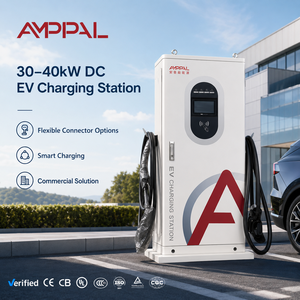
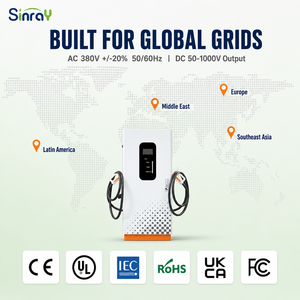
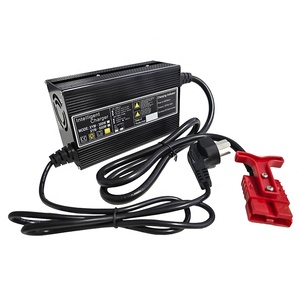
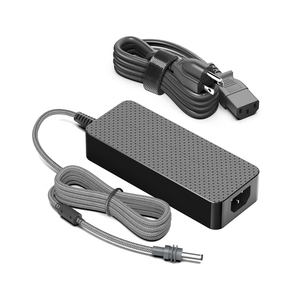
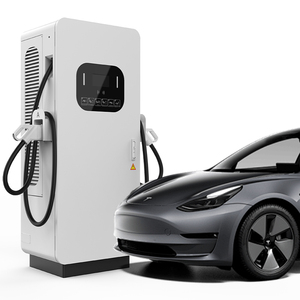
In the rapidly evolving global industrial landscape, power conversion efficiency, thermal resilience, and dynamic communications protocols form the backbone of modern heavy machinery, warehouse automation, energy storage systems (BESS), and electric vehicle (EV) fleets. As a leading China wholesale industrial charger factory & exporter, our engineering philosophy bridges high-frequency power electronics with ruggedization standards tailored for extreme off-highway and industrial operational environments.
Industrial battery chargers and commercial power conversion units are no longer passive power suppliers. Today’s industrial ecosystem demands multi-chemistry adaptive charging algorithms (supporting LiFePO4, Lithium-ion, Lead-Acid, and AGM topologies), active Silicon Carbide (SiC) MOSFET switching topologies, and CANbus/OCPP 1.6J/2.0.1 smart network control interfaces. Whether powering 48V boom lift equipment, warehouse AGVs, or multi-hundred-kilowatt commercial transit fleets, selecting an OEM manufacturing partner requires careful evaluation of total cost of ownership (TCO), electromagnetic compatibility (EMC), and operational durability under wide operating temperature windows (-40°C to +65°C).
Next-generation industrial chargers built with Silicon Carbide (SiC) semiconductor modules achieve switching speeds up to 5x faster than legacy IGBT circuits. This results in a 60% reduction in magnetic component volume, thermal dissipation loss reductions of over 35%, and system power conversion efficiency reaching up to 97.5%. High power density design allows factory operators to install smaller, lighter charger units without sacrificing duty cycle reliability.
Strategic insights for B2B procurement directors, OEM design engineers, and commercial fleet managers navigating the next decade of power management systems.
Commercial and industrial buyers are shifting away from grid-dependent charging towards off-grid and grid-interactive hybrid chargers. Integrating high-capacity Battery Energy Storage Systems (BESS) directly with solar PV arrays and high-power DC fast chargers (60kW to 240kW+) mitigates expensive demand charges and ensures uninterrupted operational continuity for industrial logistics hubs.
Global export compliance demands seamless multi-protocol bridging. Modern industrial chargers must sport dynamic switching matrix systems capable of managing CCS1, CCS2, CHAdeMO, and GB/T standards simultaneously. Combined with cloud-managed OCPP 1.6J/2.0.1 telematics and RFID user authentication, procurement teams avoid protocol lock-in across international distribution networks.
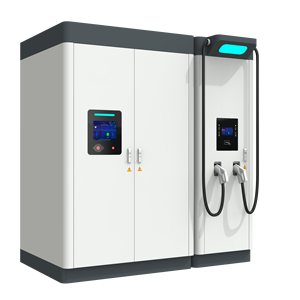
System downtime in mining, construction, and port operations leads to catastrophic revenue losses. Sourcing strategies now prioritize modular matrix chargers (such as 30kW/40kW sub-modules combined into 120kW-480kW cabinets). In the event of a module failure, non-technical personnel can perform hot-swapping within minutes without powering down the entire station infrastructure.
The technological matrix underlying industrial power management is experiencing rapid transformation driven by wide-bandgap (WBG) materials, artificial intelligence in battery management systems (BMS), and enhanced environmental sealing techniques. Understanding these technical shifts enables OEM engineers to select future-proof equipment for heavy machinery and commercial fleets.
With commercial electric buses, heavy trucks, and specialized agricultural machinery transitioning from 400V architecture to 800V and 1000V high-voltage platforms, modern industrial chargers utilize wide-output matrix control. This allows a single station to dynamically adjust voltage profiles, charging a 24V warehouse pallet jack or a 800V haul truck with equal precision and thermal efficiency.
Industrial chargers frequently face severe environmental abuse: airborne conductive dust, high moisture, corrosive chemical exposure, and mechanical vibration. High-reliability chargers feature half-sealed or fully encapsulated IP54/IP65 die-cast aluminum enclosures, internal potted power stages, and isolated thermal cooling tunnels that isolate sensitive control PCBs from raw intake air flow.
Integrating SAE J1939 and CANopen communication protocols enables direct real-time handshakes between the charger and the battery management system (BMS). Dynamic curve modulation monitors cell temperature, internal resistance, and state-of-charge (SoC) micro-variations to deliver optimal multi-stage CC/CV profiles, extending industrial battery cycle life by 20% to 35% over legacy static chargers.
Comprehensive engineering specification breakdown across primary industrial charger categories manufactured at our China factory facility.
| Category Profile | Voltage Range | Power Output | Ingress / Cooling | Primary Applications | Network / Control |
|---|---|---|---|---|---|
| Commercial Fleet DC Fast Chargers | 200V - 1000V DC | 60kW - 480kW Dual Gun | IP54 Forced Air / Liquid Cooled | e-Buses, Logistics Trucks, Fleet Depots | OCPP 1.6J/2.0.1, 4G, RFID, CAN |
| Solar BESS Integrated Stations | 300V - 950V DC | 60kW - 180kW+ Storage | IP54 Outdoor Enclosure | Off-Grid Sites, Energy Storage Hubs | Smart Microgrid Control, Modbus, 4G |
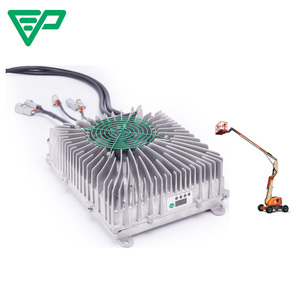
| Half-Sealed Intelligent Chargers | 12V / 24V / 36V / 48V | 10A - 60A Output | IP65 Potted / Half-Sealed | AGVs, Boom Lifts, Golf Carts, Lifepo4 Packs | Isolated CANbus, LED / LCD Display |
| Industrial External Adapters | 12V - 57V DC Fixed | 100W - 350W AC-DC | IP40 / IP65 Metal Case | Industrial Automation Controls, Sensors | Over-Voltage / Over-Temp Circuit Protection |
| Heavy Equipment Motive Chargers | 24V - 80V DC | 30A - 100A High Current | IP66 Die-Cast Aluminum | Forklifts, Mining Buggies, Aerial Platforms | SAE J1939, Adaptive Multi-Stage CC/CV |
Backbone engineering roots dating back decades in high-reliability CAN controllers, hydraulic drivers, and industrial power management. Our R&D teams manage complete in-house design control, firmware architecture, and PCB layout to ensure total operational stability.
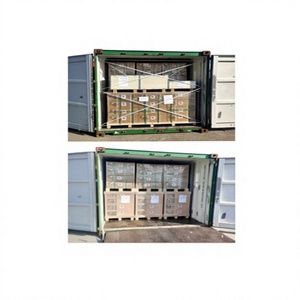
Operating under rigorous ISO 9001:2015 certified quality management systems. Every industrial battery charger and DC fast charging stack undergoes 100% full-load burn-in testing, high-voltage insulation dielectric testing, and thermal imaging verification before container loading.
From bespoke aluminum enclosure molding and custom connector wiring harnesses (Deutsch, Amphenol, REMA) to specialized factory-programmed CAN profiles and branded UI displays, we deliver rapid-turnaround OEM custom chargers on strict project deadlines.
Our industrial chargers feature multi-profile microprocessor controls capable of charging Lithium Iron Phosphate (LiFePO4), Lithium Nickel Manganese Cobalt (NMC), flooded lead-acid, sealed AGM, and Gel batteries. Charging curves (voltage thresholds, constant current phases, trickle maintenance, and temperature compensation factors) can be pre-set at our factory or field-configured via CAN interface tools.
Our commercial DC chargers (60kW to 480kW) are built with heavy-gauge galvanized steel or aluminum IP54-rated cabinets, anti-corrosion powder coating, intelligent internal heating elements for sub-zero operation (-30°C start-up), and forced-air cooling systems with replaceable dust filters. For coastal or mining sites, internal power modules are conformal coated to resist salt spray, humidity, and fine dust.
Yes. Our commercial charging stations natively support Open Charge Point Protocol (OCPP) versions 1.6J and 2.0.1 over Ethernet, Wi-Fi, or 4G LTE cellular modules. This allows seamless integration into third-party cloud management platforms for remote billing, dynamic load balancing (DLM), fault diagnostics, and over-the-air (OTA) firmware updates.
Standard catalog models are available with low MOQ thresholds (starting at 10 to 50 units depending on the model). For custom OEM projects requiring special voltage levels, bespoke casing designs, or custom software CAN node mapping, prototype samples are generally delivered in 3 to 4 weeks, with full production batch lead times between 30 and 45 days.
Our manufacturing facility produces chargers compliant with international safety, EMC, and environmental standards including CE, UL/cUL requirements, FCC Part 15 Class A/B, RoHS, and REACH directives. Detailed compliance dossiers, CB test reports, and factory quality verification logs are provided to international importers prior to shipment.
Connect directly with our senior power electronics engineering team for direct factory quotations, technical datasheets, CAD models, and OEM project evaluations.