


- ISO 9001:2015 Certified Manufacturing — Canada
- Engineering Support Since 1991
Explore our technical portfolio of heavy-duty I/O controllers, power converters, fieldbus modules, and automated process interfaces designed for OEM machine builders.
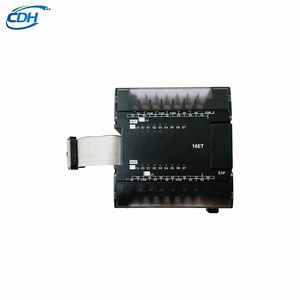
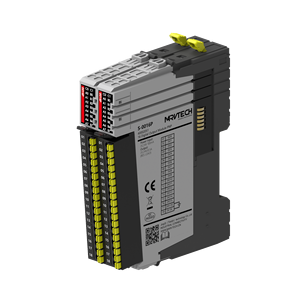
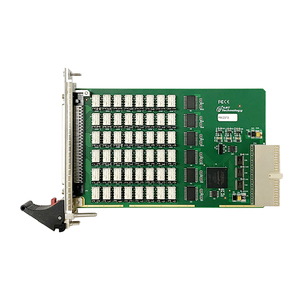
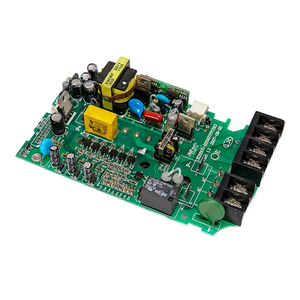
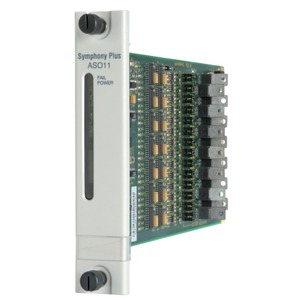
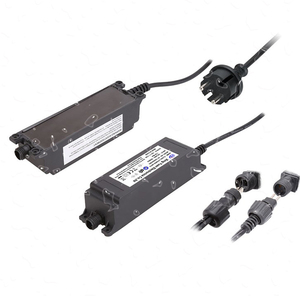
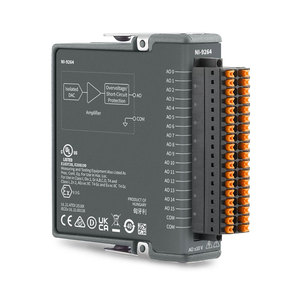
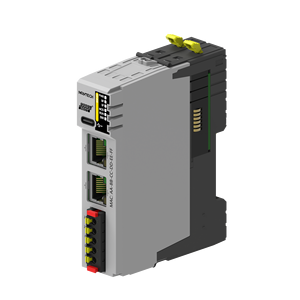
In the global mining sector, electronic control units (ECUs), fieldbus gateways, and distributed I/O controllers are the operational nervous systems of underground excavators, autonomous haul trucks, surface drilling rigs, and mineral processing plants. When procurement executives and system integration engineers search for reliable China wholesale mining controller manufacturers, the decision criteria extend far beyond purchase price. Technical buyers require field-proven reliability, rigorous EMC compliance, extended thermal operational thresholds, and flexible firmware programmable options.
Industrial mining environments present some of the most aggressive stress factors for solid-state electronics. Severe mechanical vibration, wide ambient operating temperatures (-40°C to +85°C), high humidity, dynamic dust ingress, and transient voltage spikes caused by heavy hydraulic inductive loads can destroy commercial-grade PLCs within weeks. Leading Chinese OEMs and global engineering partners have transformed the manufacturing landscape by offering ruggedized CANbus ECUs, proportional valve drivers, isolated DC-DC converters, and multi-protocol gateways specifically hardened against these destructive forces.
Evaluating a potential manufacturing partner requires deep technical scrutiny of their hardware topology and firmware development lifecycle. Below are the foundational architectural parameters that define an industrial-grade mining controller:
Mining ECUs must be housed in heavy-duty aluminum die-cast or reinforced thermoplastic enclosures rated for IP67 or IP69K ingress protection. Sealed Ampseal or Deutsch connectors prevent liquid moisture and fine dust particles from penetrating the PCB assembly during high-pressure machine washdowns.
High-voltage electric drives, switching converters, and wireless mining communication equipment generate intense electromagnetic noise. OEM mining controllers must comply with ISO 13766, EN 13309, and CISPR 25 standards to guarantee immunity against radiated emissions and load dump surges.
To bridge machine-level control with enterprise SCADA systems, controllers feature dual-CAN channels supporting SAE J1939 and CANopen, along with high-speed industrial protocol conversion to EtherNet/IP, Profinet, Modbus RTU/TCP, and Automotive Ethernet.
As underground and open-pit mining operations globally accelerate their transition toward autonomous fleets, zero-emission electric machinery, and continuous digital monitoring, the demand for sophisticated electronic control systems is evolving rapidly. Procurement managers must align with manufacturing partners who actively invest in next-generation control architectures.
Tele-operation and driverless haulage require deterministic, real-time control execution. Legacy relay logic and basic microcontrollers are being replaced by high-performance multi-core processors capable of running model-based control algorithms written in C++ and C#. Advanced input/output modules (such as high-speed discrete I/O modules and simultaneous multi-channel analog sampling units) allow real-time position verification, inclination sensing, and obstacle avoidance data processing at latency cycles below 1 millisecond.
The decarbonization of mining equipment has introduced complex hybrid power architectures. Battery Electric Vehicles (BEVs) and solar-assisted remote pit stations demand integrated power conversion platforms. High-efficiency MPPT micro-solar hybrid inverter modules, wide-range DC-DC converters (5V-36V to high-voltage rails), and isolated battery charging controllers are now seamlessly combined into unified machine control networks, eliminating thermal bottlenecks and maximizing vehicle operational uptime.
Modern mining machinery functions as a connected IoT node. Distributed fieldbus modules—such as PNP 8-channel input/output gateways—collect diagnostic data directly from hydraulic pressure sensors, oil temperature monitors, and motor vibration sensors. This data is normalized on the CAN bus, converted via onboard gateways, and streamed to fleet management software to enable predictive maintenance and drastically minimize unplanned machine downtime.
Selecting the optimal controller architecture depends heavily on the specific machine functional requirements. Use the matrix below as an engineering baseline for vendor selection:
| Application Focus | Recommended Controller Architecture | Primary Protocols & Interfaces | Critical Selection Metrics |
|---|---|---|---|
| Hydraulic Proportional Actuation | Valve Driver & Closed-Loop PWM Controller | SAE J1939, CANopen, Configurable PWM | Output current precision, dither control, current feedback accuracy |
| Distributed Machine Sensing | Multi-Channel Analog & Digital Fieldbus I/O | EtherNet/IP, Profinet, Modbus RTU/TCP | High-speed simultaneous sampling (25 kS/s/ch), optical channel isolation |
| On-Board Power Management | Isolated Wide-Input DC-DC & MPPT Power Units | Isolated DC Power Rails, Class 2 CE | Efficiency (>92%), wide input voltage window (5V-36V/1000V), thermal dissipation |
| Fleet Telematics & Bridging | Multi-Protocol CAN/Ethernet Gateway Router | J1939, Automotive Ethernet, RS-485, Modbus | Port density, buffer depth, low routing latency, rugged housing |
| High-Load Discrete Switching | Solid-State Output Expansion Module | Fieldbus I/O, Digital Discrete Controls | Solid-state load capacity, short-circuit protection, reverse polarity immunity |
With over three decades of dedicated research, design, and precision manufacturing in rugged industrial electronics, our manufacturing facilities stand at the forefront of heavy equipment automation. We partner with Tier-1 mining machinery builders, system integrators, and industrial machinery distributors worldwide to deliver reliable control hardware tailored to rigorous specifications.
Our state-of-the-art facilities operate under strict ISO 9001:2015 quality management systems. Every printed circuit board assembly (PCBA) undergoes automated optical inspection (AOI), in-circuit testing (ICT), and 100% full-load thermal burn-in screening prior to shipment.
When off-the-shelf control modules do not fit your envelope or protocol constraints, our engineering teams provide complete turnkey engineering services. From custom PCB layout and housing design to firmware development in C/C++, we accelerate your time-to-market.
We actively participate in international standards organizations, including CAN in Automation (CiA) and SAE International. Our engineering support footprint spans global technical centers, guaranteeing responsive technical backup for your machine deployments.
Detailed technical insights for procurement managers, hardware engineers, and supply chain directors sourcing industrial mining controllers.
Reputable Chinese wholesale manufacturers employ comprehensive environmental stress testing protocols before mass production. This includes multi-axis sinusoidal and random vibration testing per MIL-STD-810G standards to simulate heavy vehicle chassis mounting. Furthermore, units are subjected to thermal shock cycling (-40°C to +85°C), high-humidity soak testing, dynamic ingress testing for IP67/IP69K sealing, and rigorous surge/load-dump EMC testing to ensure long-term survival in harsh underground mines.
Our heavy-duty control platforms standardly interface with SAE J1939, CANopen, and CAN FD. Depending on model selection, integrated gateways support seamless protocol bridging to industrial networks including EtherNet/IP, Profinet, Modbus RTU, Modbus TCP, RS-485, RS-232, and Automotive Ethernet. This allows machine builders to connect low-level hydraulic actuators directly to high-level fleet telematics networks.
Yes. Factory-programmed variants are one of our core operational strengths. If a standard catalogue module closely matches your operational specifications, our engineering team can modify input/output scaling, internal loop control parameters, pinout assignments, or custom CAN message mappings in firmware. This factory-programming strategy drastically shortens overall OEM machine development cycles and validation costs compared to ground-up hardware builds.
Our programmable controllers and high-performance discrete I/O modules support standard industrial software environments. Developers can utilize C/C++ libraries, C# application interfaces, CODESYS (IEC 61131-3 standard languages such as Structured Text and Ladder Diagram), or model-based development in MATLAB/Simulink for rapid control algorithm deployment.
Standard catalog product variants typically ship within 1 to 2 weeks for evaluation samples. Custom OEM hardware modifications or bespoke enclosure engineering projects generally require 6 to 12 weeks for complete prototyping, tooling, and functional validation. Minimum Order Quantities (MOQs) are flexible depending on project scope, ranging from single-unit engineering prototypes to batch production volumes of 500+ units.
Mobile mining machinery frequently experiences dramatic alternator load dumps and inductive switching transients. Our power management modules and ECUs feature wide input voltage windows (e.g., 9V to 36V DC continuous), built-in reverse polarity protection, transient voltage suppression (TVS) diodes, and fully isolated power sub-circuits that isolate sensitive microprocessor logic from harsh vehicle power buses.
Submit your machine control specifications, fieldbus protocol requirements, or environmental targets to our senior engineering team for rapid technical evaluation and quotation.