- ISO 9001:2015 Certified Manufacturing — Canada
- Engineering Support Since 1991
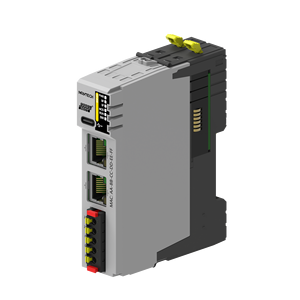
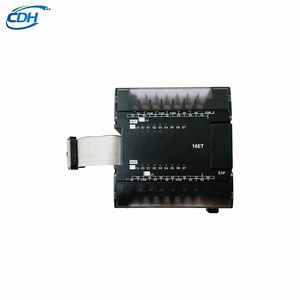
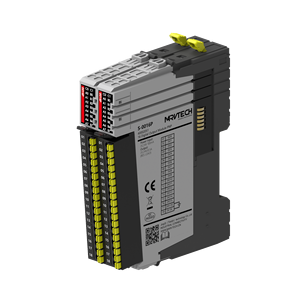
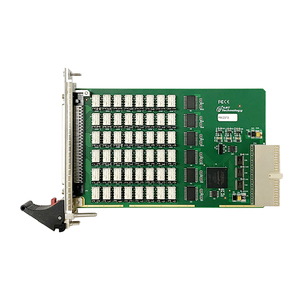
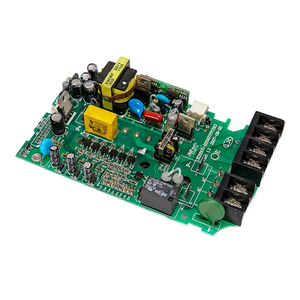
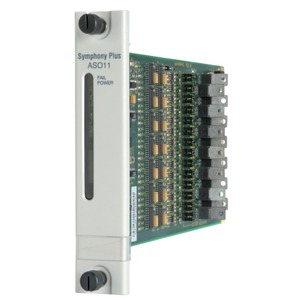
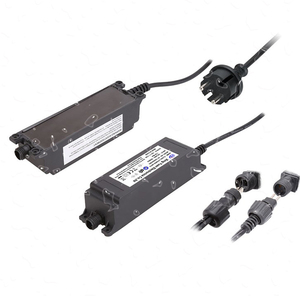
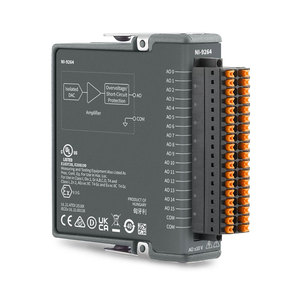
Explore our engineered inventory of industrial fieldbus I/O units, custom proximity sensors, solid-state switches, and heavy-duty power regulation modules designed for extreme operating conditions.
Operating from R&D facilities in Canada and Finland with global reach across North America, Europe, and Australia, we deliver robust OEM proximity sensor assemblies, CAN bus gateways, and hydraulic valve electronics engineered to outlast harsh field exposure.
Our proximity sensors and control modules are fully potted and validated to IP67, IP68, and IP69K standards. Designed to withstand thermal shock (-40°C to +85°C/125°C), high mechanical impact, and extreme vibration in heavy mining and off-highway environments.
We specialize in interfacing proximity sensing hardware directly with SAE J1939, CANopen, CAN FD, Modbus RTU/TCP, Ethernet/IP, and Automotive Ethernet networks. We bridge physical sensing with modern telematics systems.
From initial circuit topology, PCB design, and custom mechanical housing to firmware development and EMC validation, our Canadian design teams shorten production cycles for high-mix OEM specifications.
 ISO 9001:2015 Certified Manufacturing
 CAN in Automation (CiA) Member
 SAE International Member
In modern industrial automation, agricultural machinery, mining platforms, and energy infrastructure, the humble proximity sensor has evolved from a basic discrete limit switch into an intelligent diagnostic node. As system integrators push for higher operational uptime, predictive maintenance capabilities, and seamless integration with CAN bus and Industrial Ethernet networks, custom OEM proximity sensor design requires deep physical and electrical engineering expertise.
Depending on the working target, environmental interference, and sensing range requirements, OEM engineers utilize five fundamental physical sensing modalities:
Legacy binary NPN/PNP output switches only communicate a "present/absent" state. Modern OEM proximity sensors engineered by our team feature embedded digital interfaces such as IO-Link or SAE J1939 micro-controllers. This allows real-time transmission of internal operating temperature, operating hour counters, target distance profiles, coil integrity alerts, and vibration telemetry directly to the central machine Electronic Control Unit (ECU).
As global supply chains shift toward localized assembly hubs and risk-mitigated multi-sourcing architectures, procurement executives and technical sourcing leaders face new challenges. Component selection can no longer focus solely on unit price; total cost of ownership (TCO), long-term component availability, and protocol versatility are now critical factors.
Rather than purchasing standardized off-the-shelf sensors that force mechanical and electrical compromises, Tier-1 equipment manufacturers are increasingly contracting OEM sensor partners to develop custom modular platforms. By standardizing the internal sensing core while customizing cable harnesses, connectors (e.g., Deutsch DT, M12 A-coded/S-coded), and housing geometries (stainless steel 316L, anodized aluminum, or UV-stabilized PBT polymer), OEMs shorten development cycles while retaining proprietary machine form factors.
Global component shortages over recent years revealed the vulnerability of relying on single-protocol microcontrollers. Modern OEM proximity sensor manufacturing prioritizes universal hardware architectures. Micro-code can be factory-configured for CANopen, SAE J1939, RS-485 Modbus, or analog output (0-10V, 4-20mA, RATIOMETRIC) on identical SMT manufacturing lines, eliminating lead-time spikes during regional chip shortages.
Off-highway equipment in mining, construction, and agriculture must operate without failure despite severe salt spray, pressure-washer chemical washing (IP69K rating), and high shock loads (up to 50g continuous). Procurement teams are standardizing on vendors with ISO 9001 quality management, fully encapsulated polyurethane/epoxy potting, and documented EMC compliance (ISO 13766, EN 13309, and CISPR 25 standards) to ensure zero field recalls.
The rise of autonomous heavy machinery requires instant local decision-making. Future procurement specs mandate proximity sensors capable of processing signal filtering, speed calculation, and fault detection directly at the sensor head, preventing CAN bus network overload and reducing latency in safety-critical automated braking and steering routines.
Use this technical comparison matrix to match your operational machine requirements with the appropriate sensor technology and protocol interface.
| Sensing Technology | Target Material | Typical Range | Ingress Rating | Primary Interface Protocols | Key OEM Application Areas |
|---|---|---|---|---|---|
| Inductive Heavy-Duty | Ferrous & Non-Ferrous Metals | 1mm – 40mm | IP67, IP68, IP69K | PNP/NPN, IO-Link, SAE J1939 | Hydraulic cylinder position, gear tooth speed sensing, boom angle limits |
| Capacitive Sealed | Metals, Liquids, Plastics, Grains | 3mm – 25mm | IP65, IP67 | Discrete Solid State, Modbus RTU | Bulk hopper level control, fluid reservoir monitoring, packaging lines |
| Hall-Effect Rotary/Speed | Magnetic Targets, Precision Gear Teeth | 0.5mm – 4mm | IP68, IP69K | Frequency, Quadrature, CANopen | Wheel speed sensing, electric motor tachometer feedback, winch rotation |
| Time-of-Flight Laser | All Opaque Surfaces | 50mm – 10m | IP67, NEMA 4X | CAN FD, Ethernet/IP, 4-20mA | Autonomous AGV obstacle detection, crane height measurement, laser leveling |
| Millimeter-Wave Radar | All Solids & Dense Liquids | 0.5m – 50m | IP69K Sealed | SAE J1939, Automotive Ethernet | Mining haul truck collision avoidance, agricultural boom height sensing |
We take your specialized proximity sensor or control module concept from mechanical schematics to validated mass production with full traceable quality assurance.
Our Canadian and Finnish engineering teams evaluate your electrical, mechanical, connector, and CANbus communication specs to define the optimal PCB layout and potted housing design.
Prototypes undergo thermal shock (-40°C to +125°C), vibration table testing, ingress validation, and full EMC chamber testing to guarantee performance in harsh operating environments.
Units are manufactured on automated SMT assembly lines under our ISO 9001:2015 quality management system, with 100% end-of-line optical inspection and functional electrical testing.
Yes. As a dedicated OEM manufacturer, we specialize in customizing cable lengths, jacket materials (PUR, PVC, Teflon), and integrated connector styles including Deutsch (DT04/DT06), Amphenol, M8, M12, and Packard Metri-Pack. Overmolding and IP69K strain reliefs are integrated to match your exact chassis routing.
Our sensor designs integrate multi-stage transient voltage suppression (TVS) diodes, reverse polarity protection, and ESD suppression circuitry. They are validated to stringent off-highway EMC standards (ISO 13766 / ISO 14982) to prevent false triggering from high-current solenoid switching or alternator load dumps.
We support standard SAE J1939 and CANopen protocol interfaces, along with Modbus RTU/TCP, Ethernet/IP, Profinet, CAN FD, and Automotive Ethernet. We also provide protocol gateways to bridge legacy analog sensor signals into modern CAN network nodes.
For custom housing modifications or pre-programmed firmware variations on our catalog platforms, prototype samples are typically delivered in 3 to 5 weeks. Full ground-up custom electronics development typically ranges from 8 to 12 weeks including EMC and environmental qualification testing.
Our primary ISO 9001:2015 certified electronics manufacturing facility and hardware R&D center is located in Mississauga, Ontario, Canada. We operate specialized firmware development and engineering operations in Lempäälä, Finland, along with regional support facilities in the United States and Australia.
Inductive sensors are best suited for non-contact metal position limits in muddy or oily environments. Hall-Effect sensors excel at high-speed shaft and gear tooth speed detection inside sealed transmissions. Optical sensors provide long-range precision distance data but require clean optical paths or protective lens air-purges. Our application engineering team can help review your CAD drawings and environment profiles to recommend the right fit.
Speak directly with our application engineers to review your machine schematics, discuss technical specifications, or request complete catalog documentation.
Get Catalog