- ISO 9001:2015 Certified Manufacturing — Canada
- Engineering Support Since 1991
Explore our high-reliability fieldbus controllers, solid-state output drivers, analog process modules, and high-performance DC power converters validated for rigorous industrial and automotive deployment.
Engineered for commercial advertising, heavy backlighting, and industrial signaling systems requiring stable current delivery, thermal efficiency, and long lifespan.
Contact Us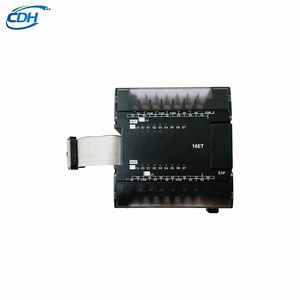
High-density solid-state switching module designed for industrial vehicle automation, PLC expansion, zero-wear operation, and high switching frequency control.
Contact Us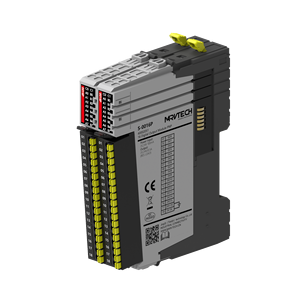
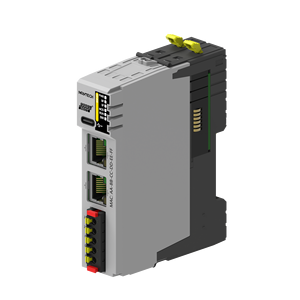
Dual Ethernet IP & Profinet protocol converter supporting real-time deterministic communication for remote vehicle telemetry and factory automation backbones.
Contact Us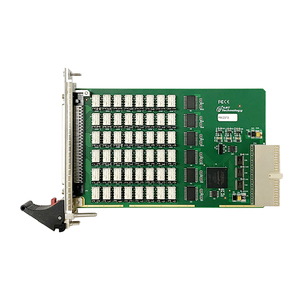
Supports low-level C++/C# algorithmic development, featuring heavy load switching capacity, rugged over-current isolation, and customizable control logic.
Contact Us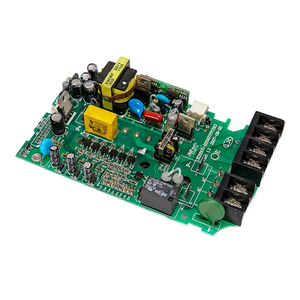
Versatile power conversion board handling 12V to 1000V DC-DC/AC inversion for specialized vehicle auxiliary power units, mobile solar units, and UPS systems.
Contact Us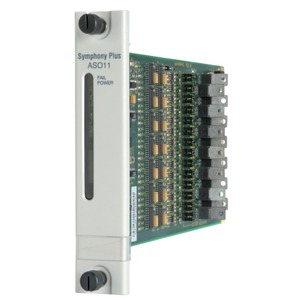
Ultra-low noise 16-bit analog signal generator optimized for hydraulic proportional valve driving, closed-loop actuator positioning, and sensor emulation.
Contact Us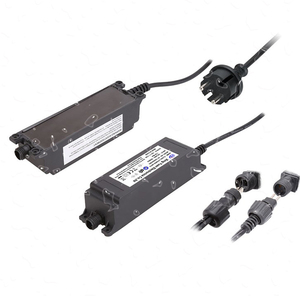
Encapsulated IP67 outdoor power conditioning unit supplying stable 5V to 36V DC power to vehicle sensors, displays, and remote wireless nodes in severe environments.
Contact Us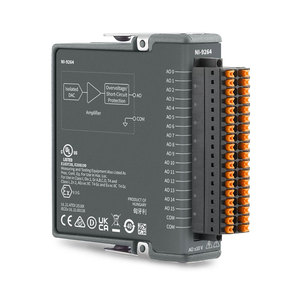
High-speed ±10V 25 kS/s/ch channel-to-channel isolated analog voltage module built for dynamic vehicle hardware-in-the-loop (HIL) testing and data acquisition.
Contact UsAn in-depth analysis of architectural selection, protocol synthesis, hardware ruggedization, and global supply chain strategies for tier-1 vehicle OEMs and system integrators.
In modern commercial vehicles, off-highway machinery, mining equipment, and electric utility fleets, the electronic control unit (ECU) serves as the central brain managing hydraulic actuation, power conversion, motion safety, and powertrain synchronization. As legacy point-to-point wiring harnesses give way to complex distributed and zonal CAN bus architectures, global original equipment manufacturers (OEMs) face increasing pressure to specify controllers that balance computational headroom, extreme environmental durability, and strict deterministic networking standards.
Since 1991, custom vehicle controller manufacturing has evolved from simple relay logic replacement to multi-core, safety-rated (ISO 26262 / ISO 13849) microcontrollers capable of running concurrent CANopen, SAE J1939, and Automotive Ethernet communication stack protocols. Sourcing off-the-shelf controllers often forces engineering compromises—either in physical connector layout, thermal dissipation profiles, or firmware flexibility. Partnering with a specialized OEM exporter enables custom PCB tailors, tailored software stacks, and factory-programmed configurations that shorten product development cycles by up to 40%.
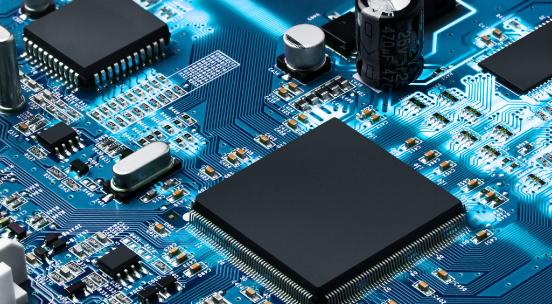
Native protocol handling with configurable baud rates, custom PGN mapping, automated heartbeat monitoring, and isolated dual/quad CAN channel architectures for zero-frame-loss telemetry.
Integrated closed-loop current feedback PWM outputs engineered specifically for precision hydraulic proportional valves, directional solenoids, and brushless DC (BLDC) motor actuation.
Hardware and firmware developed to satisfy AgPL d (ISO 13849) and ASIL B/C (ISO 26262) standards, featuring internal hardware watchdogs, redundant sensing circuits, and safe-state outputs.
IP67 and IP69K fully potting options utilizing thermally conductive polyurethanes or silicones, ensuring 100% operation across -40°C to +85°C ambient temperature ranges under severe shock and vibration.
Seamless translation engines bridging legacy RS-485/Modbus RTU networks, J1939 engine data, CANopen motion nodes, and modern Automotive Ethernet (100BASE-T1) cloud telematics gateways.
From initial C/C++ control model prototyping to automated end-of-line functional testing, our global supply chain guarantees 10+ years of active component availability and lifecycle support.
Key technological shifts and supply chain dynamics influencing how vehicle manufacturers specify, source, and integrate electronic hardware over the next decade.
Procurement directors and chief engineers are actively restructuring vehicle electronic backbones. Traditional architectures relied on dozens of standalone, single-function controllers scattered across the chassis. Modern procurement contracts prioritize **Zonal Controller Units (ZCUs)** that consolidate localized I/O processing, power distribution, and actuation commands into rugged regional hubs.
This architectural shift dramatically reduces copper wiring harness weight—often by 20% to 35%—lowering raw material costs and assembly labor while improving vehicle payload efficiency. Exporters with established expertise in high-density configurable pinouts, mixed-signal inputs, and multi-protocol fieldbus routing are positioned as primary beneficiaries of this procurement transition.
Compare standard functional parameters across our specialized vehicle controller product lines to match exact machine requirements.
| Application Focus | Primary Bus Interfaces | I/O Configuration Mix | Ingress / Thermal Rating | Target Machine Categories |
|---|---|---|---|---|
| Hydraulic Valve Actuation | SAE J1939, CANopen | Up to 12 Current-Regulated PWM Outputs, 4 Universal Inputs | IP67 / IP69K, -40°C to +85°C | Excavators, Forestry Harvesters, Refuse Trucks |
| Zonal I/O Expansion | Dual CAN 2.0B, CAN FD | 24 Configurable Analog/Digital Inputs, 16 Solid-State Outputs | IP67 Sealed Aluminium Housing | Agricultural Tractors, Mining Loaders, Municipal Vehicles |
| Protocol Telematics Gateway | J1939, Modbus TCP, Ethernet, RS-485 | Isolated Fieldbus Ports, Internal Data Logging Flash | IP65 Heavy-Duty Polycarbonate | Stationary Power Gensets, Mobile Microgrids, Crane Control |
| Auxiliary Power Management | CANbus Output & Diagnostics | DC-DC Converter Controller, Battery Charge Management | Submersible Encapsulated IP68 | Electric Buses, Hybrid Mining Equipment, AGVs |
| Precision Position Sensing | CANopen, Analog 0-10V / 4-20mA | Dual-Axis Inclinometer, Dynamic Gyro Compensation | Heavy-Duty Cast Alloy IP69K | Concrete Pumps, Aerial Work Platforms, Road Pavers |
Detailed breakdown of functional safety, cybersecurity, and hardware-software disaggregation in off-highway and commercial export markets.
Hardware longevity is no longer solely dictated by physical component wear. Commercial buyers now demand controllers capable of accommodating continuous firmware enhancements throughout the vehicle’s 10-to-15-year lifecycle. Microcontrollers designed with dual-bank flash memory allow seamless background OTA updates via CAN FD or Ethernet without taking machines offline. Embedded bootloaders certified to ISO 14229 (UDS - Unified Diagnostic Services) ensure diagnostic compliance across global service networks.
As vehicle fleets connect to cloud telemetry platforms and automated dispatch systems, cyber threats move from theoretical risks to mission-critical vulnerabilities. OEM controller factories are integrating Hardware Security Modules (HSM) directly onto controller PCBs. These cryptographic chips store secure keys, verify digital signatures during boot-up (Secure Boot), and encrypt CAN bus messages (SecOC - Secure On-Board Communication) to prevent unauthorized control overrides.
The global push toward zero-emission heavy machinery requires vehicle controllers capable of operating in high noise, high transient environments alongside 400V–800V EV traction battery packs. Modern OEM controllers incorporate galvanically isolated power supplies, advanced differential signal conditioning, and rigorous electromagnetic compatibility (EMC) shielding rated to CISPR 25 Class 5 standards to eliminate false sensor reads caused by inverter switching noise.
Combining world-class North American engineering control with agile international manufacturing to deliver unmatched technical authority and reliability.
State-of-the-art automated SMT assembly lines, 100% automated optical inspection (AOI), in-circuit testing (ICT), and full environmental thermal cycling chamber burn-in for every production unit.
Dedicated hardware engineering teams in Canada and specialized firmware development centers in Finland, providing fast-turn custom board bring-up and custom protocol stack development.
Active corporate members of CAN in Automation (CiA) and SAE International. Our engineering leads directly participate in shaping next-generation CANopen and SAE J1939 standard specifications.
Every custom controller design undergoes rigorous internal and third-party laboratory validation, including mechanical shock (50g), sinusoidal vibration, salt spray corrosion, and severe ESD immunity testing.
Whether you require minor modifications to standard catalog platforms (custom connectors, pre-loaded parameter maps) or full ground-up hardware architecture design, we adapt to your NPI timetable.
With direct technical sales support across North America, Europe, and Asia-Pacific, we provide complete export documentation, tariff compliance support, and buffered safety stock management.
Direct answers to critical technical, quality, and supply chain questions asked by vehicle engineering leads and procurement managers.
Our controller platforms feature robust native support for SAE J1939 and CANopen protocols as standard software stacks. Select hardware models also support CAN FD, Modbus RTU (over RS-485/RS-232), Modbus TCP, Industrial Ethernet, and Automotive Ethernet (100BASE-T1). Custom protocol bridge software can also be developed to interface with proprietary legacy machine buses.
Units are specifically designed for severe duty cycles. Enclosures utilize die-cast aluminum or glass-filled nylon housings sealed with high-grade silicone gaskets or 100% solid polyurethane potting compound to achieve IP67/IP69K ingress ratings. Internal electronics use automotive-grade components (-40°C to +125°C rating), conformal coating, and heavy copper traces designed to handle continuous high-vibration profiles per SAE J1455 standards.
Yes. We offer complete turnkey OEM hardware design, PCB layout, firmware development, and system integration services. Alternatively, if your project schedule requires a faster time-to-market, we can rapidly customize an existing standard control platform by adapting its I/O stage, pinout connectors, or firmware parameter tables, avoiding high non-recurring engineering (NRE) fees and long validation timelines.
Our hardware architecture options include dual-core lockstep microcontrollers, external safety watchdogs, independent power disable paths, and redundant input sense channels. We assist OEMs in achieving machine safety compliance up to ISO 13849 Performance Level d (AgPL d / PL d) and ISO 26262 ASIL B/C depending on system topology and safety goals.
For standard catalog configurations, initial prototype samples can be dispatched within 1 to 2 weeks, with standard production lead times averaging 4 to 8 weeks depending on volume. Custom OEM controller projects typically undergo a 12-to-16-week engineering phase (design, prototype fabrication, validation testing) followed by flexible volume production runs tailored to your manufacturing schedule.
We implement a strict 10+ year product lifecycle management strategy. All component selection for our controller platforms prioritizes tier-1 semiconductor manufacturers with long-term roadmap guarantees. In the event of component end-of-life (EOL), our engineering team performs pin-compatible redesigns and validation in-house to prevent disruption to your assembly lines.
Connect directly with our senior application engineers to review your machine block diagrams, IO pinouts, fieldbus protocols, and environmental requirements today.
Contact Us