


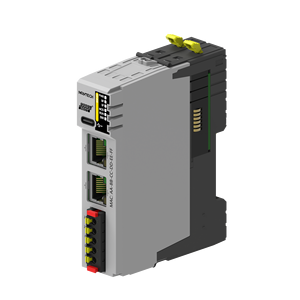
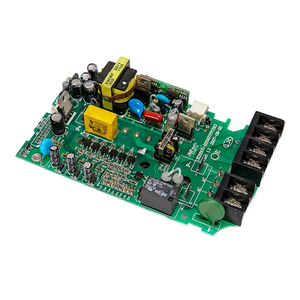
PLC Display & Power Controller Module for Industrial Automation
- Industrial Grade Power Management
- High Reliability Backlight Driving
- Wide Voltage Tolerance Input
Explore our export-grade, field-proven CANbus, EtherCAT, and PLC control hardware designed for harsh off-highway and heavy automation platforms.
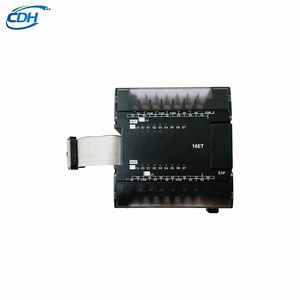
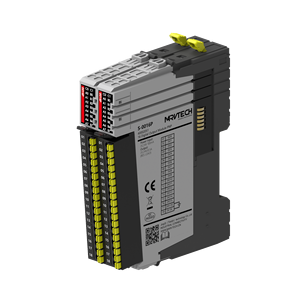
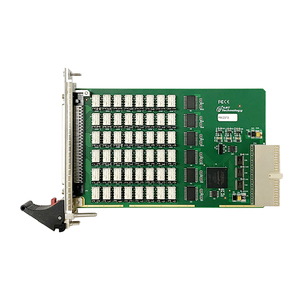
As a global OEM/ODM motion controller manufacturer and turnkey exporter, our engineering heritage traces back to 1991. We specialize in designing and manufacturing compact, rugged electronic control units (ECUs), proportional hydraulic valve drivers, CANbus protocol gateways, and distributed I/O controllers engineered for machines operating in the world's most unforgiving environments.
Our core R&D and hardware design control are centralized in Canada, supported by advanced embedded software engineering hubs in Finland and sales/technical support offices in the United States and Australia. Every product leaving our ISO 9001:2015 certified manufacturing facility undergoes 100% automated functional circuit testing, thermal stress screening, and rigorous electromagnetic compatibility (EMC) verification.
 ISO 9001:2015 Certified Manufacturing
 CiA (CAN in Automation) Official Member
 SAE International Standards Member
An in-depth technical analysis for control systems engineers, procurement heads, and machine integrators transitioning to smart, decentralized motion ecosystems.
Modern machine builders are rapidly shifting away from centralized PLC cabinets toward IP67/IP69K decentralized I/O modules mounted directly on the vehicle frame. By converting analog valve signals and sensor inputs into CANopen or SAE J1939 digital messages locally, cabling harness mass is reduced by up to 60%, drastically minimizing signal degradation and assembly labor.
Interoperability is the single biggest bottleneck in heterogeneous industrial setups. Next-generation OEM motion controllers natively feature real-time protocol conversion between legacy RS-485 / Modbus RTU, CAN FD, Automotive Ethernet (100BASE-T1), and industrial Ethernet (PROFINET, EtherCAT), allowing seamless telemetry pass-through to IoT edge routers.
Precision actuation demands high-resolution current feedback control. Advanced hydraulic valve drivers incorporate programmable dither frequency and amplitude algorithms to overcome mechanical hysteresis in proportional solenoids, guaranteeing millisecond-level position accuracy across agricultural, construction, and mining equipment.
Use this architectural guide to match your system topology with our engineered platform capabilities:
| Controller Series Class | Supported Communication Protocols | I/O Signal Density & Control Type | Environmental Ingress Protection | Typical OEM Application Field |
|---|---|---|---|---|
| Hydraulic Valve Drivers | SAE J1939, CANopen, PWM Input | Up to 16 PWM / Proportional Current Outputs with Closed-Loop Sensing | IP67 / IP69K Sealed Aluminum Enclosure | Excavators, Mobile Cranes, Forestry Harvesters |
| Distributed I/O Expansion | Ethernet/IP, PROFINET, Modbus TCP | 16 to 32 Channel Discrete PNP/NPN, 0-10V, 4-20mA Analog Inputs | IP20 DIN-Rail / IP67 Rugged Block | Industrial Conveyors, Robotic Assembly, Packaging Lines |
| Programmable ECUs (SDK) | CAN FD, Dual J1939, RS-485, C++/C# API | Universal Configurable Analog, Digital, Frequency, and Quadrature Inputs | IP67 Sealed Housing with Deutsch Connectors | Autonomous Off-Highway Vehicles, Electric Drive Trains |
| Power Management & Inverters | CANbus Diagnostic Telemetry, RS-232 | Wide DC Step-Up/Step-Down, MPPT Solar Mains, High Isolation Surge | Heavy Shock/Vibration (MIL-STD-810G) | Hybrid Energy Storage, Heavy Truck Power Auxiliary |
Procurement teams are moving away from fixed-function single-purpose hardware modules. The emerging paradigm favors standardized hardware platforms with high-density universal inputs (configurable via software to act as voltage, current, frequency, or resistive inputs). This strategy minimizes stocking SKUs, simplifies spare parts logistics, and drastically reduces inventory carrying costs for global machine builders.
The global semiconductor disruptions of recent years highlighted the critical risk of relying on proprietary silicon architecture. Leading OEMs now mandate that controller manufacturers design hardware using automotive-grade components with flexible multi-footprint microcontrollers, ensuring fast component substitution without requiring total redesigns or re-certification of firmware.
In DC-DC conversion and motor drive controllers, the adoption of Silicon Carbide (SiC) switches enables higher switching frequencies with reduced thermal dissipation. Procurement departments prioritize these platforms due to their compact heat-sink dimensions and overall vehicle energy efficiency gains, particularly in battery-electric off-highway machines.
Instead of spending 12 to 18 months designing a custom ECU from scratch, OEM buyers are increasingly leveraging pre-validated catalogue platforms that can be factory-programmed with custom logic control, CAN message maps, and pinout profiles prior to overseas shipping.
When off-the-shelf components cannot satisfy demanding dimensions, mechanical mounting footprints, or extreme EMC limits, our turnkey OEM design workflow offers a streamlined engineering path from concept to volume export:
Direct technical answers to help engineering lead buyers evaluate our manufacturing capabilities and export terms.
Our motion controllers natively interface with SAE J1939 and CANopen protocol stacks as standard. Depending on the model selected, hardware options include Modbus RTU (RS-485), Modbus TCP, Ethernet/IP, PROFINET, Automotive Ethernet (100BASE-T1), RS-232, and high-speed CAN FD (Flexible Data-rate). We also offer dedicated CAN bus gateways to seamlessly translate data between legacy serial sensors and modern vehicle control networks.
Every rugged controller is potted or encapsulated in heavy-duty aluminum or high-impact resin enclosures rated up to IP67 and IP69K ingress protection. They are fully qualified for extended ambient operating temperatures ranging from -40°C to +85°C (-40°F to +185°F), resistant to high-pressure washdown, salt spray corrosion, and severe mechanical vibration in compliance with SAE J1455 and MIL-STD-810G standards.
We provide comprehensive OEM software development services. Customers can either request custom factory-flashed firmware created by our Canadian and Finnish software engineering teams, or utilize our programmable hardware controllers featuring C++/C# SDKs, Simulink code generation support, and user-friendly GUI configuration software to program unique motion profiles, ramp times, dither rates, and fault protection modes in-house.
Yes. Our primary manufacturing facility operates under a strictly audited ISO 9001:2015 Quality Management System based in Canada. We maintain full component traceability, IPC-A-610 Class 2/3 soldering standards, RoHS/REACH compliance, and CE/UL certifications across our product matrix. Furthermore, as active members of CAN in Automation (CiA) and SAE International, our designs strictly adhere to global industrial best practices.
Standard evaluation samples for catalogue platforms are typically dispatched within 1 to 2 weeks. Custom factory-programmed variants or minor board-level modifications generally carry a lead time of 4 to 6 weeks. Full OEM custom controller development projects—spanning schematic design to pilot prototype qualification—are typically completed within accelerated 12 to 16 week milestones.
We design industrial control products with guaranteed long component lifecycles, typically supporting platforms for 10 to 15+ years. In the event of semiconductor EOL (End-of-Life) announcements, our design teams proactively manage pin-compatible drop-in replacements or issue form-fit-function updates to prevent any disruption to your vehicle assembly lines.
Contact our global engineering support team today. Share your system requirements, required I/O counts, and protocol preferences to receive a tailored engineering proposal and evaluation sample options.