- ISO 9001:2015 Certified Manufacturing — Canada
- Engineering Support Since 1991
Explore our high-reliability tilt sensing hardware, I/O modules, power conditioning electronics, and fieldbus communication nodes engineered for off-highway machinery and automated heavy industry.
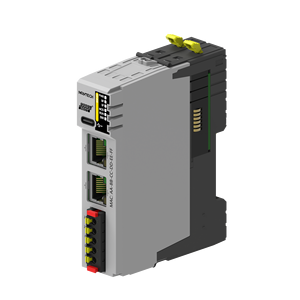
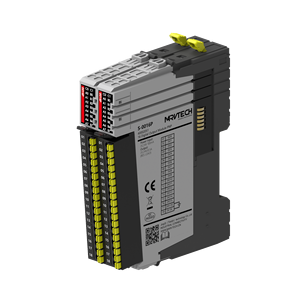
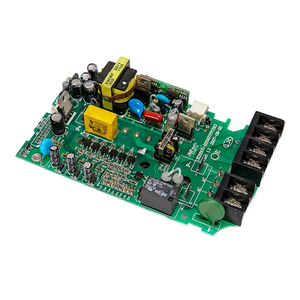
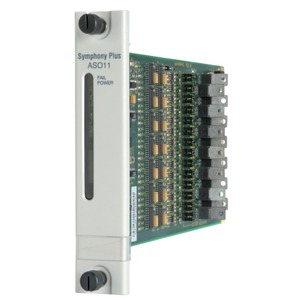
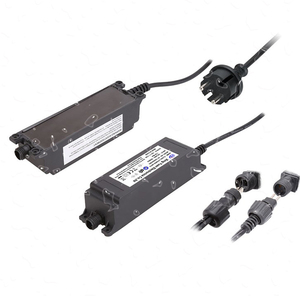
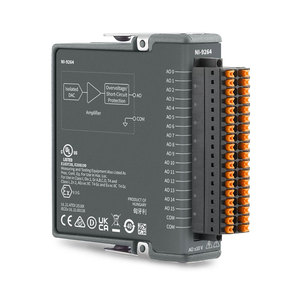
In modern heavy off-highway equipment, automated construction platforms, renewable energy tracking arrays, and industrial automation networks, precision tilt sensing (inclinometry) forms the sensory backbone of operational safety, automated levelling, and closed-loop control. Procurement directors and chief system architects searching for top-tier OEM/ODM Tilt Sensor Factories & Suppliers must look beyond standard catalog datasheets to evaluate dynamic response times, cross-axis sensitivity, long-term thermal drift stability, and deep firmware customization capabilities.
Selecting the optimal tilt sensor technology involves understanding the core mechanical and electronic tradeoffs inherent in different sensing architectures. Traditional static inclinometers perform exceptionally well in stationary environments such as structural health monitoring of bridges and solar tracker positioning. However, when deployed on mobile machinery—such as hydraulic excavators, mobile elevating work platforms (MEWPs), agricultural tractors, or mining haulers—external linear accelerations, engine vibrations, and abrupt equipment shocks severely corrupt standard acceleration-based tilt calculations.
Utilizes capacitive micro-electro-mechanical systems (MEMS) accelerometers to measure the Earth's gravity vector. Cost-effective and highly precise for zero-dynamic-movement applications (Resolution down to 0.001°).
Combines 3-axis MEMS accelerometers with 3-axis MEMS gyroscopes via advanced sensor fusion algorithms (Extended Kalman Filtering) to isolate true gravitational tilt from linear acceleration spikes.
Offers extreme accuracy around the zero-degree point for geodetic, civil engineering, and high-precision bench calibration, though limited by fluid viscosity changes across thermal extremes.
To ensure seamless operational integration, leading OEM/ODM suppliers provide custom housing materials (die-cast aluminum, stainless steel, or high-impact UV-stabilized thermoplastics), custom connector configurations (Deutsch DT series, M12 5-pin industrial connectors), and factory-flashed communication protocols tailored to the OEM's exact vehicle architecture.
When specifying an inclinometer or tilt sensor for heavy equipment manufacturing or industrial automation OEM projects, design engineers must rigorously analyze five technical vectors: dynamic performance requirements, operating bandwidth, mechanical ingress protection, bus communications interface, and thermal compensation thresholds. Below is an engineering selection guide established by our application engineering team:
| OEM Application Needs | Recommended Sensing Technology | Primary Bus / Signal Output | Critical Engineering Metrics | Environmental Ingress & Validation |
|---|---|---|---|---|
| Hydraulic Excavator & Boom Angle Control | Dynamic Gyro-Compensated 6-DOF IMU | SAE J1939 / CANopen (250/500 kbps) | Sub-5ms latency, <0.5° dynamic accuracy during movement | IP69K sealed, 50g continuous shock, ISO 16750 validated |
| Dual-Axis Solar Tracker Positioning | High-Precision Static Dual-Axis MEMS | Modbus RTU (RS-485) / 4-20mA Analog | 0.01° repeatability, ultra-low standby power dissipation | IP67 weather-proof housing, UV resistant enclosure |
| Aerial Work Platform (MEWP) Safety Interlock | Dual-Redundant Single/Dual Axis Inclinometer | Redundant CANopen / Dual Analog (0.5V - 4.5V) | SIL2 / PLd functional safety readiness, cross-axis error <0.1% | IP67, broad operating thermal window (-40°C to +85°C) |
| Mining Equipment Hull & Chassis Leveling | Heavy-Duty Dynamic Tilt Sensor | SAE J1939 / CAN FD Protocol Gateway | Shock rejection up to 100g, customizable zero-position offset | Fully potted rugged aluminum alloy housing, Deutsch DT04 |
| Structural Health & Bridge Inclination Monitoring | Ultra-Low Frequency Precision Inclinometer | Industrial Ethernet (Profinet / Modbus TCP) | Long-term zero drift <0.02°/year, 24-bit ADC resolution | NEMA 4X / IP66 cast enclosure, surge protection integrated |
By establishing precise technical targets early in the OEM development cycle, machine manufacturers can eliminate costly field failures, lower warranty claims, and streamline control software development via standardized CAN communication objects.
The industrial sensor landscape is undergoing a rapid transition driven by machine autonomy, electrification, functional safety mandates, and telematics-driven predictive analytics. OEM buyers and system integrators evaluating tilt sensor suppliers must align with factory partners actively investing in next-generation sensor design paradigms:
Off-highway OEMs are increasingly mandated to implement safety-rated controllers and sensors. Next-gen tilt sensors incorporate internal dual-core self-checking architectures, redundant MEMS elements, and CANopen Safety protocols to satisfy Performance Level d (PLd) compliance without adding external sensor hardware.
As vehicle control networks shift from legacy SAE J1939 to higher bandwidth architectures, dynamic tilt sensors are incorporating CAN FD (Flexible Data-rate) and Single Pair Ethernet (SPE) interfaces to transmit uncompressed 6-axis raw inertial data alongside filtered angle telemetry.
Modern tilt sensors no longer simply output angle values; they run embedded micro-machine-learning models at the sensor edge to monitor machine vibration signatures, detect structural mechanical wear, and predict hydraulic cylinder drift before catastrophic system failure occurs.
Furthermore, global supply chain volatility has made OEM procurement teams far more sensitive to supplier agility. Leading OEM/ODM factories are adopting modular hardware platforms that allow rapid customization of firmware, pinout configurations, and mounting dimensions within weeks rather than traditional multi-month engineering cycles.
Established in 1991, Axiomatic Technologies Corporation is a global leader in designing and manufacturing compact, rugged electronic controls, hydraulic valve drivers, power conversion modules, and high-precision tilt sensors for off-highway, agricultural, forestry, energy, and industrial machinery operating in the harshest environments.
Our core engineering strength lies in full lifecycle OEM/ODM design control. From initial hardware schematic layout and embedded firmware code generation in Canada and Finland, to rigorous automated surface-mount assembly (SMT) and environmental stress screening (ESS), we ensure every component leaving our facility adheres to strict ISO 9001:2015 quality standards.
 CAN in Automation Member
 SAE International Member
 ISO 9001:2015 Quality Certified
Answers to common technical, manufacturing, and integration questions submitted by machine designers and procurement managers during sensor supplier selection.
A: Static MEMS inclinometers calculate tilt based solely on measuring Earth's gravitational acceleration vector across 1, 2, or 3 axes. While exceptionally precise when stationary, any linear movement, machine acceleration, or chassis vibration introduces fictitious acceleration forces, degrading accuracy. Dynamic tilt sensors integrate a multi-axis gyroscope and a high-speed Extended Kalman Filter (EKF) to isolate gravitational acceleration from dynamic motion, maintaining sub-degree measurement accuracy even on aggressively moving excavators, wheel loaders, or boom lifts.
A: Yes. As a dedicated OEM engineering partner, Axiomatic specializes in factory-flashed custom firmware. We can easily modify standard SAE J1939 PGN output structures, adjust CANopen Object Dictionary entries, alter filter cut-off frequencies, or implement customized zero-angle calibration routines tailored directly to your vehicle control unit (VCU) specifications—even for specialized lower-volume machine variants.
A: Every tilt sensor undergoes factory thermal calibration across its full operating spectrum (-40°C to +85°C). Internal microcontrollers continuously apply mathematical temperature polynomial models to offset sensor gain and zero-point thermal drift. Furthermore, active multi-axis mathematical decoupling algorithms eliminate cross-axis crosstalk errors when the sensor experiences inclination simultaneously across orthogonal pitch and roll axes.
A: Our heavy-duty sensor enclosures feature fully potted electronics housed inside high-grade aluminum alloy or glass-reinforced nylon casings sealed to IP67 and IP69K ingress standards. Electrical input/output lines incorporate multi-stage transient voltage suppression (TVS) diodes, reverse polarity protection, and load dump protection conforming to ISO 16750-2 and ISO 7637-2 standards for heavy commercial vehicle electrical systems.
A: Standard evaluation units and sample kits are typically dispatched within 1 to 2 weeks for initial bench testing and vehicle integration testing. For full ODM engineering projects requiring custom PCB layouts, specialized enclosures, or specific connector interfaces, our Canada and Finland engineering teams typically deliver fully validated prototype hardware within 8 to 12 weeks following final specification approval.
A: Select models can be customized and certified for specific industrial and hazardous environment requirements upon request. Contact our sales and engineering support teams to review specific ATEX, IECEx, or Class I Division 2 compliance parameters required for your specialized energy, oil & gas, or underground mining application.
Connect directly with our application engineers in Canada, USA, Europe, or Australia to review your machine architecture, request custom sample units, or receive technical engineering datasheets.
Inquire Now