- ISO 9001:2015 Certified Manufacturing — Canada
- Engineering Support Since 1991
Explore our high-performance electronic control units, robust I/O fieldbus modules, and intelligent power control systems designed for extreme off-highway and industrial automation applications.
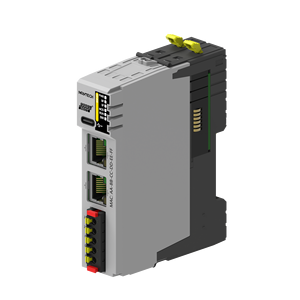
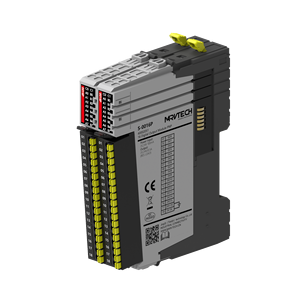
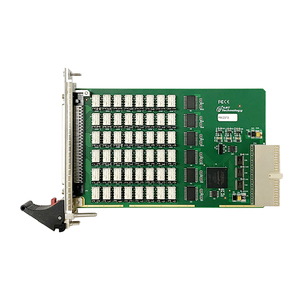
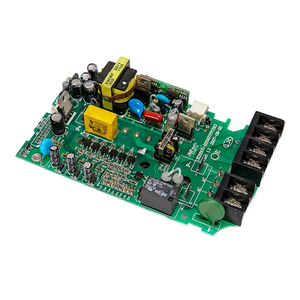
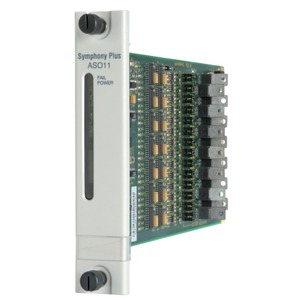
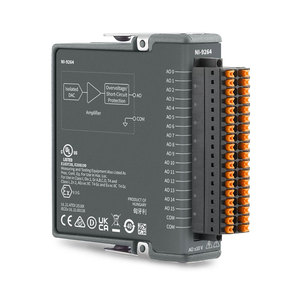
Modern mobile equipment design is undergoing a paradigm shift. The rapid transition from mechanical-hydraulic links to modern Electro-Hydraulic Steering (EHS) and fully electronic Steer-by-Wire (SbW) architectures has placed the vehicle control unit (ECU) at the heart of operational safety, machine productivity, and fuel efficiency. As off-highway machinery, mining equipment, agricultural tractors, and commercial specialized vehicles embrace semi-autonomous and autonomous capabilities, selecting a top-tier steering controller factory and exporter is no longer merely a procurement exercise—it is a critical safety engineering decision.
A steering controller acts as the central command node, capturing human operator inputs from joysticks, steering wheels, or remote teleoperation systems, processing real-time sensor telemetry (including wheel angle, hydraulic pressure, vehicle speed, and inclination), and calculating precise PWM (Pulse-Width Modulation) output signals to actuate proportional valves, hydraulic pumps, or electric steering motors. Because steering is classified as a safety-critical application, OEMs must source controllers engineered in accordance with rigorous functional safety frameworks such as ISO 25119 (AgPL d/e) for agricultural machinery, ISO 13849 (Performance Level d/e) for industrial vehicles, and ISO 26262 (ASIL D) for automotive networks.
Technical Information Gain: Sourcing an off-the-shelf industrial PLC rarely satisfies mobile machine safety standards. OEM steering controllers require hardware-level fault monitoring, redundant dual-microprocessor architectures (lockstep cores), dedicated watchdog circuits, and isolated CAN bus interfaces (SAE J1939 / CANopen) to withstand load dump transients and harsh electromagnetic environments.
When engineering and sourcing managers assess potential steering controller exporters, technical evaluation must extend far beyond unit price. The following core architectural pillars define industry-leading steering controllers:
Top manufacturers integrate dual-core microcontrollers (MCU) operating in lockstep mode or primary-secondary safety configurations. Independent hardware watchdogs, internal voltage monitoring, and real-time short-to-ground / short-to-battery detection on valve driver outputs ensure safe shutdown modes upon fault detection.
Controllers must feature fully potted, IP67 or IP69K-sealed aluminum housings designed to endure thermal shock (-40°C to +85°C), extended mechanical vibration (ISO 16750-3), salt spray corrosion, and chemical exposure from hydraulic fluids and diesel fuels.
Seamless communication over SAE J1939, CANopen, ISOBUS (ISO 11783), and CAN FD (Flexible Data-rate) is vital. Modern steering controllers also serve as fieldbus gateways, bridging legacy analog sensor inputs with digital Automotive Ethernet backbones.
| Controller Category | Target Application | Safety Certification | Typical I/O & Interface | Key Advantage |
|---|---|---|---|---|
| Electro-Hydraulic (EHS) Driver | Excavators, Wheel Loaders, Tractors | ISO 25119 AgPL d / SIL 2 | 4-8 PWM Outputs, 2x CAN (J1939), Dual Encoder | High-precision current closed-loop control for proportional hydraulic valves. |
| Steer-by-Wire (SbW) Master Unit | Autonomous Mining Haulers, AGVs | ISO 26262 ASIL D / PL e | Redundant CAN FD, Dual Core Lockstep MCU, Ethernet | Complete mechanical elimination with zero-latency fail-operational capability. |
| Compact Auxiliary Steering Module | Forklifts, Municipal Utility Vehicles | ISO 13849 PL c/d | 2x H-Bridge Motor Drivers, Analog/Digital I/O | Integrated DC motor controller for low-voltage electric power steering (EPS). |
| Protocol Gateway Steering Controller | Multi-Machine Retrofit & Fleet Automation | Standard Industrial / CE / FCC | Multi-port CAN/Ethernet/Modbus/RS-485 | Translates non-standard sensor signals into standardized J1939 steering commands. |
As a global leader in rugged electronic control units, power conversion systems, and signal conversion gateways, Axiomatic Technologies brings over three decades of engineering authority to mobile machine control. Operating under an ISO 9001:2015 certified quality management framework in Canada, Axiomatic combines rigorous R&D expertise with global manufacturing and application support hubs across Canada, the USA, Finland, and Australia.
Whether your machine fleet requires off-the-shelf programmable CANbus steering drivers or completely customized OEM electronic control units, Axiomatic delivers verified hardware engineered to withstand severe shock, vibration, thermal cycling, and harsh electromagnetic interference (EMC).
From firmware development in Canada and Finland to hardware schematic validation, design control stays entirely in-house. This ensures rapid tailoring of control algorithms, dither frequency parameters, and ramping speeds for specific hydraulic valve manifolds.
Every controller platform undergoes extensive environmental stress testing, including full IP67/IP69K sealing validation, HALT (Highly Accelerated Life Testing), and CISPR 25 / ISO 11452 EMC compliance testing for heavy vehicle environments.
Procurement teams and OEM system designers must align their component selection with emerging technology megatrends. Sourcing legacy controllers carries long-term supply chain risks and premature obsolescence.
As steering controllers connect to telematics gateways and cloud management systems, hardware-based security modules (HSM) are becoming mandatory. Procurement specifications now require secure boot, hardware encryption keys, and signed firmware update capabilities over-the-air (FOTA).
Traditional 250 kbps CAN bus channels are bottlenecked by autonomous sensor data streams. Advanced steering controllers feature dual-channel CAN FD (up to 5 Mbps) and 100BASE-T1 Automotive Ethernet to support real-time path planning and lidars/radar steering inputs.
Hybrid and battery-electric off-highway machines are driving demand for unified controllers that manage both proportional electro-hydraulic valves and low-voltage electric power steering motors simultaneously within a single compact module.
Direct technical answers to the most critical sourcing questions asked by OEM machine designers and global procurement executives.
Selection depends primarily on safety isolation and mechanical backup requirements. Electro-Hydraulic Steering (EHS) retains a secondary hydraulic or mechanical link for manual steering in emergency conditions, making it ideal for high-speed highway-rated machinery. Steer-by-Wire (SbW) eliminates mechanical links entirely, relying on redundant electronics and sensor feedback. SbW provides total flexibility in operator joystick mapping and teleoperation, but requires dual-redundant safety controllers certified to ISO 25119 AgPL e or ISO 13849 PL e.
SAE J1939 is the universal standard across North American off-highway, commercial vehicle, and engine control networks. CANopen (and CANopen Safety) is widely adopted in European industrial and mobile hydraulics. For agricultural machinery, ISOBUS (ISO 11783) compatibility ensures automatic steering control interaction with implement guidance systems. Higher bandwidth applications are increasingly specifying CAN FD and Automotive Ethernet (100BASE-T1).
Because steering controllers are typically mounted exposed on machine chassis or engine bays, minimum ingress protection should be IP67 (immersion resistance) or IP69K (high-pressure washdown). Testing documentation must verify thermal cycling between -40°C and +85°C, random mechanical vibration per ISO 16750-3, load dump voltage transient suppression (ISO 7637-2), and EMC immunity against strong RF fields.
Yes. Leading controller factories offer flexible firmware architectures allowing custom control loop configuration. Parameters such as joystick dead-bands, progressive steering gains, automatic straight-ahead centering, dither frequencies, and dynamic hydraulic valve compensation can be factory-configured or updated in the field via user-friendly CAN setup tools.
For standard catalogue controllers or factory-programmed variants, lead times typically range from 2 to 4 weeks depending on batch size. For fully customized hardware development projects (custom PCB design, housing tooling, and safety validation), development milestones span 6 to 12 months. Minimum Order Quantities (MOQ) vary based on custom tooling requirements, but prototype runs are supported during engineering evaluation phases.
Consult directly with our senior control engineers to evaluate your steering application requirements, review fieldbus compatibility, or request custom ECU prototype validation.