- ISO 9001:2015 Certified Manufacturing — Canada
- Engineering Support Since 1991
Explore high-reliability I/O modules, power converters, and process signal controllers built for demanding thermal and automation infrastructure.
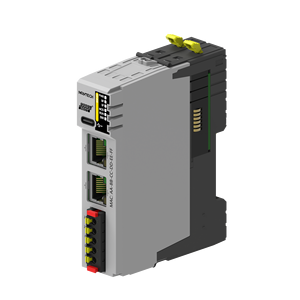
Heavy-duty PLC power and display module designed for high-density illumination, backlight drivers, and reliable continuous industrial power conversion.
Send an Inquiry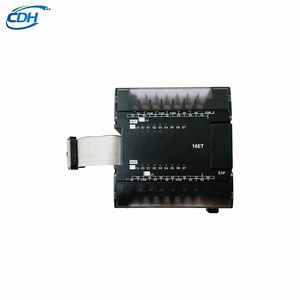
Precision 16-point solid-state transistor output expansion block for industrial automation control, high-speed switching, and logic isolation.
Send an Inquiry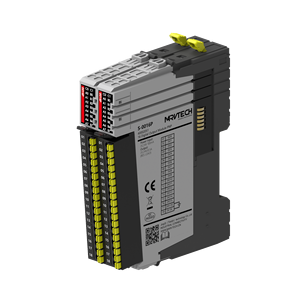
MT20S Series smart individual fieldbus interface platform supporting low-latency Ethernet/IP and Profinet protocols for distributed industrial automation.
Send an Inquiry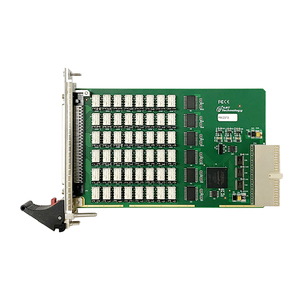
Programmable high-load discrete I/O board equipped with C++/C# development API support for custom machine control and automated sensor integration.
Send an Inquiry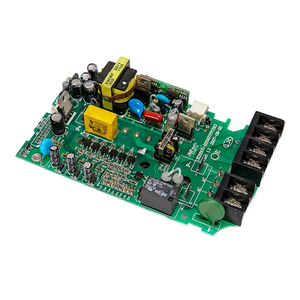
Multi-voltage hybrid solar inverter module featuring high-isolation transformers and software-configurable MPPT management for rugged off-grid energy platforms.
Send an Inquiry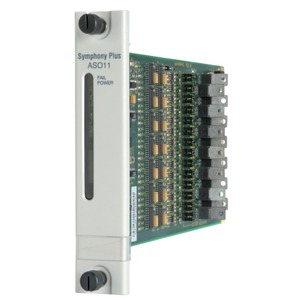
Ultra-low drift process control I/O module optimized for closed-loop thermal regulation, precise voltage modulation, and industrial sensor feedback.
Send an Inquiry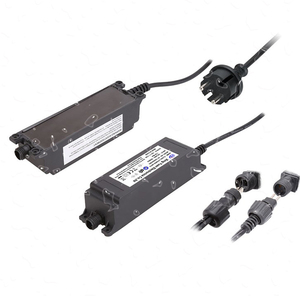
CE-certified, IP67 waterproof rated outdoor power module delivering regulated 5V-36V output for harsh ambient sensor arrays and field controllers.
Send an Inquiry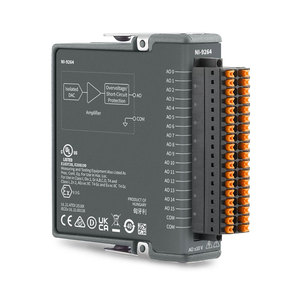
High-speed 25 kS/s per channel simultaneous ±10 V analog output module for industrial test rigs, multi-sensor calibration, and real-time control systems.
Send an InquiryTemperature measurement forms the fundamental backbone of modern process control, thermal management, heavy equipment monitoring, and industrial automation. In complex industrial ecosystems—ranging from off-highway construction machinery, marine propulsion units, and mining equipment to green power converters and automated manufacturing plants—accurate thermal telemetry directly dictates operational safety, system efficiency, and machine lifespan.
As industrial architectures shift from localized analog sensing toward decentralized, network-connected intelligence (utilizing protocols such as SAE J1939, CANopen, Ethernet/IP, and Modbus RTU), selecting the right temperature sensor manufacturer and system integration supplier has become a critical procurement decision. Procurement executives and systems design engineers must evaluate suppliers not merely on unit cost, but on holistic performance parameters including signal conditioning fidelity, electromagnetic compatibility (EMC), thermal shock tolerance, ingress protection, and total cost of ownership (TCO).
When specifying temperature monitoring systems for harsh operating environments, design engineering teams must first establish the optimal primary sensing element. Temperature transducers broadly fall into four foundational technical categories, each exhibiting distinct impedance, linearity, response time, and signal conditioning requirements:
Utilizing high-purity platinum elements (such as Pt100 and Pt1000), RTDs provide industry-standard linearity, exceptional stability, and low drift over operating windows ranging from -200°C to +850°C. Preferred for precise process control.
Based on the Seebeck effect between dissimilar metals, thermocouples deliver ultra-wide thermal detection spans up to 1800°C. They are essential for engine exhaust gas monitoring, furnace thermal tracking, and extreme temperature zones.
Semiconductor-based thermal sensors providing exponential resistance changes in response to temperature fluctuations. Ideal for localized, rapid-response electronic board thermal protection and automotive fluid monitoring.
While the physical probe senses the local thermal state, raw sensor outputs are extremely susceptible to electromagnetic noise, voltage drops across long wiring harnesses, and ground loops. Therefore, high-reliability applications rely on integrated signal conditioning modules—such as Axiomatic Technologies' CAN-bus temperature controllers and analog I/O hubs—that digitize raw sensor inputs directly at the point of measurement and broadcast robust data across vehicle networks.
Founded in 1991, Axiomatic Technologies Corporation has established itself as an international benchmark in rugged electronic controls, hydraulic valve drivers, DC-DC power conversion units, and industrial temperature monitoring equipment. Headquartered with fully certified ISO 9001:2015 manufacturing operations in Canada, combined with embedded firmware engineering hubs in Finland and sales/technical support facilities in the United States and Australia, Axiomatic delivers high-reliability machine controls engineered specifically for working machines operating in severe environmental conditions.
Unlike standard commercial-grade control suppliers, Axiomatic’s product engineering philosophy prioritizes resilience against mechanical shock, severe structural vibration, extreme ambient operating temperatures (-40°C to +85°C/+105°C), high humidity, dynamic chemical exposure, and severe electrical transients common in heavy equipment power grids.
Hardware architecture, multilayer PCB layout, and real-time firmware development are executed in-house across Canada and Finland, ensuring rapid OEM customization and total code traceability.
Every controller design undergoes stringent functional verification, climatic thermal cycling, HALT/HASS testing, and full EMC compliance testing for rugged industrial vehicle environments.
Active participation in SAE International and CAN in Automation (CiA) ensures seamless implementation of SAE J1939, CANopen, CAN FD, Modbus, and Automotive Ethernet protocols across all product lines.
The global temperature sensor market is undergoing a structural technological shift driven by Industry 4.0 digitisation, electrification of off-highway machinery, and dynamic thermal optimization in renewable energy storage systems. B2B procurement managers and system integrators must align their sourcing strategies with these dominant technical vector trends:
Traditional industrial control panel designs relied on individual copper sensor wires running hundreds of meters from thermal probes back to a central PLC rack. This legacy architecture suffered from continuous attenuation, severe signal degradation due to EMI/RFI noise from variable frequency drives (VFDs), and heavy wiring harness weight.
The modern engineering standard replaces analog runs with localized, multi-channel thermal monitoring units mounted directly on the engine engine block, battery module, or hydraulic reservoir. These nodes process 8 to 20 RTD or thermocouple channels simultaneously, convert signals into high-resolution digital telemetry, and transmit data over a single twisted-pair SAE J1939 or CANopen network, reducing copper wiring costs by up to 65% while eliminating line noise.
Next-generation temperature controllers no longer merely report real-time degrees Celsius; they operate as intelligent edge-computing devices. Modern units incorporate real-time sensor diagnostic algorithms capable of identifying open-circuit conditions, short-to-ground faults, sensor aging drift, and rate-of-change thermal anomalies. By feeding high-frequency thermal trend data into predictive maintenance models, commercial operators can anticipate bearing failure, hydraulic fluid degradation, or cooling loop clogging days before catastrophic failure occurs.
With the rapid electrification of heavy machinery, commercial utility vehicles, and energy storage systems (ESS), temperature monitoring modules must now operate safely alongside high-voltage DC buses (400V to 1000V DC). Suppliers must provide high galvanic isolation (e.g., 1500V AC to 3000V DC breakdown strength) between sensor inputs, power supply rails, and fieldbus communication ports to prevent hazardous high-voltage transients from destroying control electronics or endangering vehicle operators.
Industrial temperature sensors and monitoring modules deployed in mining, agriculture, and marine propulsion face relentless high-pressure steam jet cleaning, salt spray, oil submersion, and extreme mechanical shock. Leading manufacturers utilize high-grade aluminum or TEUTONIC resin enclosures filled with specialized thermal potting compounds, achieving IP67 and IP69K ingress protection ratings that guarantee multi-year zero-leak performance.
To assist procurement managers and systems design engineers in evaluating system architecture requirements, the benchmark matrix below outlines key selection parameters across primary industrial temperature sensing and control categories:
| Technology Category | Measurement Span | Typical Signal Accuracy | Interface / Protocol | Primary Industrial Application | Strategic Selection Advantage |
|---|---|---|---|---|---|
| Multi-Channel RTD Module | -200°C to +850°C | ±0.1°C to ±0.3°C | SAE J1939 / CANopen | Engine oil, hydraulic fluids, coolant lines | High linear accuracy, long-term drift stability |
| Thermocouple Monitoring Unit | -40°C to +1250°C (Type K) | ±0.5°C (with CJC) | CANbus / Modbus RTU | Exhaust manifolds, turbos, kilns, furnaces | Ultra-wide temperature sensing range |
| Smart Digital Thermal Node | -40°C to +125°C | ±0.5°C | Automotive Ethernet / IO-Link | Electric vehicle battery packs (BMS), ESS | Decentralized wiring, embedded diagnostics |
| Hybrid Power & Thermal Controller | -40°C to +85°C ambient | ±1.0% FS Output | Analog PWM / Solid State Switch | Variable speed fan drive, thermal management | Integrated closed-loop power control & sensing |
Procuring industrial-grade temperature control electronics and sensor interface platforms requires evaluating long-term operational costs rather than initial purchase price alone. Global supply chain volatility, component obsolescence, and stringent environmental compliance regulations necessitate a structured, strategic procurement methodology:
While low-cost unrated sensors may lower upfront capital expenditure, their failure rates under harsh field conditions lead to excessive warranty claims, unscheduled equipment downtime, and potential safety liability. A robust OEM sourcing model factors in MTBF (Mean Time Between Failures), warranty duration, IP rating reliability, and supplier responsiveness. Axiomatic's rigorous design qualification ensures extended operational service lives exceeding 10+ years in harsh off-highway applications.
Off-the-shelf control modules rarely match specific OEM machine mounting footprints or custom CAN bus messaging structures perfectly. Sourcing from manufacturers capable of offering factory pre-configured software, custom connector assembly, and tailored firmware algorithms drastically reduces software engineering workload for the OEM’s machine integration team, cutting product time-to-market by months.
Modern industrial temperature units, such as those engineered by Axiomatic Technologies, support industry-standard heavy-duty vehicle protocols including SAE J1939, CANopen, and CAN FD as standard. For broader industrial automation integration, specific platforms support Modbus RTU/TCP, Ethernet/IP, Profinet, Automotive Ethernet, and legacy RS-485 interfaces. Dual-bus protocol gateways are also available to bridge fieldbus networks.
Thermocouples measure the voltage differential generated between two dissimilar metals at the measuring tip versus the connection point (junction) on the terminal board. Cold Junction Compensation utilizes a precision internal RTD or thermistor located directly at the input terminal block to accurately measure the ambient temperature at the junction. The microcontroller calculates the absolute temperature by adding the measured cold-junction ambient temperature to the thermocouple voltage reading.
Yes. Axiomatic offers full OEM electronic contract design and custom engineering services worldwide. Engineering scope spans custom PCB hardware layout, specialized housing design, targeted connector pinouts, and custom firmware logic development. Where rapid deployment is required, existing hardware platforms can be factory pre-programmed to meet specific customer CAN bus message maps and functional algorithms.
Axiomatic products are designed to survive the harshest off-highway, marine, and industrial conditions. Enclosures are sealed to IP67 or IP69K standards to prevent water, dust, and solvent ingress. Units undergo rigorous qualification testing for mechanical shock and vibration (MIL-STD-202G/810G standards), extended temperature operation (-40°C to +85°C/+105°C), and severe EMC/RFI immunity in compliance with ISO 13766, CE, and SAE J1113 standards.
Instead of routing dozens of individual, shielded analog sensor wires from various engine locations back to a central control cabinet, a multi-channel CAN temperature module is installed close to the sensing points. The module aggregates up to 20 temperature inputs, digitizes the signals, and broadcasts all data across a single 2-wire CAN bus backbone. This dramatically simplifies machine harness design, eliminates electrical noise pickup, and reduces harness installation labor.
Axiomatic operates a fully certified ISO 9001:2015 quality management facility located in Mississauga, Canada. In addition, the organization maintains active engineering and sales operations in Finland, the USA, and Australia. Axiomatic is an active corporate member of CAN in Automation (CiA) and SAE International, directly engaging in the development of emerging vehicle control standards.
Connect directly with Axiomatic's application engineering team to review your temperature sensor interface requirements, request customized CANbus firmware, or order technical evaluation hardware.
Send an Inquiry