


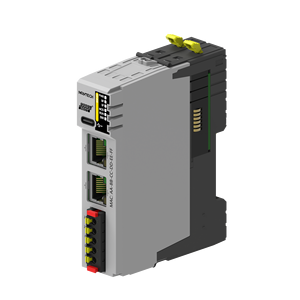
Industrial Laser Receiver Display & Power Controller Module
- CE Certified High-Intensity Light Display
- Direct Power Conversion for Machine Control
- Multi-Channel Backlight Display Interface
- Operating Temp: -40°C to +85°C
Engineered for seamless integration with OEM machine control systems across South Korea. All modules feature certified CE noise immunity, rugged shock resistance, and direct bus protocol compatibility.
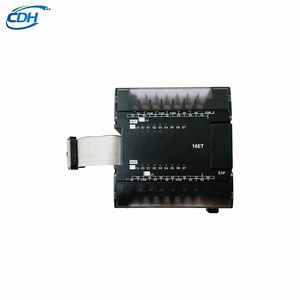
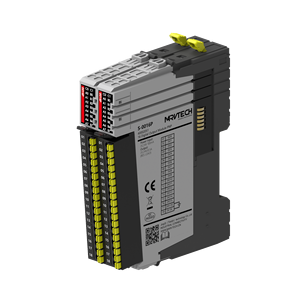
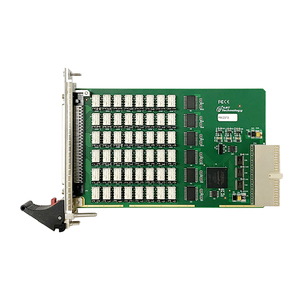
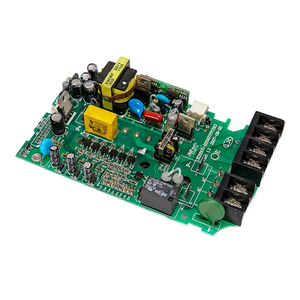
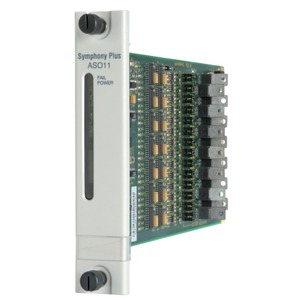
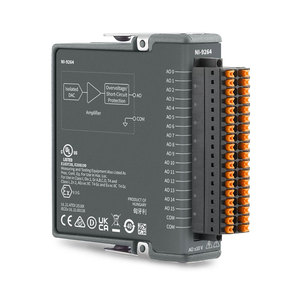
An in-depth guide to optical signal conditioning, CANbus message translation, and environmental compliance for Korean original equipment manufacturers (OEMs) and system integrators.
South Korea’s industrial sector is currently undergoing a rapid transformation driven by the government’s Smart Construction 2030 Roadmap and the nationwide push for autonomous smart factory operations. Original Equipment Manufacturers (OEMs) in South Korea—ranging from earthmoving equipment giants in Incheon and Yongin to high-tech shipyard automation integrators in Ulsan and Geoje—require robust, zero-latency optical laser sensing solutions. Navigating complex site dynamics requires equipment equipped with high-dynamic-range CE certified industrial laser receivers that maintain absolute positioning accuracy despite extreme vibration, solar interference, and severe electromagnetic noise.
An industrial laser receiver deployed on a motor grader, excavator, or automated concrete screed serves as the primary ground-truth position sensor. The core sensor architecture utilizes an array of high-sensitivity silicon PIN photodiodes configured in a vertical or circular matrix. When a rotating red or green laser transmitter sweeps across the sensor array, light photons generate fractional microampere photocurrents proportional to the incident light flux.
Standard commercial laser sensors often experience saturation failure when operated under direct sunlight in open-pit Korean civil engineering projects. Our CE-certified industrial laser receivers employ narrow-band optical interference filters paired with active DC-restoration transimpedance amplifiers (TIA). This architecture rejects ambient solar radiation (up to 100,000 Lux) while amplifying the high-frequency pulsed laser signals (up to 1200 RPM sweeps) with a response latency under 1.5 microseconds.
The differential voltage output from the photo-amplifier stage is processed via an onboard high-speed digital signal processor (DSP). By measuring the exact time-of-flight strike across the photodiode array, the DSP calculates the beam center with sub-millimeter elevation accuracy. This height error signal is converted directly into proportional control commands for hydraulic solenoid valves or transmitted via CAN bus frames (SAE J1939 / CANopen) to the primary vehicle electronic control unit (ECU).
Modern Korean equipment architectures no longer rely on primitive analog voltage feedback, which is prone to voltage drops and ground-loop noise across long wiring harnesses. Our export-grade laser receiving systems incorporate fully integrated microcontroller nodes supporting standard vehicle and factory fieldbuses:
This deep hardware and software integration minimizes wiring complexity, reduces installation labor costs, and enables real-time telematics reporting back to central fleet control centers.
Tailored engineering solutions addressing the specific harsh operating environments and high-precision demands of South Korea’s key industrial sectors.

Integrated directly onto excavators, bulldozers, and graders operating across major Smart City developments in Songdo, Cheongna, and 3rd-Generation New Towns. Receivers supply millimetric grade feedback to hydraulic actuators for automated land leveling.

Deploying optical receiver nodes for automated laser leveling of multi-thousand-ton hull blocks during LNG carrier assembly. Offers shock absorption against heavy structural impacts and immunity against surrounding high-power arc welding noise.
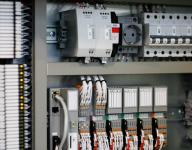
Ultra-flat concrete floor pours in mega semiconductor cleanrooms (Pyeongtaek & Yongin clusters) demand zero structural deviation. Our receivers provide 360-degree laser tracking with sub-millimeter precision for laser screed robots.

Automated paddy field leveling tractors equipped with CANbus-linked laser receivers optimize water resource distribution and crop yields across South Korea's automated agricultural cooperatives.
Technical evaluation matrix comparing mission-critical performance metrics required for OEM machinery exports into the South Korean market.
| Technical Parameter | Axiomatic CE Certified Industrial Receiver | Standard Commercial Grade Receiver | Impact on Korean OEM Equipment |
|---|---|---|---|
| Communication Interface | Native SAE J1939 / CANopen | Raw Analog Voltage / Relay Switch | Eliminates external gateway costs; plugs directly into HD Hyundai / Doosan ECUs. |
| Optical Bandwidth & Dynamic Range | 635nm – 780nm with Active Solar Rejection | Basic Photodiode Array (Unfiltered) | Prevents false triggers under direct Korean summer sunlight & site reflection. |
| Ingress Protection Rating | IP67 & IP69K Sealed Encapsulation | IP65 Plastic Housing | Withstands high-pressure steam washing and chemical exposure on construction sites. |
| Operating Temperature Limits | -40°C to +85°C Industrial Range | -10°C to +50°C Standard Range | Reliable operation through harsh Korean winters (-20°C) and hot humid summers. |
| EMC & CE Certification | CE Marked, EN 61000-6-2, EN 61000-6-4 Compliance | Uncertified / Basic CE Self-Declaration | Ensures fast KC (Korea Certification) harmonization and zero EMI field failures. |
| Shock & Vibration Resistance | MIL-STD-202G Method 214A (50g Shock) | Low-g Commercial Plastic Mount | Prevents internal solder joint fracture under extreme hydraulic pile-driving shock. |
Understanding the regulatory, demographic, and technological shifts governing machine control procurement in Korea.
South Korea’s National Radio Research Agency (RRA) strictly enforces Electromagnetic Compatibility (EMC) regulations for all industrial electronics entering Korean ports. Importing CE certified laser receivers with validated immunity (EN 61000-6-2/4) significantly reduces the time and cost required for local KC certification approval, enabling Korean importers to bring machinery to market without regulatory delay.
Facing a shrinking skilled construction labor force, Korean civil engineering contractors are mandating 3D Machine Guidance (3MG) and 2D Laser Machine Control across all government tenders. Industrial laser receivers act as the critical real-time sensory link, replacing manual grade-checkers with millimeter-accurate automated control loops.
Korea’s 5G industrial networks require sensor nodes to stream health and position data continuously. Our laser receiver controllers output real-time dynamic diagnostic telemetry (temperature, voltage supply, signal noise ratio, alignment vector) directly over CAN bus to onboard telematics units.
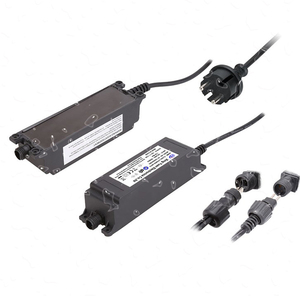
Modern electrical systems on electric excavators and hybrid working machines demand highly stable power conversion. Pairings between our CE certified Class 2 waterproof power units and laser receiving arrays guarantee smooth voltage delivery without thermal throttling.
Over three decades of specialized design, testing, and ISO-certified manufacturing in rugged machine electronics.
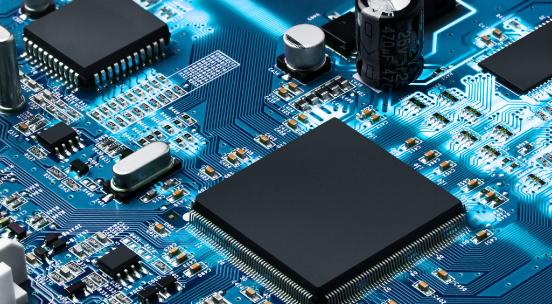
Since 1991, Axiomatic Technologies has engineered advanced electronic controls, power management converters, and laser receiving solutions for machines working in the world's most unforgiving environments. With engineering and R&D headquarters based in Canada and firmware development centers in Canada and Finland, we deliver custom hardware and software tailored to OEM specifications.
Whether your application requires factory-flashed custom J1939 CAN frame mappings, customized wire harnesses, or specialized optical array heights, our engineering team manages complete product lifecycles under stringent ISO 9001:2015 quality standards.
Manufacturing facility in Canada operating under validated quality management processes.
Active contributor to CiA CANopen & CAN FD international protocol standards committee.
Direct alignment with SAE J1939 commercial vehicle and off-highway electronic controls standards.
Comprehensive technical and logistical guidance for procurement managers, engineering leads, and machinery distributors in South Korea.
Our industrial laser receivers are certified under European CE directives for Electromagnetic Compatibility (EMC EN 61000-6-2 for immunity and EN 61000-6-4 for emissions). Because South Korea's National Radio Research Agency (RRA) harmonizes KC EMC testing requirements with international CISPR and IEC standards, providing our comprehensive CE test reports enables Korean importers to streamline local lab validation, significantly shortening certification timelines and lowering compliance expenses.
Yes. Our controllers feature native SAE J1939 and CANopen communication stacks. They send laser position, elevation offset, and diagnostic status directly over the standard 250 kbps or 500 kbps CAN network. Korean equipment OEMs can map our standard PGN data frames directly into their primary display units or machine control computers without requiring third-party protocol conversion gateways.
Our optical detection array incorporates active DC optical restoration combined with narrow-band optical interference filters. This allows the receiver to reject direct solar irradiance up to 100,000 Lux and high-frequency reflections from glass or water while accurately detecting red (635nm–670nm) and green (520nm–532nm) rotating lasers at distances up to 800 meters across open construction sites.
We provide factory pre-programming and custom wiring assembly services. Korean OEM customers can specify custom CAN bit rates, specific frame ID allocations, control logic parameters (such as proportional valve output curves), and heavy-duty sealed connectors (e.g., Deutsch DT/AMPSEAL). Units arrive at your assembly plant ready for plug-and-play installation.
Standard catalog items are stocked and dispatched from our primary operations within 1 to 2 weeks, while custom OEM production runs typical range from 4 to 6 weeks. Shipments to South Korea are routinely routed via express air freight (Incheon International Airport - ICN) or sea freight (Busan Port). All export documentation—including Certificates of Origin (COO), Commercial Invoices, Packing Lists, and CE Declaration of Conformity—is formatted for rapid South Korea Customs Clearance.
All Axiomatic industrial laser receivers and power conversion modules are backed by a standard 12-month factory warranty against manufacturing defects. In the event of a field technical inquiry, our global application engineering teams in Canada and Finland provide direct technical assistance, CAN bus trace debugging, and expedited RMA root-cause analysis.