- ISO 9001:2015 Certified Manufacturing — Canada
- Engineering Support Since 1991
Engineered for Japanese commercial fleets, Tokyo port logistics, and rugged off-highway machinery operating across the Kanto region.
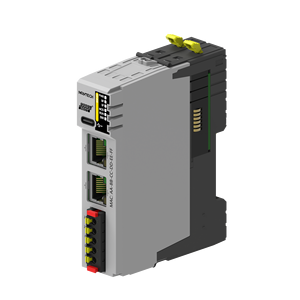
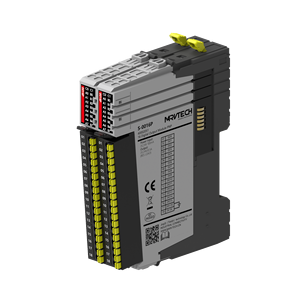
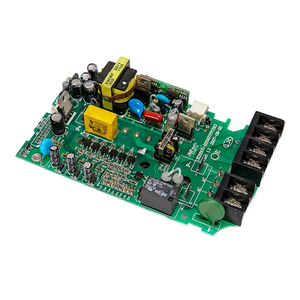
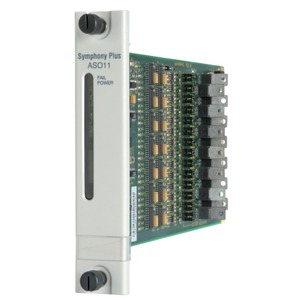
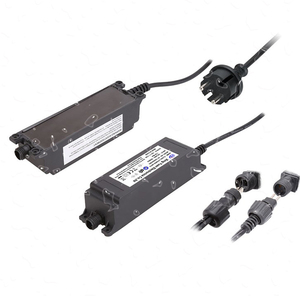
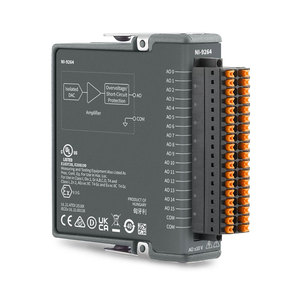
Addressing the strict reliability, wireless compliance, and real-time edge processing demands of Japan’s commercial automotive industry.
As the Greater Tokyo Metropolitan Area advances its smart transportation infrastructure under the Ministry of Land, Infrastructure, Transport and Tourism (MLIT) mandates, commercial fleet operators and heavy industrial original equipment manufacturers (OEMs) require highly dependable telematics hardware. Telematics units (TCUs) sourced for Tokyo must bridge complex multi-bus vehicle networks—such as SAE J1939, CAN FD, and ISOBUS—with low-latency wireless cellular protocols while adhering strictly to Japan’s MIC (Ministry of Internal Affairs and Communications) TELEC radio frequency regulations.
China’s premier telematics factories have emerged as essential manufacturing partners for Tokyo system integrators. By combining Tier-1 automotive hardware engineering, advanced surface-mount technology (SMT) cleanroom assembly, and competitive total cost of ownership (TCO), top-tier Chinese manufacturers deliver customizable telematics solutions engineered to perform seamlessly across Tokyo’s complex urban, coastal, and sub-zero mountainous environments.
High-throughput telemetry processors capable of parsing raw vehicle bus data, decoding J1939 proprietary PGNs, and performing edge filtering before data transmission to cloud dashboards, minimizing cellular payload costs.
High-density Tokyo urban canyons like Shinjuku and Marunouchi frequently disrupt satellite signals. Our units feature multi-constellation RTK and inertial sensor (IMU) dead reckoning for uninterrupted positional tracking.
Equipped with Hardware Security Modules (HSM), secure boot mechanisms, and TLS 1.3 encrypted data channels to prevent unauthorized vehicle bus injection and protect corporate fleet intelligence.
Purpose-built hardware deployed across critical commercial sectors in Tokyo, Chiba, Kanagawa, and Saitama prefectures.
Precision temperature telemetry integrated with wireless BLE sensors monitor high-value perishable seafood and pharmaceutical distribution from Toyosu Market throughout Metropolitan Expressway networks. Instant alerting via cellular IoT prevents thermal excursions during urban traffic jams.
Heavy machinery operating on major earthmoving and foundation projects requires rugged IP69K ingress protection, vibration-isolated dual CAN bus controllers, and heavy-duty hydraulic valve telemetry to deliver real-time load, tilt, and engine torque stats to central site managers.
With Tokyo targeting full commercial fleet decarbonization, our hybrid power telematics gateways capture high-voltage battery state of charge (SOC), cell temperature differential, and regenerative braking metrics, providing fleet engineers with critical battery health forecasting.
Telematics TCUs connected to Driver Monitoring Systems (DMS) process lane deviation, driver fatigue, and harsh braking events in real-time. Automated emergency notifications over 5G networks ensure compliance with Japanese commercial transport safety guidelines.
Navigating the Japanese telecommunications landscape requires strict compliance with domestic wireless standards and evolving connectivity protocols.

Compare key technical metrics across our core telematics hardware families to match your fleet or OEM machine requirements.
| Telematics Platform | Processor & Memory | Network Interfaces | Wireless Connectivity | Ingress Rating | Target Application |
|---|---|---|---|---|---|
| Pro-Gateway TCU-5000 | Dual-Core ARM Cortex-A7 @ 1.2GHz | 2x CAN FD, 1x RS-485, 1x LIN | 5G NR / 4G LTE Cat-4 / Wi-Fi 6 | IP67 Sealed | Heavy Commercial Trucks & Interstate Logistics |
| Compact IoT Gateway-300 | 32-Bit ARM Cortex-M4 ST Micro | 1x CAN 2.0B, 1x RS-232 | 4G LTE-M / NB-IoT / BLE 5.2 | IP65 Molded | Urban Last-Mile Delivery & Cold-Chain Van |
| Rugged Hydraulic ECU-800 | High-Reliability Automotive MCU | 3x CAN (J1939 / ISOBUS) + PWM Out | Cellular IoT + Satellite Backup | IP69K Waterproof | Construction Excavators & Port Cranes |
| EV Fleet Telematics Controller | Dual MCU with Hardware Security Module | 2x CAN FD, Automotive Ethernet | 5G Sub-6GHz + IEEE 802.11p V2X | IP67 Enclosure | Electric Buses, Taxis & Battery Fleet Ops |
Decades of specialized CAN-bus engineering combined with high-volume ISO certified manufacturing excellence.
Our engineering team in Canada and China delivers end-to-end customization across hardware schematics, multi-layer PCB design, customized wire harnesses, and tailor-made firmware protocols for fast-track OEM projects.
Every telematics device is built under rigorous quality control standards, featuring automatic optical inspection (AOI), automated X-ray inspection (AXI), and 100% full-load burn-in testing prior to global shipment.
We work directly with domestic testing houses to ensure our hardware meets TELEC, JATE, CE, FCC, and RoHS standards, reducing risk and accelerating time-to-market for Tokyo importers.
Essential answers regarding certification, software integration, lead times, and OEM customization.
Yes. Our cellular and wireless telematics units utilize pre-approved TELEC/JATE wireless modules or can be custom-certified through our accredited laboratory partners, allowing rapid commercial deployment on Japanese network carriers.
Absolutely. In addition to standard SAE J1939, OBD-II, and CANopen protocols, our firmware team can integrate custom DBC files and proprietary PGN structures used by Hino, Isuzu, Fuso, and Nissan Diesel platforms.
Standard catalog platforms are available with a lead time of 2–3 weeks. Custom OEM variants requiring specialized PCB or enclosure modifications typically take 4–6 weeks for sample validation, followed by fast sea or air freight to Tokyo/Yokohama ports.
All off-highway and heavy truck telematics controllers undergo HALT/HASS environmental screening and are qualified to ISO 16750 and MIL-STD-810G standards, ensuring resistance to severe mechanical vibration and power transients.
Yes. We offer SDKs, API documentation, and custom firmware integration for MQTT, HTTPS, and AWS IoT Core connections, enabling secure data streaming directly into your proprietary enterprise portal.
Connect directly with our senior hardware and software application engineers. Request custom technical datasheets, sample units, or request a complete technical RFP evaluation today.