- ISO 9001:2015 Certified Manufacturing — Canada
- Engineering Support Since 1991
Engineered for high-vibration earthmoving, precise grading, and harsh industrial environments in Mumbai's expanding infrastructure sector.
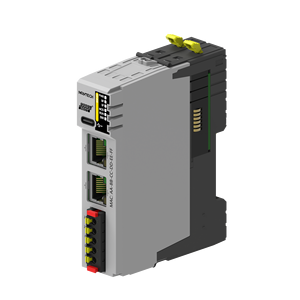
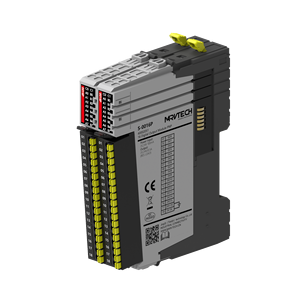
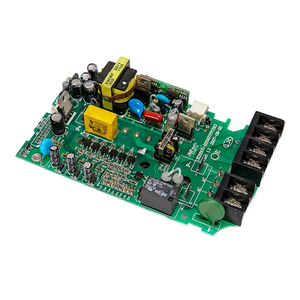
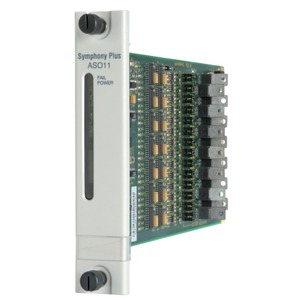
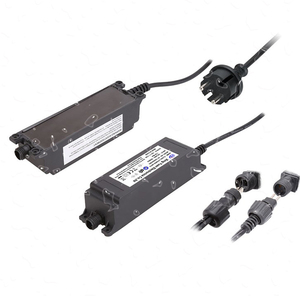
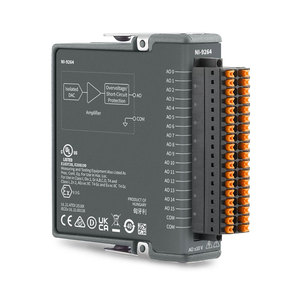
In the rapidly transforming landscape of the Mumbai Metropolitan Region (MMR), civil infrastructure development—ranging from the Mumbai Trans Harbour Link (MTHL) extensions, Navi Mumbai International Airport ground clearing, to the vast Mumbai Metro Rail Expansion (MMRDA)—demands unprecedented precision in subgrade earthmoving, site levelling, and automated concrete paving. At the core of modern 2D and 3D automated grade control systems lies the Industrial Laser Receiver.
As a premiere OEM manufacturer and engineering authority originating from advanced control technology ecosystems in Canada and China, our manufacturing facilities specialize in delivering high-gain photodiode sensor arrays, real-time SAE J1939/CANopen communication interfaces, and heavy-duty IP68-sealed sensor enclosures. This white paper serves as a comprehensive technical guide for procurement managers, equipment OEMs, and EPC contractors operating across Mumbai and the broader Indian subcontinent.
An industrial laser receiver operates as the primary feedback transducer in automated grading systems. Mounted directly to the mast of an excavator, motor grader, or bull dozer, the sensor must capture continuous 360-degree laser planes emitted by rotating transmitter units operating at 600 to 1200 RPM.
When operating in high ambient temperature and direct solar glare typical of coastal Maharashtra, standard optical receivers suffer from solar saturation, leading to missed strikes or phantom signals. Our proprietary sensor heads integrate multi-layer optical bandpass coatings paired with high-frequency electronic chopping. This enables continuous strike recognition even under 100,000 Lux ambient solar illumination, transmitting raw position data straight to the hydraulic valve controller without signal degradation.
Sourcing laser receivers and industrial I/O controllers for Mumbai requires direct alignment with local geotechnical conditions, extreme weather patterns, and specific OEM machinery fleets predominant in the region (e.g., JCB, Tata Hitachi, Caterpillar, SANY, Komatsu).
Projects around Jawahar Lal Nehru Port Trust (JNPT) and Navi Mumbai maritime zones present aggressive saline environments combined with soft estuarine mudflats. Laser receivers mounted on dredging excavators and piling rigs require complete resistance to marine corrosion, continuous salt fog, and high humidity.
Our receivers feature marine-grade anodized aluminum enclosures, potted internal PCB assemblies using polyurethane potting resins, and heavy-duty Deutsch DT nickel-plated connectors. Tested to MIL-STD-810G for salt spray, these systems provide long-term durability along the Mumbai coastline.
Underground Metro corridors and deep utility trenching demand tight elevation control within narrow urban rights-of-way. By pairing our CANbus-enabled 360-degree laser receivers with high-precision inclinometers and tilt sensors, contractors achieve real-time dual-axis grade control. This prevents over-excavation of Mumbai's hard basalt bedrock, reducing expensive concrete backfill volumes by up to 18%.
Mumbai's monsoon season brings tropical downpours exceeding 2,500 mm annually, alongside ambient ground temperatures soaring above 45°C in pre-monsoon months. Equipment components frequently fail due to thermal shock and moisture ingress.
The Indian machine control market is witnessing a massive transition from traditional stringline and manual optical levelling to 2D laser-guided and 3D GNSS-integrated automatic blade control. Driven by government mandates for accelerated highway execution (NHAI) and smart city logistics hubs across Thane, Bhiwandi, and Pune industrial corridors, contractors are upgrading existing machine fleets with aftermarket laser control kits.
A complete 2D machine control loop requires high-speed synchronization between optics, processing hardware, and hydraulic power units. Below is the simplified real-time data topology engineered by our China manufacturing hub:
| System Component | Technical Function | Communication Protocol | Key Performance Parameter |
|---|---|---|---|
| Industrial Laser Receiver | Detects 360° rotating laser plane elevation | SAE J1939 CANbus / PWM | ±0.5mm to ±10mm selectable deadband; 10Hz-50Hz update rate |
| Dual-Axis Heavy Inclinometer | Measures cross-slope and mainfall machine chassis tilt | CANopen / RS-485 Modbus | 0.01° resolution; dynamic MEMS accelerometer filtering |
| Central Machine ECU / Gateway | Executes PID grade algorithms & signal conversion | Profinet / Ethernet IP / CAN FD | 32-bit ARM Cortex-M7 core; real-time deterministic OS |
| Proportional Hydraulic Driver | Drives proportional solenoids on hydraulic main valve | PWM / Current-Loop (0-2.5A) | Closed-loop current feedback; adjustable dither frequency |
| Automotive Waterproof Power Unit | Regulates battery power & protects against load dump | Class 2 Isolated DC-DC | 9V-36V input range; 3kV surge isolation; IP67 outdoor rating |
By providing direct C++/C# software development support and open CANbus message mapping, our controllers allow Mumbai-based system integrators to write custom grade control firmware tailored to specialized machinery, such as sugarcane land levellers, airport runway pavers, and railway ballast regulators.
Selecting an industrial laser receiver supplier requires evaluating core engineering control, manufacturing quality systems, and global support capabilities. Building on over 30 years of harsh-environment electronics design heritage (originating with Axiomatic engineering practices), our facility bridge Chinese manufacturing scale with international quality compliance.
Our receivers offer dual output options: direct proportional pulse-width modulation (PWM) signals to drive hydraulic solenoid valves directly, or SAE J1939 CANbus messages that interface seamlessly with secondary machine control units (ECUs) such as Danfoss, Rexroth, or Axiomatic system controllers.
Yes. All receiver models designed for the Indian market feature IP68/IP69K ingress protection, ruggedized cast-aluminum housings, and fully potted interior electronic boards. They are validated to perform in ambient temperatures ranging from -40°C to +85°C with 100% condensing humidity resilience.
Standard models support SAE J1939 and CANopen protocols. Additional protocol translation modules are available for Profinet, Ethernet/IP, RS-485 Modbus RTU, and Automotive Ethernet to support advanced telemetry and fleet management systems.
Standard catalogue items are dispatched within 3 to 5 business days. Express air freight to Mumbai Air Cargo (BOM) takes approximately 3 to 5 days, while sea freight containers to JNPT Port typically require 14 to 18 days transit time.
Absolutely. Our embedded software team provides factory-programmed CAN IDs, customized deadband bandwidth settings, and custom software libraries supporting C++ and C# integration for localized OEM machine developers.
Yes. Our manufacturing facilities operate under an ISO 9001:2015 Quality Management System. Products comply with CE, ROHS, and EMC directives for high-vibration off-highway vehicles and industrial automation equipment.
Contact our application engineering team today for technical datasheets, CAD models, factory-direct quotes, or custom OEM controller development.
Get a Quote