- ISO 9001:2015 Certified Manufacturing — Canada
- Engineering Support Since 1991
Engineered for high-vibration off-highway vehicles, automated manufacturing lines, and severe industrial environments across Poland and Europe.
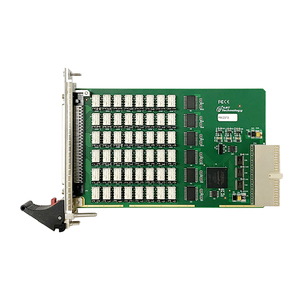
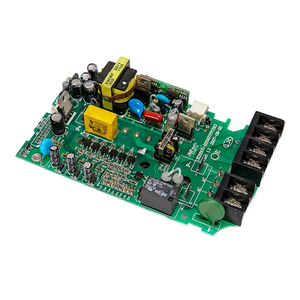
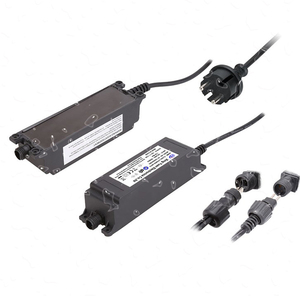
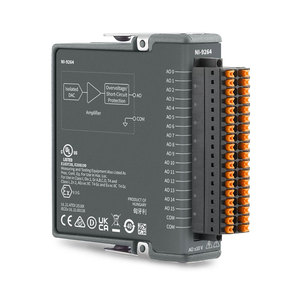
As Poland solidifies its position as Central and Eastern Europe’s (CEE) primary engine for advanced manufacturing, industrial automation, and heavy equipment production, the technical demands placed on electric motor drive controllers have reached an unprecedented level of complexity. Driven by national re-industrialization initiatives, strict European Union carbon-neutrality mandates, and rapid adoption of Industry 4.0 architecture, Polish original equipment manufacturers (OEMs) and system integrators require power electronics that exceed baseline performance metrics. Electric motor drive controllers serve as the nervous system of modern automated machinery, coordinating pulse-width modulation (PWM), closed-loop speed regulation, vector torque management, and high-speed fieldbus synchronization across severe operational conditions.
Exporting electric motor controllers to Poland requires an in-depth understanding of local operating conditions—ranging from sub-zero winter thermal stresses in open-pit mining operations across Silesia to high-duty cycles in automotive assembly plants surrounding Katowice, Poznań, and Wrocław. Technical procurement leaders no longer seek simple speed regulators; they demand intelligent, ruggedized electronic control units (ECUs) capable of seamlessly bridging deterministic CANopen or SAE J1939 vehicular networks with industrial real-time Ethernet protocols like PROFINET, Ethernet/IP, and Modbus TCP.
To deliver true technical value to design engineers, an electric motor drive controller must be evaluated by its architectural subsystems: hardware power stages, embedded firmware algorithms, galvanic isolation barriers, and fieldbus communication stack capability. The performance of these subsystems directly determines machine efficiency, thermal dissipation profile, electromagnetic compatibility (EMC), and operational longevity.
Utilizing high-frequency Silicon Carbide (SiC) and discrete MOSFET topologies to maximize power density while reducing switching loss thermal footprint in compact aluminum enclosures.
Native integration of dual CAN 2.0B channels with SAE J1939, CANopen, and PROFINET protocol gateways for microsecond control loop timing across industrial networks.
Fully encapsulated potted enclosures providing IP67/IP69K sealing against moisture, chemical washdowns, and broad operating temperature ranges from -40°C to +85°C.
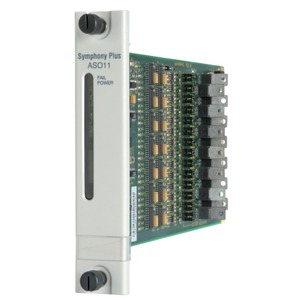
Modern electric drive units operate by receiving digitized control commands via fieldbus inputs or precision analog reference signals (such as 0-10V, 4-20mA, or differential voltage outputs like those generated by NI-9264 or SPASO11 modules). The internal microcontrollers compute Field-Oriented Control (FOC) or Direct Torque Control (DTC) algorithms to drive high-side and low-side power switches. This dynamic control loop guarantees smooth continuous torque even at near-zero RPM, preventing mechanical striction in heavy machinery actuators, hydraulic replacement pumps, and electric winch systems.
Supplying electric motor drive controllers and fieldbus modules to Poland requires matching specific controller hardware specifications to the precise industrial topologies of Polish economic zones:
Analyzing procurement data and engineering queries from Polish OEMs reveals four pivotal technological transitions currently reshaping the market for motor drive controllers and automation accessories:
A. Transition from Hydraulic Actuation to Electro-Mechanical Drives: In line with EU Green Deal directives, Polish machinery builders are replacing traditional fluid power hydraulics with high-efficiency electric motors and electro-hydraulic actuators. This transition requires motor drive controllers equipped with precise dither frequency control, configurable ramps, and integrated current sensing to achieve equivalent force density with significantly higher energy efficiency.
B. Convergence of IT & OT Protocols (Industrial Ethernet Integration): Factory networks in Poland are rapidly migrating from legacy serial communication to unified real-time Ethernet protocols. Motor controllers and peripheral I/O units must offer multi-protocol compatibility—bridging PROFINET, Ethernet/IP, and Modbus RTU/TCP back to high-level Programmable Logic Controllers (PLCs) and Supervisory Control and Data Acquisition (SCADA) systems without introducing telemetry jitter.
C. Decentralized Architecture & Smart Field Modules: Traditional centralized control cabinets are being superseded by modular, machine-mounted drive controllers. By mounting IP67-rated motor drives and fieldbus modules directly on the machine frame near the motor, Polish equipment builders achieve dramatic cost reductions in copper wiring harnesses, simplify field maintenance, and enhance electromagnetic noise immunity.
D. Demand for Modular Customization & OEM Co-Development: Off-the-shelf motor drives frequently fail to meet specialized OEM physical constraints or complex software logic requirements. Polish engineers increasingly prioritize suppliers capable of delivering factory-programmed variants, custom firmware application layers (developed in C/C++ or IEC 61131-3 languages), and rapid prototyping services supported by certified ISO 9001 manufacturing facilities.
To assist Polish procurement engineers and system architects in selecting the optimal control platform, the matrix below details key engineering selection criteria across primary automation and drive controller families:
| Controller / Module Family | Primary Interface Protocol | Typical Voltage / Output Spectrum | Environmental Rating | Optimal Application Fit in Poland |
|---|---|---|---|---|
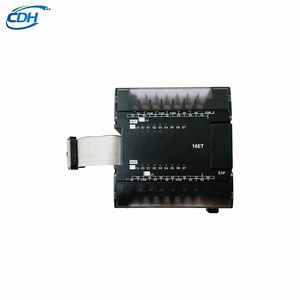
| Solid-State Discrete I/O Modules (e.g., CP1W-16ET, 237x Series) | Fieldbus / Direct PLC Bus / High-Speed Pulse | 24V DC Discrete, High-Current Solid-State Outputs | IP20 (Cabinet) to IP65 | Automotive packaging lines, rapid sorters, conveyor logic in Poznań & Wrocław. |
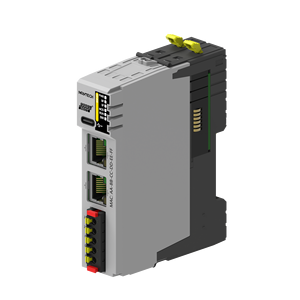
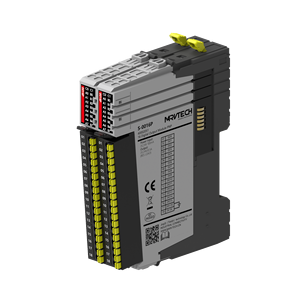
| Multi-Protocol Fieldbus Gateways (e.g., PNP 8-Ch Ethernet/IP PROFINET) | Ethernet/IP, PROFINET, Modbus RTU/TCP | 24V DC Field Power, 8 Channel Configurable I/O | IP67 Industrial Sealed | Robotic welding cells, food & beverage processing plants in Silesia & Masovia. |
| High-Precision Analog Process Modules (e.g., SPASO11, NI-9264 Series) | Simultaneous Voltage Output (±10V), 25 kS/s/ch | High-Resolution 16-Bit Analog Outputs | Industrial Chassis / Module | Closed-loop motor drive speed reference, hydraulic proportional valve positioning. |
| Hybrid Inverter & MPPT Software Modules (e.g., 120V-1000V MPPT UPS) | CANbus, Modbus TCP, Smart Grid Software | 500W - 2kW, Multi-Voltage DC/AC Conversion | Rugged PCB / Encapsulated | Off-grid telecom stations, solar hybrid agricultural pumps in Greater Poland. |
| Waterproof Outdoor Power Units (e.g., OEM Class 2 5V-36V CE) | DC Regulated Bus, Overcurrent Protection | 5V to 36V Wide DC Range, CE Certified Class 2 | IP67 / IP68 Fully Potted | Outdoor municipal vehicle drives, LED display backlighting, harsh weather sensors. |
When sourcing mission-critical motor drive controllers and industrial automation components, technical reliability and manufacturing provenance are paramount. Our engineering partner, Axiomatic Technologies Corporation, brings over three decades of pioneering leadership in rugged electronic control design and power conversion systems for global industries.
Operating out of an ISO 9001:2015 certified manufacturing facility in Canada, with dedicated R&D firmware engineering teams located in Canada and Finland, and global sales support spanning North America, Europe, and Australia, Axiomatic provides the rigorous engineering foundation required by top-tier Polish OEMs. Every motor controller, CAN gateway, and signal conditioner undergoes extensive physical validation—including high-G shock and vibration qualification, thermal cycling from sub-zero to maximum ambient loads, and full EMC compliance testing to guarantee immunity against industrial high-voltage transients.
Furthermore, active corporate memberships in industry standards organizations—such as CAN in Automation (CiA) and SAE International—ensure that all product firmware remains strictly compliant with evolving fieldbus specifications. Whether your project requires a standard catalogue motor controller, factory-programmed parameters to streamline assembly line throughput, or a completely customized electronic control unit (ECU) engineered to your unique mechanical packaging, our engineering team provides direct co-design support from concept to mass production.
Our drive controllers and automation modules support standard industrial protocols including SAE J1939, CANopen, PROFINET, Ethernet/IP, Modbus RTU/TCP, RS-232, RS-485, and CAN FD. Dedicated protocol converter gateways are also available to bridge legacy equipment networks with modern real-time vehicle or factory Ethernet systems.
Yes. All products exported to Poland and the broader European Economic Area comply fully with relevant EU Directives, including the Electromagnetic Compatibility (EMC) Directive 2014/30/EU, Low Voltage Directive (LVD) 2014/35/EU, and RoHS/REACH environmental safety directives. CE compliance test reports are available upon request.
Our ruggedized controllers are engineered specifically for harsh environments. Featuring fully potted IP67 or IP69K enclosures, they operate reliably across extended thermal windows from -40°C to +85°C. They are validated against mechanical vibration, physical shock, salt fog exposure, and thermal shock cycles common in Northern and Eastern European winters.
Absolutely. We offer complete OEM custom engineering services covering hardware redesign, custom PCB layout, and tailored firmware development (C/C++, IEC 61131-3 logic). For standard catalogue models, we can factory-program custom baud rates, I/O pin mappings, and dynamic control ramps so units are ready for plug-and-play installation upon arrival at your Polish facility.
Standard catalogue modules and evaluation samples are dispatched rapidly from our European distribution network or Canadian headquarters via expedited international air freight, typically reaching Polish destinations within 3 to 7 business days. Scheduled bulk production orders are coordinated via buffer stock agreements to sync with your ERP manufacturing schedule.
You can connect directly with an application engineer by clicking the inquiry button below. Share your machine specifications, required voltage spectrum, operating environment, and target fieldbus protocol, and our technical team will provide platform recommendations, datasheets, and competitive pricing structures.
Partner with a trusted global supplier of rugged motor drive controllers, fieldbus modules, and precision power electronics. Contact our engineering support team today to review your project requirements.