- ISO 9001:2015 Certified Manufacturing — Canada
- Engineering Support Since 1991
Engineered for seamless integration within rugged industrial junction box assemblies, fieldbus power distribution units, and severe-duty automation systems across the Pacific Northwest.
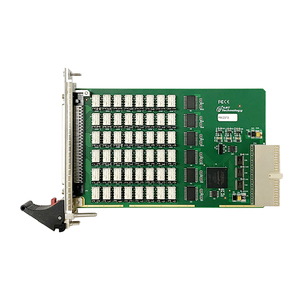
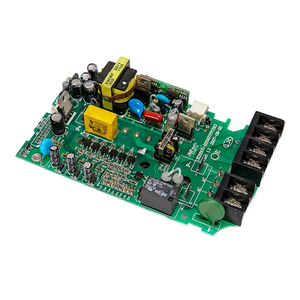
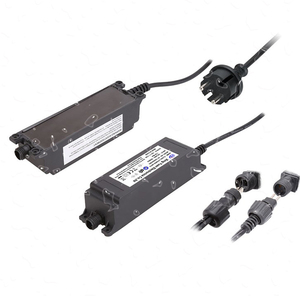

The Greater Seattle region presents a unique convergence of heavy maritime operations, aerospace manufacturing corridors, high-density data centers, and clean energy infrastructure. Industrial junction boxes operating in this territory must withstand relentless moisture, marine salt air, ambient thermal fluctuations, and strict electrical safety standards.
Seattle’s bustling commercial port, shipyards, and Pacific fishing fleets demand terminal junction boxes rated for extreme coastal environments. Our NEMA 4X and IP68 stainless steel junction boxes are specifically designed to resist aggressive saltwater mist, high-pressure washdowns, and continuous marine vibration. Pre-configured with corrosion-resistant brass cable glands and passivated 316-grade enclosures, these units protect vital power distribution and remote I/O fieldbus links on commercial tugs, ferries, and dockside crane terminals throughout Puget Sound.
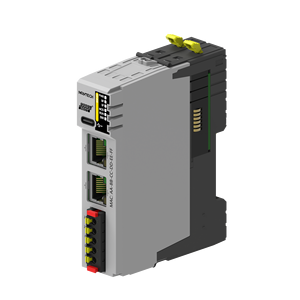
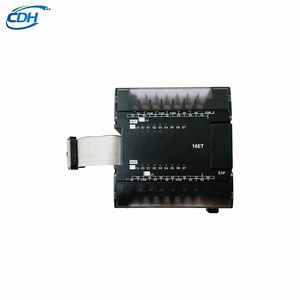
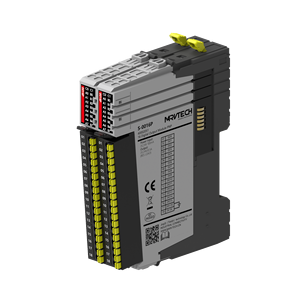
Advanced assembly plants across Snohomish and King Counties require highly organized, dust-tight, and EMI/RFI-shielded terminal boxes. Integrating high-channel discrete and analog I/O modules (such as the 16-channel solid-state modules), our junction enclosures serve as central routing nodes for robotic assembly arms, automated guided vehicles (AGVs), and multi-axis hydraulic valve arrays. Built with DIN-rail mounting channels and rapid field-wiring terminal blocks, these enclosures simplify complex aerospace tooling installations while maintaining zero electrical noise interference.
As the Pacific Northwest serves as a primary hub for global cloud hyperscalers and trans-Pacific fiber optic cable landings, continuous power reliability is critical. Our hybrid power junction boxes house high-efficiency MPPT solar controllers, micro-UPS software inverter modules, and surge protection devices. Installed in climate-controlled server rooms or outdoor fiber termination huts, these enclosures ensure uninterrupted secondary power switching and clean signal conditioning for critical telecom equipment.
Hydroelectric generation plants across the Cascade Range and Seattle Public Utilities water treatment networks require subsea-capable, hermetically sealed electrical enclosures. Designed to withstand subterranean dampness, high hydraulic pressures, and ambient thermal swings (-40°C to +85°C), our heavy-duty cast aluminum and fiberglass-reinforced polycarbonate junction boxes provide reliable sensor signal junction nodes for turbine speed controls, flow meters, and gate valve actuators.
Industrial automation standards in Washington State are rapidly evolving under stringent regional environmental mandates, seismic safety codes, and Industry 4.0 digitizations. Industrial buyers in Seattle are moving beyond basic electrical junction boxes toward smart, networked enclosure solutions.
Due to Seattle's annual rainfall averaging 38+ inches combined with marine atmospheric moisture, conventional painted carbon steel boxes suffer premature rust and seal degradation. The market has heavily shifted toward 316L Stainless Steel and marine-grade 5052-H32 Aluminum with electro-polished finishes. These materials eliminate maintenance cycles and pass 1,000-hour salt spray corrosion testing per ASTM B117 standards.
Modern Seattle factories are upgrading static terminal boxes into active edge processing nodes. By integrating fieldbus communication modules supporting Ethernet/IP, Profinet, and Modbus TCP directly inside the junction enclosure, engineers can stream real-time temperature, vibration, and current draw data directly to cloud dashboards without routing hundreds of individual analog cables back to a central PLC cabinet.
Located along the Cascadia Subduction Zone, Seattle facility managers mandate IEEE 693 seismic compliance for structural electrical infrastructure. Our junction boxes incorporate heavy-gauge internal mounting sub-panels, spring-cage terminal block connectors that resist mechanical loosening under harmonic vibration, and reinforced external mounting feet capable of enduring severe seismic shocks.
Selecting the correct junction box enclosure and terminal module architecture requires balancing environmental exposure, electrical loading, EMI susceptibility, and total cost of ownership. The comparative matrix below outlines performance parameters tailored for Pacific Northwest industrial deployments.
| Material / Spec | Ingress / Protection Rating | Corrosion Resistance | EMI/RFI Shielding | Ideal Seattle Application |
|---|---|---|---|---|
| 316 Stainless Steel | NEMA 4X, 6P / IP68, IP69K | Superior (Salt Spray Resistant) | Excellent (>60dB attenuation) | Shipbuilding, Dockside Cranes, Marine Terminals |
| Anodized Aluminum (5052) | NEMA 4X / IP66, IP67 | High (Marine Atmospheric) | Very High (Natural Shielding) | Aerospace Tooling, Mobile Machinery, Off-Highway |
| Fiberglass Reinforced Polyester (FRP) | NEMA 4X / IP66 | Exceptional (Chemical/Acid Proof) | Poor (Requires Coating) | Wastewater Treatment, Chemical Processing Plants |
| Polycarbonate (UV Stabilized) | NEMA 4X, 12, 13 / IP67 | High (Non-corrosive) | None (Transparent/Radio Clear) | Outdoor Solar Junctions, Wireless IoT Gateways |
When high-density power supply units or high-channel voltage output modules (such as the NI-9264 simultaneous 16-channel module) are enclosed inside IP67 junction boxes, internal heat dissipation becomes a critical factor. Modern engineering practices utilize internal thermal conduction plates, phase-change interface pads, and micro-thermostat controlled anti-condensation heating elements to maintain internal temperatures within the optimal range of -40°C to +85°C during cold Puget Sound winters.
Co-locating 120V/220V power converters alongside low-voltage sensor communications (such as CANbus or 0-10V analog outputs) can cause signal corruption. Superior junction box designs employ internal metallic Faraday shield partitions, shielded twisted-pair grounding clamps, and isolated fieldbus I/O modules to ensure seamless signal transmission without ground loops or electromagnetic interference.
For over three decades, our organization has engineered rugged machine controls, custom electrical enclosures, power management convertors, and protocol gateways for demanding industries worldwide.
Our primary production facilities operate under strict ISO 9001:2015 quality management systems. Every junction box module and control sub-assembly undergoes 100% automated optical inspection (AOI), high-voltage isolation breakdown testing, and full functional thermal stress screening prior to shipment.
As an active member of CAN in Automation (CiA) and SAE International, our engineering team brings specialized expertise in SAE J1939, CANopen, Ethernet/IP, Profinet, and Modbus protocols. We design custom internal PCB mounting assemblies that integrate seamlessly into complex machine networks.
Eliminate local field assembly labor. We provide pre-drilled, pre-glanded, and pre-wired junction box assemblies tailored to your exact mounting footprint. From custom CNC conduit entry punchouts to laser-engraved terminal identification tags, our enclosures arrive factory-ready for instant installation.
Essential information for electrical engineers, system integrators, and procurement officers evaluating industrial junction boxes and fieldbus modules in the Greater Seattle area.
Yes. Our industrial electrical enclosures and internal power distribution components are engineered to comply with UL 508A (Industrial Control Panels), NEMA 250, and NFPA 70 (National Electrical Code) standards enforced by the Seattle Department of Construction and Inspections (SDCI). Custom UL-labeled panel assemblies can be provided based on project specification.
While IP66 and IP67 ratings specify ingress protection against water jets and temporary submersion, NEMA 4X provides an extra mandatory criteria: resistance to environmental corrosion. For outdoor applications in Seattle, Puget Sound docks, or chemical washdown zones, NEMA 4X stainless steel or polycarbonate enclosures ensure protection against rust, ice formation, and salt atmospheric pitting that IP ratings alone do not test for.
Absolutely. We specialize in turn-key enclosure systems. We can factory-install internal DIN rails, terminal block blocks, power supply modules, discrete/analog I/O cards, and pre-cut NPT or metric cable gland entry ports. This reduces on-site field labor in Seattle area jobsites and guarantees factory-tested wiring integrity.
Standard catalogue enclosures and modular I/O units are maintained in stock for rapid dispatch. Custom CNC-machined, modified gland-entry, or pre-wired terminal box sub-assemblies typically ship within 2 to 4 weeks depending on batch volume. Expedited shipping options to Seattle-Tacoma (SEA) logistics terminals are available for emergency facility maintenance.
Rapid atmospheric temperature drops in western Washington often cause moisture condensation inside sealed outdoor boxes. We mitigate this by incorporating pressure-equalizing hydrophobic vent plugs (IP68 Gore vents), internal anti-condensation heating elements, and conformal-coated electronic PCBs to protect sensitive control circuitry from moisture bridging.
Connect directly with our application engineering team. Whether you need marine-grade NEMA 4X enclosures, pre-wired fieldbus terminal boxes, or custom CANbus I/O integration, we provide comprehensive technical support and competitive OEM pricing.
Contact Us