- ISO 9001:2015 Certified Manufacturing — Canada
- Engineering Support Since 1991
Heavy-duty, vibration-hardened controllers, solid-state output modules, fieldbus gateways, and precision power supplies tailored for harsh South African industrial and mining environments.
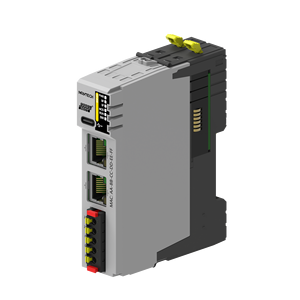
High-reliability power module with robust thermal dissipation designed for auxiliary machine display backlighting and industrial signage.
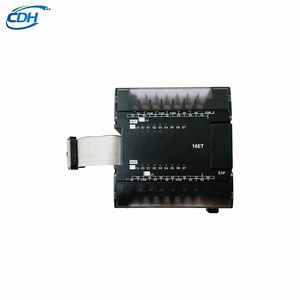
16-point solid-state switching module providing high-speed response and wear-free output control in dusty surface plant operations.
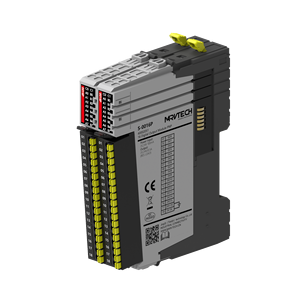
Rugged fieldbus module bridging Ethernet/IP and PROFINET networks to centralized mine management systems with channel isolation.
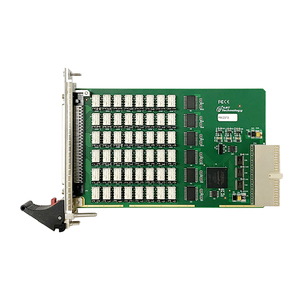
Programmable high-capacity discrete I/O interface optimized for custom OEM machinery software logic and heavy electrical switching.
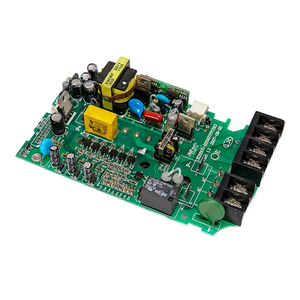
Versatile MPPT solar hybrid power transformation module ensuring uninterrupted control back-up during off-grid load-shedding events.
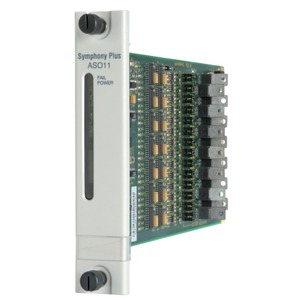
Precision process control analog module designed for exact proportional hydraulic valve modulation and sensor telemetry routing.
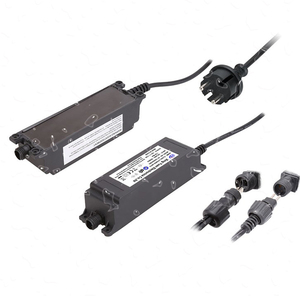
IP-sealed wide-range DC power conversion unit engineered for external vehicle enclosures and high-moisture subterranean washdown zones.
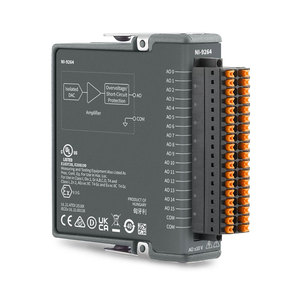
High-density 16-channel voltage output unit supporting fast 25 kS/s simultaneous updating for real-time dynamic machine diagnostics.
South Africa’s mining industry stands as a pillar of global mineral supply, dominating world reserves in Platinum Group Metals (PGMs), manganese, gold, chrome, and coal. From the ultra-deep gold shafts of the Witwatersrand Basin—reaching depths beyond 3,800 meters—to the vast open-pit operations across the Bushveld Igneous Complex and the Kalahari Manganese Field, heavy machinery operates under environmental stressors unmatched in standard industrial settings. For Original Equipment Manufacturers (OEMs), mine operators, and system integrators seeking dependable **Mining Controller Manufacturers & Factory for South Africa**, standard off-the-shelf industrial electronics consistently fail to deliver required operational longevity.
Subterranean gold and PGM extraction imposes severe thermal loading, extreme humidity, corrosive acidic slurry exposure, and continuous low-frequency shock from rock-blasting and heavy drilling equipment. Conversely, surface mining in regions like the Northern Cape exposes mobile haulage fleets, excavators, and draglines to abrasive airborne silica dust, high ambient solar heat, and intense battery-to-alternator voltage transients. Furthermore, chronic electricity grid volatility and frequent Eskom load-shedding cycles require control systems to possess internal power conditioning, fast reboot capabilities, and hybrid energy management features.
Information Gain Insight: Modern mining control systems deployed in Sub-Saharan Africa must integrate multi-protocol fieldbus routing (SAE J1939 to CANopen/PROFINET), internal surge protection against supply rail fluctuations, and heavy potted enclosures capable of sustaining continuous 50G shock loads while maintaining real-time telemetry.
To maximize Mean Time Between Failures (MTBF) and minimize unpredicted underground downtime—where halting a single continuous miner or haul truck costs thousands of USD per hour—engineering decision-makers require direct access to specialized control controller factories capable of delivering custom firmware mapping, ruggedized PCB layouts, and field-proven hardware architectures.
Electronic Control Units (ECUs), hydraulic valve drivers, power converters, and signal gateways engineered for mining machinery must adhere to stringent physical, electrical, and protocol standards. The integration of modern digital control interfaces into diesel-hydraulic and battery-electric vehicles (BEVs) represents a fundamental step toward zero-emission mine sites and remote autonomous operations.
In heavy-duty mobile machinery, the Controller Area Network (CAN bus) serves as the central nervous system. Controllers built for Southern African mines must natively support SAE J1939 protocols for powertrain telemetry, exhaust after-treatment management, and transmission diagnostics, alongside CANopen protocols for precise hydraulic valve positioning and motor drive feedback. Specialized protocol converters act as hardware bridges, allowing legacy analog sensor setups or proprietary RS-485/Modbus equipment to communicate transparently across modern vehicle networks.
Underground continuous miners, roof bolters, and loaders rely on proportional hydraulics for precise boom articulation, steering, and load handling. Advanced mining valve controllers utilize closed-loop pulse-width modulation (PWM) current control with configurable dither frequency. This technical capability prevents mechanical spool stiction caused by micro-contaminants in hydraulic fluid, ensuring smooth, micro-meter precise operator control even under heavy thermal expansion of hydraulic fluid manifolds.
Fully encapsulated IP67/IP69K housings using aluminum extrusions or high-impact resin to resist direct high-pressure hose washdowns and acidic mud.
Integrated load-dump suppression compliance (ISO 7637-2) shielding internal microcontrollers from severe voltage spikes caused by heavy alternator switching.
On-board flash memory logging combined with CAN FD and Automotive Ethernet interfaces to transmit vibration, temperature, and wear data to surface servers.
Due to regional energy security challenges in South Africa, mine sites increasingly rely on localized hybrid microgrids featuring solar PV installations, diesel gensets, and battery energy storage systems (BESS). Controller factories catering to this market produce high-efficiency DC-DC converters, MPPT micro-solar tracking modules, and hybrid UPS software controllers. These devices stabilize DC voltage buses (12V, 24V, 48V, up to 1000V DC) powering onboard telemetry, emergency lights, gas monitors, and autonomous navigation sensors during main power transitions.
To demonstrate true practical engineering applicability, let us examine four distinct deployment scenarios across South Africa's diverse mining operations where rugged controllers are actively deployed:
| Mining Sector / Region | Operational Environment | Controller / Module Selected | Key Engineering Solutions Provided |
|---|---|---|---|
| Deep-Level Gold Mining (Witwatersrand Basin) |
High humidity (95%+ RH), ambient temps >45°C, high seismic shock, sulfurous water runoff. | Potted SAE J1939 I/O Expansion Module & Hydraulic Valve Controller | Closed-loop PWM dither control for rock-drill arms; IP69K potted enclosure preventing moisture ingress and corrosion. |
| Open-Pit Platinum Operations (Rustenburg / Bushveld) |
Fine abrasive platinum dust, direct UV exposure, continuous vibration, heavy electrical loads. | Discrete Solid-State I/O Modules & CANbus Gateways | Solid-state switching eliminates mechanical contact wear; J1939 gateway aggregates engine health telemetry for fleet wireless telemetry. |
| Manganese & Iron Ore Haulage (Kalahari Basin) |
Extreme daily thermal cycling (-5°C winter nights to +48°C summer days), heavy dust storm exposure. | Wide-Input Waterproof DC-DC Converter & Heavy Duty Inclinometer | Regulated output power for surface radar and anti-collision systems; dual-axis inclinometer provides roll/pitch stability alerts. |
| Hybrid Mine Microgrids (Off-Grid Remote Processing) |
Frequent mains outages, high grid voltage sag, integration with localized solar arrays. | MPPT Hybrid Solar & UPS Control Modules | Seamless switching between solar feed, battery bank, and diesel genset; zero-drop power supply for SCADA data logging. |
In underground coal and platinum veins, continuous miners operate by grinding rock faces using rotating cutter heads while loading crushed ore onto shuttle cars. The severe mechanical vibration generated by cutter heads quickly destroys conventional PCB solder joints and relays. Specialized controller factories utilize automatic SMT manufacturing with dual conformal coating and full silicone potting to damp mechanical resonance.
Furthermore, safety mandates in South Africa require Collision Avoidance Systems (CAS) and Proximity Detection Systems (PDS) to prevent vehicle-to-pedestrian accidents in confined haulage drifts. Controllers serve as the central processor for these systems, receiving speed inputs, steering angles from CAN sensors, radar distances, and executing emergency braking via electro-hydraulic solenoid valves within milliseconds.
The South African mining domain is undergoing a profound transformation driven by three core macro-economic trends:
To reduce subterranean ventilation costs associated with clearing diesel exhaust fumes, major mining houses (including Anglo American, Impala Platinum, and Sibanye-Stillwater) are replacing diesel load-haul-dumpers (LHDs) with battery-electric fleets. This shift increases the demand for specialized high-voltage DC-DC power converters, motor drive controllers, and thermal management control units. Controllers must monitor lithium battery cell temperatures, manage regenerative braking feedback, and communicate via CAN FD to avoid thermal runaway risks underground.
Environmental, Social, and Governance (ESG) standards require mining enterprises to report carbon footprints and improve energy efficiency per ton of ore extracted. Smart controllers equipped with edge-processing algorithms dynamically optimize hydraulic pump displacement based on machine demand. Rather than running hydraulic pumps at constant full RPM, intelligent controllers reduce bypass energy waste by up to 35%, directly lowering diesel fuel consumption or grid power draw.
South African mines are expanding remote operating centers (ROCs) where operators control machinery above ground in air-conditioned control rooms. This operational shift relies on low-latency fieldbus modules capable of transmitting high-density diagnostic data—such as input voltage states, output short-circuit warnings, ambient enclosure humidity, and internal temperatures—over fiber-optic or 5G private mine networks.
When selecting a manufacturing partner for heavy-duty industrial and mining controllers, technical competence and stringent quality assurance are non-negotiable. Building upon over three decades of engineering leadership since 1991, our global engineering and production infrastructure delivers verified, harsh-environment control solutions to world-leading machine builders.
State-of-the-art ISO 9001 certified manufacturing facility executing automated optical inspection (AOI), in-circuit testing (ICT), and 100% full-load burn-in qualification.
Every platform design undergoes rigorous internal testing for thermal shock (-40°C to +85°C), continuous random vibration (SAE J1455), salt spray corrosion, and electromagnetic compatibility (EMC).
Multi-national engineering design centers in Canada and Finland with dedicated application support across North America, Europe, Australia, and Sub-Saharan Africa.
Whether your application requires selecting a proven off-the-shelf CAN bus signal conditioner or developing a ground-up custom OEM Electronic Control Unit with custom C++/C# application logic, our factory team manages hardware, firmware, and system architecture to meet demanding project schedules.
Connect with our expert application engineers to review your machine architecture, request datasheets, or scope custom CANbus control and power conversion platforms built for extreme mining conditions.
Send an Inquiry