- ISO 9001:2015 Certified Manufacturing — Canada
- Engineering Support Since 1991
Engineered for ultra-low noise transmission, high galvanic isolation, and rugged operating resilience in demanding industrial environments.
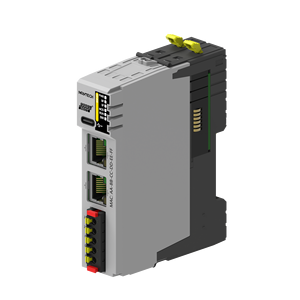
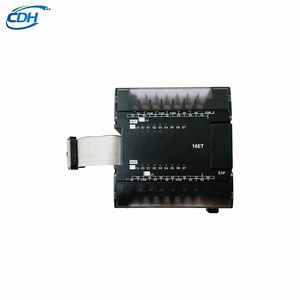
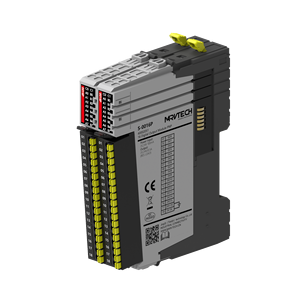
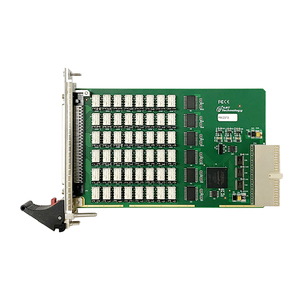
In the era of Society 5.0 and Japan’s rapid shift toward fully autonomous cyber-physical production systems (CPS), the integrity of analog and digital signal channels within industrial facilities has emerged as a cornerstone of operational resilience. Modern automated manufacturing facilities—spanning precision automotive assembly plants in Aichi, semiconductor fabrication cleanrooms in Kumamoto and Hokkaido, and high-speed robotic packaging lines—rely on intricate networks of sensors, programmable logic controllers (PLCs), distributed I/O modules, and variable frequency drives (VFDs).
However, as factory automation systems become increasingly dense and interconnected, they generate intense electromagnetic fields, common-mode voltage spikes, and ground potential differentials. Without robust galvanic signal isolation, these transient interference sources induce ground loops, signal corruption, measurement drift, and catastrophic component breakdown across sensitive controller interfaces.
"Signal isolators act as the indispensable galvanic firewall in industrial control architectures, preventing destructive transient ground loop currents and electromagnetic interference (EMI) from corrupting micro-volt level instrumentation and high-speed fieldbus data networks."
For Japanese system integrators and procurement engineers, sourcing top-tier signal isolators and fieldbus conversion modules requires looking beyond simple datasheet specifications. Evaluation must encompass long-term thermal stability, Common-Mode Rejection Ratio (CMRR > 120 dB), galvanic isolation barrier breakdown ratings (up to 3.0 kV RMS or higher), and seamless protocol compatibility across legacy 4-20mA loops, Modbus RTU, CANopen, SAE J1939, PROFIBUS, and industrial Ethernet (PROFINET, EtherNet/IP, EtherCAT).
Japan’s industrial sector is renowned globally for setting the benchmark in quality, reliability, and precision engineering. Meeting the demanding operational criteria of Japanese original equipment manufacturers (OEMs) and plant managers requires a localized understanding of the specific environment where signal conditioning hardware is deployed:
Deployed in ultra-clean environments across Kyushu ("Silicon Island") and Hokkaido. Signal isolators condition micro-amp analog telemetry from mass flow controllers (MFCs), vacuum gauges, and plasma etching systems, protecting high-density DAQ boards from plasma-induced RF spikes.
Essential for electric vehicle powertrain test benches and robotic welding cells in industrial hubs such as Aichi and Shizuoka. High-voltage 3kV isolators protect CANbus controllers from high-power inverter noise during battery charge-discharge cycles and motor dynamometer testing.
Utilized extensively by leading Japanese industrial robot manufacturers. Multi-channel discrete solid-state isolated output modules manage fast-switching solenoid valve arrays and servo drives without back-EMF feedback disturbing central PLC processors.
Applied in Shinkansen rail equipment and heavy machinery operating under harsh thermal and vibration conditions. Module designs feature potted enclosures, M12/rugged connectors, and extended operating temperature ranges (-40°C to +85°C).
Integrated with solar PV micro-inverters, wind turbine pitch controllers, and industrial energy storage systems (BESS). Ensures isolated telemetry transmission between high-voltage DC buses and low-voltage digital management systems.
Used in coastal chemical refineries across Kawasaki and Yokkaichi. Intrinsic safety isolators prevent dangerous spark generation in explosive gas atmospheres while providing 3-way isolation (Input, Output, Power).
Choosing the correct signal isolator topology determines system reliability, channel density, and total cost of ownership. The comparative analysis below outlines the core differences between primary isolation technologies used in modern industrial modules:
| Isolation Technology | Isolation Rating (kV RMS) | Propagation Delay | EMC Immunity / CMRR | Primary Industrial Application |
|---|---|---|---|---|
| Galvanic Magnetic Transformer | 2.5 kV – 5.0 kV | Medium (< 500 ns) | Very High (> 130 dB CMRR) | High-power DC-DC converters, heavy industrial motor drives, and analog 4-20mA loops. |
| Optical Isolation (Optocoupler) | 1.5 kV – 3.75 kV | Slow to Medium (1 µs – 10 µs) | Moderate (100 dB CMRR) | Standard discrete PLC digital inputs/outputs, status indicator lamps, simple relay drives. |
| Digital Capacitive Barrier | 3.0 kV – 5.0 kV | Ultra-Fast (< 15 ns) | High (> 110 dB CMRR) | High-speed bus communications (CAN FD, RS-485, Automotive Ethernet, SPI, I2C). |
| Solid-State Relay (SSR) Module | 2.5 kV – 3.75 kV | Fast (< 100 µs) | High (Zero-cross switching) | Fast inductive load control, solenoid actuators, high-frequency PLC output switching. |
With over three decades of advanced electronic control design since 1991, Axiomatic Technologies Corporation delivers ruggedized, high-performance signal conditioning and power management systems engineered for extreme environments.
Our application engineering team supports Japanese B2B buyers through every phase of system integration—from preliminary network bandwidth calculations and signal noise analysis to custom firmware configuration and rapid prototyping.
Answers to common inquiries from Japanese engineering procurement managers and system integrators.
Our technical application specialists are available to assist Japanese engineering teams in selecting the optimal galvanic signal isolators and fieldbus conversion modules for your system integration projects.